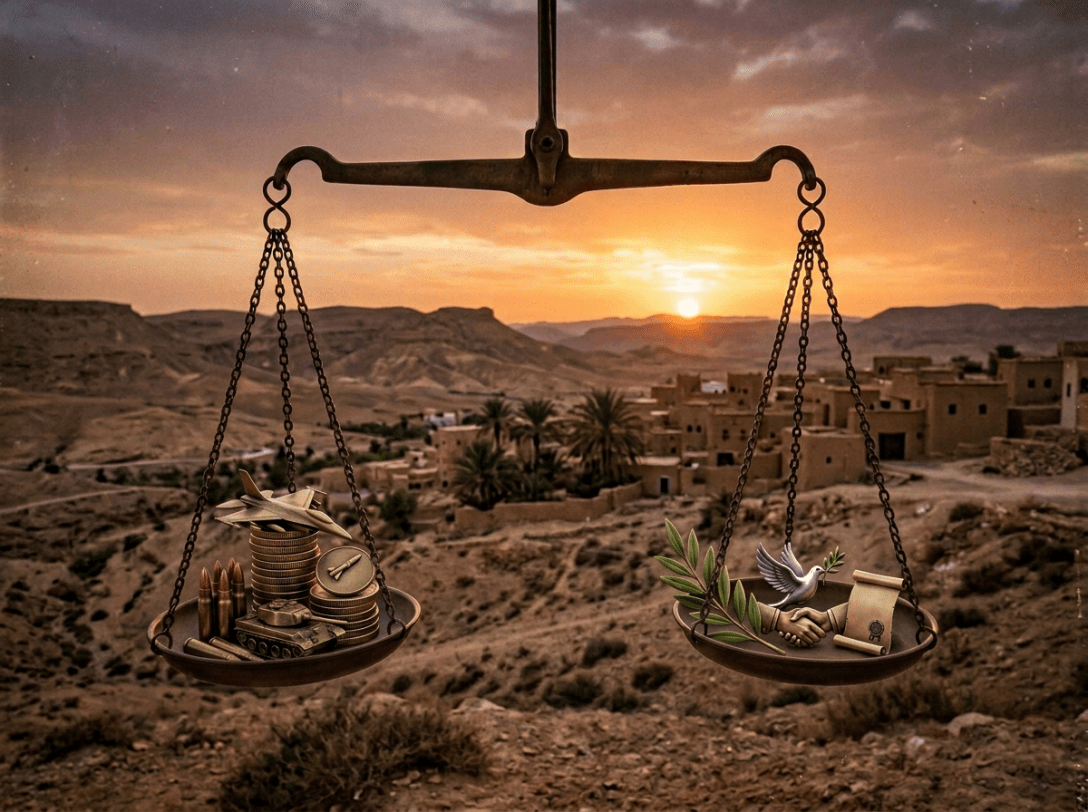
After both of our previous attempts failed largely because Iran has proven completely unable to stop firing missiles for no seemingly sane reason, it appears to be a good time to reconsider our options.
Before we begin, I should come clean: Throughout the conflict with Iran I have consistently advocated to make an even less than desirable deal to end hostilities, more fully open the Strait of Hormuz, and create a situation where we can continue to grind on towards our longer term goals of denuclearization and regional stability. Unlike many of my fellow conservatives, I believed the idea that we would “finish the job” of regime change a fantasy because there was no possible scenario where the United States would put the number of boots on the ground, much less commit them for the length of time required. Even if President Donald Trump was inclined to mount an actual invasion of that scale to topple the remnants of the regime, Congress would never authorize such a deployment and the American people would never support it in sufficient numbers. At the same time, I didn’t consider this to be a problem. To me, it showed that we learned the lessons of our failures in Afghanistan and Iraq, and were refusing to repeat them. For better in my mind or worse in others, this left us with making a deal and doing the hard work afterwards to make it stick long term, but after two such deals have come and gone – the initial non-ceasefire ceasefire and the more formal and recent Memorandum of Understanding – it seems like a good moment to start questioning that position and perhaps the best way of doing so is to ask why neither of those attempts lasted more than a few days or weeks. Why did neither of the Trump Administration’s efforts to end the war with pretty clearly defined diplomatic terms negotiated with the help of Middle Eastern countries that we can assume are at least somewhat sympathetic to Iran, completely fail?
Though Iran would claim differently, more on that in a moment, the unfortunate answer is that either the regime as a whole or some parts of it refused to comply with the terms of either agreement for even a short period. While we might accept there was some confusion over the initial ceasefire because the details were not immediately published, the MOU made it exceedingly clear that Iran had to do two things for it to remain in effect. First, they had to allow free shipping in the Strait, “Upon the signing of this MOU, the Islamic Republic of Iran will make arrangements using its best efforts for the safe passage of commercial vessels with no charge, for 60 days only, from the Persian Gulf to the Sea of Oman and vice versa. The traffic of commercial vessels will immediately start, and considering the need for removing the technical and military obstacles, and demining by the Islamic Republic of Iran will be instated within 30 days. The Islamic Republic of Iran will conduct dialog with the Sultanate of Oman to define the future administration and maritime services in the Strait of Hormuz in discussion with other Persian Gulf littoral states in line with the applicable international law and the sovereign rights of coastal states of the Strait of Hormuz.” Second, they had to refrain from threatening and attacking their neighbors, described as “immediate and permanent termination of military operations on all fronts,” but it was barely ten days before they began doing both. Though the MOU was signed on June 17, the attacks started on June 25 and by the 27th, CNN was reporting that a tanker “was struck in the Strait of Hormuz” and “Bahrain, which hosts a US military base, reported Iranian drone attacks on its territory.”
At the time, President Trump described these incidents as a “foolish violation” of the agreement and the situation only devolved from there, effectively restarting the conflict at a less intense level and reinstating the blockade. Confronted with this reality, Iran would probably claim that the reopening of the Strait was predicated on their maintaining control of the waterway complete with the ability to charge tolls. Barely a day after the MOU went into effect, Iranian officials began insisting they planned to assess fees “for services” as part of a final agreement, despite President Trump saying it would remain “permanently toll-free” and the MOU making it clear that the Strait would be settled “in line with the applicable international law,” which pretty clearly disallows tolls in waters that are not controlled by a specific country, setting up what appears to be a permanent impasse. Despite this, the impulse to control the Strait is apparently so strong that after the interim deal collapsed and hostilities resumed, Iran bizarrely proceeded to negotiate with Oman anyway to supposedly implement these tolls on a “voluntary basis.” As Reuters described it late last month, “Oman has presented Iran with a plan backed by Gulf states to manage the Strait of Hormuz, including collecting voluntary fees for using it, a Gulf source and a Western diplomat told Reuters on Tuesday.” Later in the same report, they summed up the position of both sides this way, “Iran has said it wants to manage the strait alongside Oman, which controls the opposite shore, and charge service fees to ships that use it. Washington wants to return to the status quo prior to the war, when ships were able to pass freely with no payments, and says charging mandatory fees would be illegal.” In other words, Iran has convinced itself for reasons no one has bothered to explain that the Strait now belongs to them, despite the claim not being made prior to the start of the conflict on February 28, and they seem to believe they can implement a never before seen fee for passage model either on their own or in conjunction with Oman, essentially telling the rest of the region and the world which relies on the waterway that they will do what those two countries tell them to and like it. To be sure, the use of the term “voluntary” allows a certain amount of wiggle room, but Iran and Oman can’t possibly be naive enough to believe anyone would pay a fee they didn’t have to, suggesting the plan is for some sort of mandatory scheme.
While President Trump’s detractors will undoubtedly blame him for this development – not entirely without merit considering he made the decision to start the war – it’s a position that can only politely be described as insane to the point where it’s no position at all. Why not claim they’re annexing Afghanistan, Iraq, or the United Arab Emirates while they’re at it? The matter is doubly strange, at least in my humble opinion, because the Memorandum of Understanding itself was pretty widely seen as a major win for Iran and an embarrassment for the United States including by at least some Republicans. Shortly after it was released, MS Now claimed “The MOU, as laid out to reporters, reveals some significant wins for Iran that are raising eyebrows in the U.S., especially among members of Congress, including U.S. support for a $300 billion reconstruction fund and no restrictions on Iran’s missile program.” “Reagan is rolling over in his grave. Iran’s nuclear ambitions were not curbed, and they have learned that threatening the Strait of Hormuz works and will undoubtedly leverage it in the future. Now, Iran gets to build brand-new infrastructure under this deal,” explained Republican Senator Bill Cassidy. “This is the worst foreign policy blunder in decades,” he added. Firoozeh Kashani-Sabet, Walter H. Annenberg Professor of History at the University of Pennsylvania, insisted it was a political win as well as an economic and potentially military one. “By conceding many of Tehran’s longstanding demands, this MoU marks an unprecedented development. The MoU provides formal recognition of the Islamic Republic’s political sovereignty—denied since 1979, given that the revolution was immediately followed by the unfortunate and disastrous hostage-taking of U.S. embassy personnel—alongside commitments to withdraw U.S. forces from Iran’s vicinity and to refrain from meddling in its domestic affairs.”
Putting this another way, Iran has not only refused to make a deal, they have refused to take the win to use the old expression. To be sure, at least some of this is not surprising. The Islamic Revolutionary Guard in particular has never been known as trustworthy and the skepticism they would fulfill any promises they might make before either the ceasefire or MOU were in place was more than justified based on their past behavior. While I was inclined to agree with this assessment myself, it seemed to me they’d be smart enough to say what was necessary to play along while ultimately doing whatever they wanted, hoping to get the benefits of the deal without actually doing what was necessary to comply with it. After all, the country had been hit hard, their leadership decimated, and their military seriously degraded. How hard would it be to stop shooting at ships and their neighbors for a little while to rebuild while dragging out what will undoubtedly be complex discussions over dismantling the nuclear program for years? How insane do you have to be not to take the short term benefits and instead try to assert control over something you have never controlled and likely will never control given its importance to the world and some of their only real allies like China? That they have refused to do so can only lead one to believe a deal of any kind is not possible at this time, which prompts the next question: Is one even desirable unless something dramatic changes?
To me at least, the answer appears to be no despite my previous position. Even if you set aside that there’s no point in making a deal which recent history indicates will be violated in short order, before the ink is dry as they say, recent history also strongly suggests maintaining the current status quo – the blockade and the US Navy escorting ships through the Strait, plus whatever else President Trump has planned as part of his recently announced economic D-Day – is preferable when you balance the costs and the benefits. On the cost side, the war has increased oil prices and will likely to continue to do so longer than preferable, but despite the oft repeated claims Iran’s supposed control over the Strait will cause prices to hit $150 or even $200 per barrel, they have settled between an admittedly elevated $80 to $85 and as new production comes online and new pipelines become operational, will likely fall even further. While many claimed there would be greater disruptions in global trade, large enough to impact the entire global economy, that doesn’t appear to be the case and since the conflict has been ongoing for six months – at points much more kinetic than now – those fears seem unlikely to materialize, though there has been a measurable impact on inflation and the cost of some products like fertilizer. This is certainly not desirable and everyone can certainly come to their own conclusions, but strikes me as more so than an endless merry-go-round of fluctuating prices as potential deals come and go. Given markets in general crave stability, elevated yet manageable prices will be easier to deal with than ever rising and falling prices based on the political and military whims of both Iran and the United States. At least businesses and consumers will be able to plan accordingly rather than worrying when to purchase something as simple as gasoline because the cost might collapse or spike on any given day. There is, of course, the reality that those living and working in the region are forced to deal with sporadic attacks, but sadly, that has been the reality in the region for decades and though the war has made it worse, most have learned to live with it to the point where bars in Dubai were open while they were getting bombed on a practically daily basis in March – a colleague of mine was there, he could see the smoke from his hotel, but everything was open and life went on in a way difficult for those of us in the United States to understand.
Balanced against those costs, the benefits are potentially substantial in the short and long term. By almost all accounts the economic impact of the blockade has been staggering, costing Iran some $13 billion per month, decimating oil exports, causing inflation to increase over 60%, destroying some one million jobs, and resulting in a misery index of 90 plus points. Though the regime has been able to stave of a complete economic collapse and the threat of force against their citizens has prevented any kind of uprising, the longer the blockade goes on, the worse it will get, the greater the chance of an actual collapse at best or simply taking much, much longer to rebuild at worst. In addition, the US escort of ships through the Strait combined with the blockade has also produced a less tangible, but potentially more important benefit. For the past six months, the experts and the mainstream media have generally regarded Iran as some kind of superorganism, a country whose never before seen system of government makes them somehow impervious to the harsh realities every other government faces. While they continually fretted that the United States would run out of weapons, targets, and options, they seemed to believe Iran had an unlimited supply and was able to unleash untold havoc such as destroying all of the infrastructure across the entire Middle East. Similarly, because Iran claimed they controlled the Strait, it was assumed to be the case, despite our blockade, ships getting through, and the country having no real navy to speak of, the claim alone was enough to be accepted as fact.
Recently, however, the reality that was never truly the case has started to become unmistakable to the point where even CNN was forced to admit, “Iran has lost significant control of the Strait of Hormuz.” “The battle for control of the Strait of Hormuz has become the focal point of the Iran war. Over the past several months, both Iran and the United States have claimed the upper hand – and the competing rhetoric has caused considerable confusion and doubt. At the moment, however, the evidence is clear: The United States, patrolling the strait with its navy, is gaining ground – and Iran is losing much of its control of the critical waterway. More than 80% of liquids transits through the Strait of Hormuz over the past two weeks have taken the Omani route – a UN-authorized shipping channel that Iran vehemently opposes – or have been ‘dark’ transits that likely took the Omani route, according to Kpler, which tracks ships using transponders and satellite data. Iran, declaring the strait under its control, has attacked dozens of ships that tried to travel the waterway via the north coast of Oman. Despite the risk, most ships have recently chosen to ignore Iran’s demands and cross the strait with the promise of protection from US naval forces. ” “It increasingly looks like Iran has at least partially lost control of the strait,” explained Homayoun Falakshahi, head of crude oil analysis at Kpler. If you look past the anti-Trump insanity of taking Iranian rhetoric about anything at face value as opposed to objectively considering the military strength of the opposing forces in the region, the truth that Iranian control and most of their threats were almost entirely an illusion is finally beginning to become clear and if it continues to do so, Iran will lose the only real leverage the have. Perhaps more importantly, they will have been revealed to be more bluster than brawn, more bark than bite. For a country whose existence is primarily predicated on the belief they are a threat, the world realizing they aren’t will be devastating.
All told, it seems better to keep them in a box for now, let them rot behind the blockade, and wait for something fundamental to shift to even talk about a deal. While some may somewhat rightfully criticize me for changing positions, I can only say that I’m willing to admit when I am wrong, to change my opinion as the reality changes and the worst fears don’t come to pass, and at the least, deserve some credit for that.


Credit given. The Iran problem was one of the plates spinning in my mind yesterday; and I couldn’t come up with a solution. I think Trump thought that people were more like him than not–i.e. rationale actors who would take a good enough deal. He was wrong – those people don’t care. And if you care (Trump does) you lose. You and I might not be Christians; but I’ll take a Christian every day of the week before I’d take a Jihadist.
Kick the can down the road and hope for a miracle, I guess.
LikeLiked by 1 person
Yup, it’s incredible to me that they care so little they won’t even lie to get a huge advantage, but that’s the case. At the same time, I think we can keep them in a box and accomplish the same thing. 🙂
LikeLike
If the Dems don’t win both chambers … but then what? Someone inside Iran, an Iranian, has to step up with a new idea about governing the country and – Where are they? It’s just insane what people will tolerate. I can’t imagine living like that.
We’re lucky to be “born in the USA” 🙂
LikeLiked by 1 person
I don’t think the Dems will win the Senate, but I don’t think it really matters in terms of Iran either way because the margin will be too small to do much. At the same time, I think you asked the million dollar question. There are over 90 million Iranians. WTF have they been doing all this time?
LikeLiked by 1 person