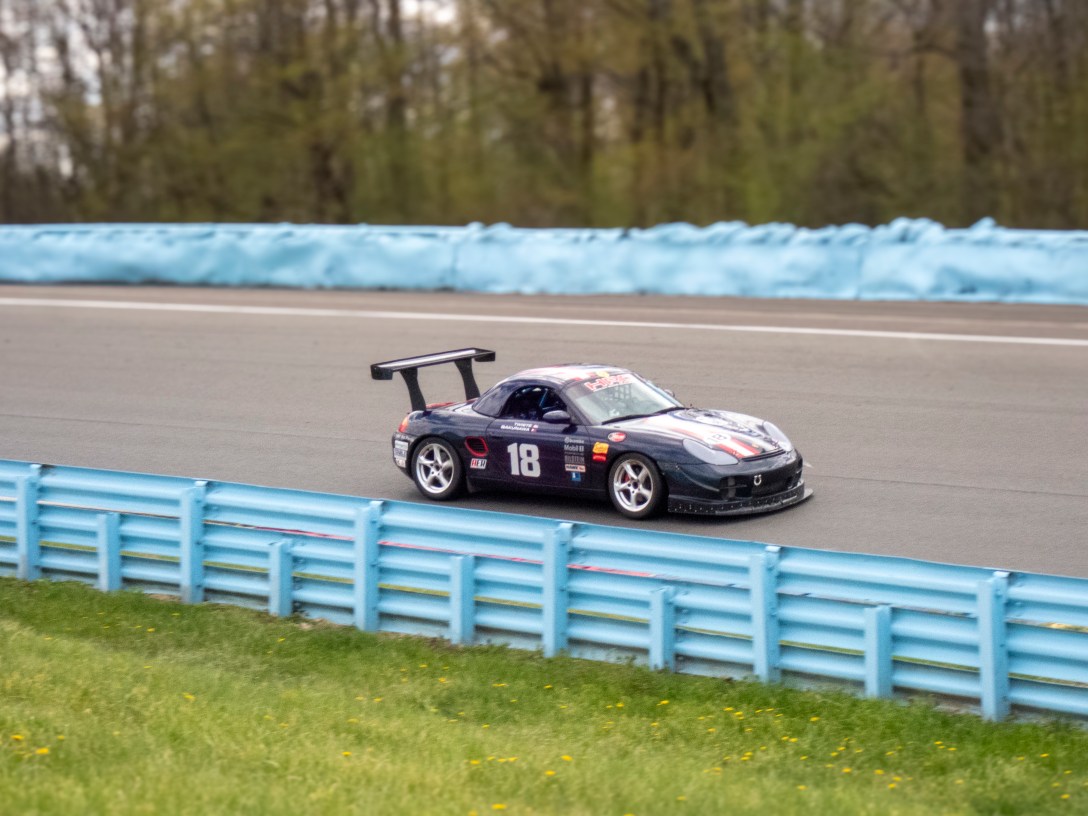
We spent Saturday morning wondering what hell could be wrong with our car and perhaps more importantly, could we fix it? This wasn’t merely an academic question. If we were unable to figure out, our weekend would’ve been over almost before it began.
On Saturday morning, my brother and I were stuck in the garage at Watkins Glen International trying to figure out what was wrong with our racecar. Late Friday afternoon, she started exhibiting a rather bizarre behavior when the entire dashboard would begin shaking violently at precisely 95 miles per hour, as though rocks were bouncing around inside or a gremlin was trapped and struggling frantically to get out. While we’ve certainly experienced our fair share of tire and brake issues, including having a brake pad crack at over 120 miles per hour at Watkins Glen itself coming into a dangerous turn known as the Bus Stop in the 10 years we’ve run the car, nothing quite like this has ever happened. Generally speaking, when something goes wrong with any part of the wheel or a suspension component, you can feel it through the entire car at any speed. It might get worse the faster you go, a slight shimmy becoming unmistakably harsh if not completely undrivable, but something was obviously wrong the whole time and the only question is whether or not it was dangerous to continue to drive at that point because sometimes you will continue to drive under less than ideal conditions as long as something worse isn’t likely to happen. In this case, the car itself seemed perfectly fine. Below 95 miles per hour, nothing was noticeably off and above, the shaking seemed limited to the dashboard itself. The steering column didn’t move. The car didn’t buck like a bronco. There was no vibration through the seat or visible in the mirrors like one of those old fashioned motorized beds straight of National Lampoon’s Vacation. What the hell could be wrong and perhaps more importantly, could we fix it?
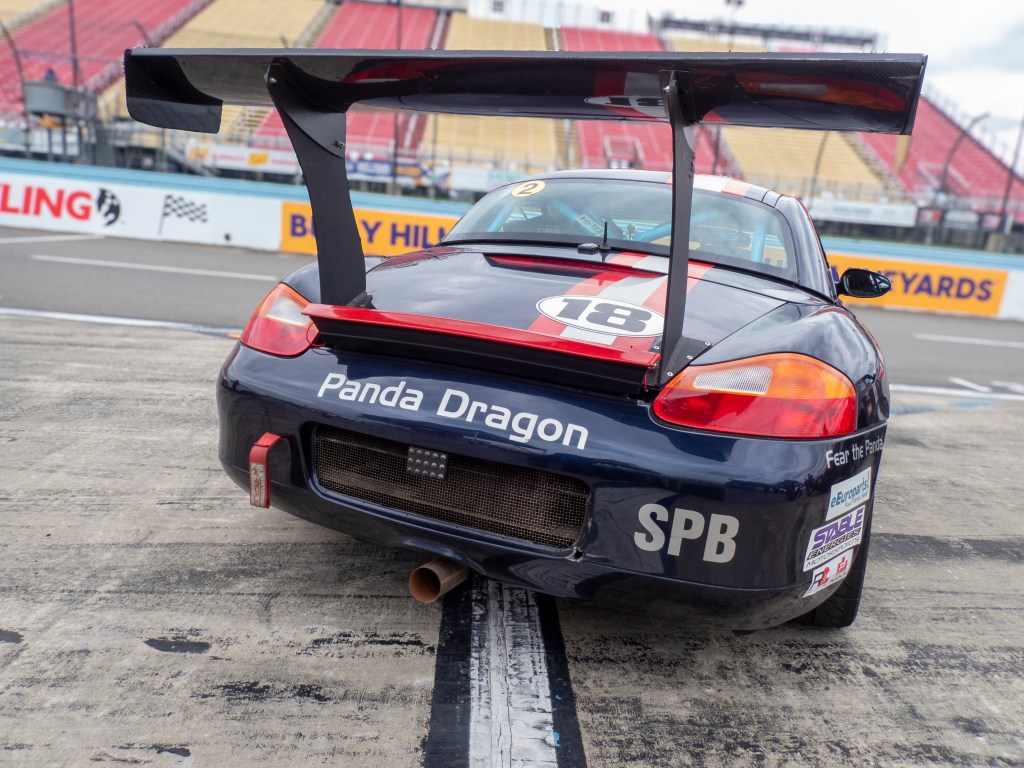
This wasn’t merely an academic question. Race weekends are expensive and time consuming. Unless you have very deep pockets, you have to lug the car and all the accompanying equipment to the track yourself, unload, unpack, prep, and do everything else including gassing the car up with heavy 5.5 gallon jugs held over a little drip pan, before packing everything up again to head home. Even on a good day, you’re likely to spend far more time supporting the car and waiting around than actually driving it. As of Saturday morning, we had a decent day in practice and qualifying on Friday, actually starting the qualifying race from the grid for the first time in years before the dashboard started shaking with about an hour left, sending the car back to the garage. If we were unable to figure out and ultimately fix it, our weekend would’ve been over almost before it began. Perhaps needless to say, the figuring out part isn’t always easy without being a real mechanic and all the tools you’d find in a real garage. The best we could do was go through the usual causes, even if we didn’t necessarily believe that was the case this time around, and ask a few of the other teams for their wisdom, which in many cases is far superior to ours considering the only work I’d ever done on a car was change the oil before I got involved in racing. We removed the front rims, checked the brake pads, suspension components, control arms, bushings, and changed the tires, but no luck, everything seemed as it should be. While the dashboard itself is close to impossible to remove at a race, at least for us, we crawled into the footwells and checked underneath, removed the cover where the airbag used to be, and generally poked around, prodding everything in sight to see if anything had come loose, but still, no luck.
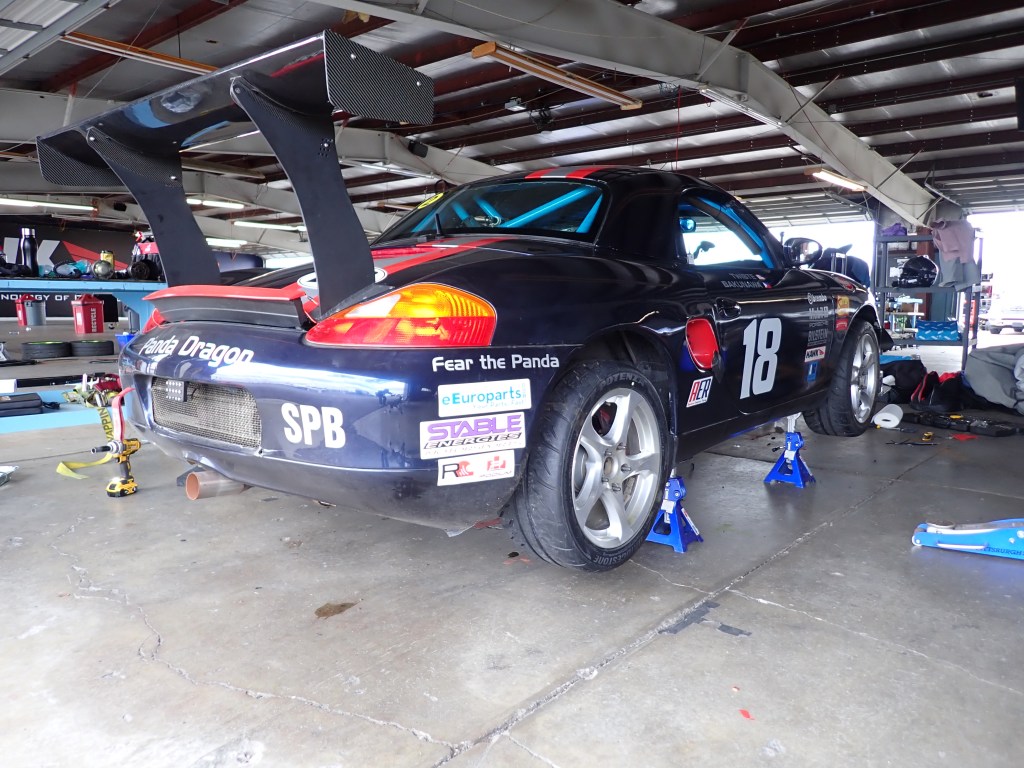
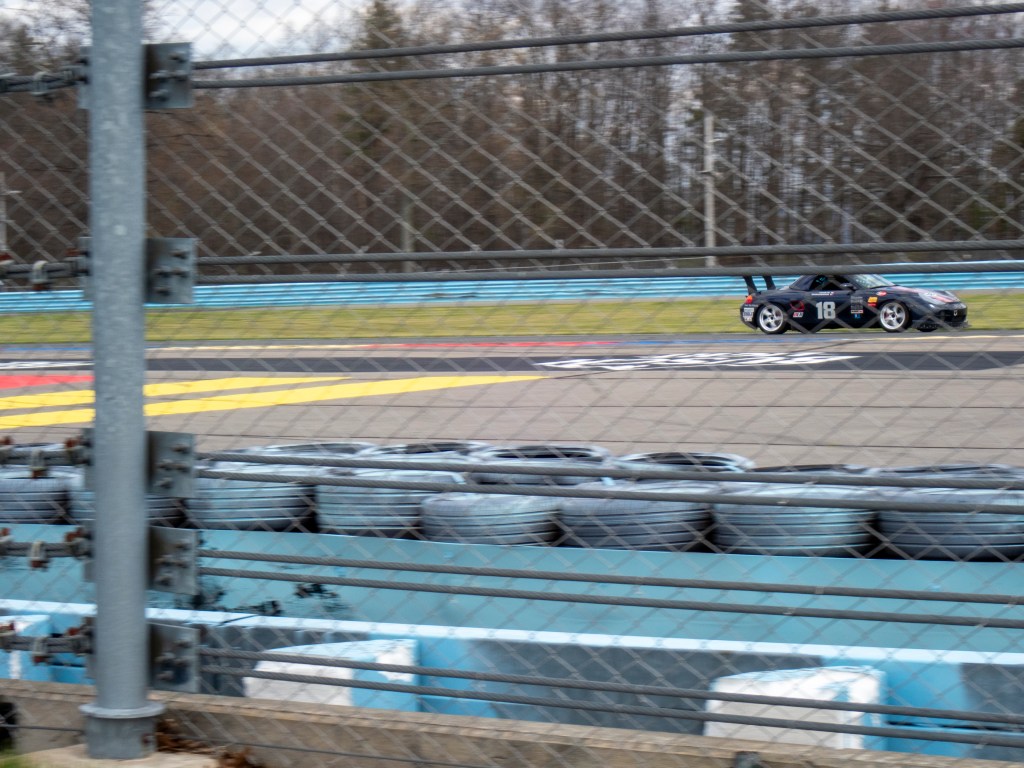
As morning turned into early afternoon, we were running out of options. There’s only so much you can do in a garage at a race track and only so much knowledge either of us have in any event. To be sure, some teams were having an even worse time than we were. Mechanical issues are one thing and there were plenty of those. There are always plenty of those, to be sure. In the garage across from us, a team that brought two cars was having a hard time keeping them on the road and throughout the day various other cars would stream into the garages for various amounts of time during which people hoping to keep racing to start crawling all over them, frantic for a fix. There is a league text messaging service that posts announcements for who needs what part or what tool, and frequently they get the help they need even if they seem obscure, but the worst thing a mechanical problem can do is force you to call it quits. At least the car is likely to be fixed in time for the next race and hasn’t experienced any permanent damage. Wrecks, however, are quite another, and Watkins Glen in particular is known to eat cars, being both extremely fast and extremely tight. Unlike most tracks, there is practically no run off, that is the infamous light blue walls run right up to the racing surface like you were in a tunnel or an F1 street course, daring you to get as close as possible. If you spin or put even a single wheel out of place, there’s a pretty high chance you’re crashing, forget what happens if you collide with another car, a not exactly infrequent occurrence across eight hours of racing. It’s also very fast, one of the few tracks where even with a relatively low power car like our 1999 Porsche Boxster with a 3.2 liter engine from 2002, good for around 230 horsepower, you’re regularly moving at over 100 miles per hour, hitting at least 115 three times, and close to 130 once.
By noon on Saturday, there had already been several wrecks including one car significantly damaged and another completely totaled. We might not have been racing, but it could’ve been worse and in racing, it could always get worse. At the same time, it wouldn’t be accurate to characterize either of us as frantic or desperate despite staring down a blown weekend. My brother and I aren’t exactly your typical racers. To us, a racing weekend is half actual racing and half a vacation. Where other cars will have three or even four drivers and most also have some kind of pit crew, it’s just me and him with my wife and our mother stopping by at the end of the day to cheer us on and help out where they can. We do not have anything near a full team that could actually compete, nor do we really want one. Previously, I’ve described us half-jokingly as the league’s mascot. When I went out onto the grid to start the qualifying race, one of the league officials who has known us for years actually joked, “Panda’s going to start a race?” I laughed and replied, “Yes, the new afternoon format for qualifying means we don’t have to miss our morning massage.” Most of the time, we aren’t even at the track when the race starts and we haven’t been to a supposedly mandatory drivers meeting in close to a decade. While we are certainly serious enough behind the wheel – you have to be – we’re not there to win. We’re there to have fun, get as much time in the car as possible, hear the mid-engine boxer six cylinder screaming behind us as it was meant to do, feel the momentum as the car powers through turns much faster than should seem possible, and bring the car home in one piece. If the racing gods, who are notoriously fickle, do not shine us on any given weekend, so be it, who are we to argue?
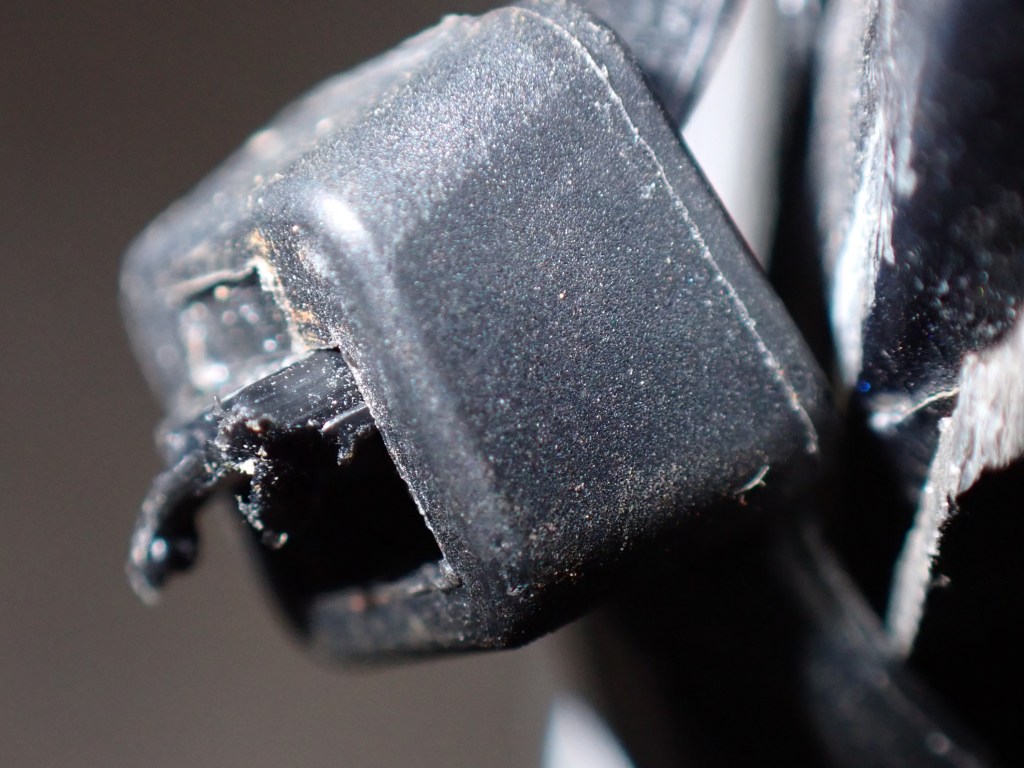
This didn’t mean we weren’t eager to get back out there or be disappointed if we couldn’t, and as fate would have it this time around, the car was up on a lift while we were performing one final, seemingly hopeless to check before declaring the weekend over, allowing me to note that the left side of the front splitter had come loose, creating a little, seemingly innocent enough gap. About an hour earlier my brother had wondered whether the strangeness of the issue could be due to aerodynamics somehow, given that it only occurred at a certain speed and there are few things other than air that behave that way, but at the time, we had no idea how that could be. Why would air be getting up underneath the dashboard of all places especially when we hadn’t changed anything about that aspect of the car in years? Could air really cause the dashboard to buck in place like it was trying to tear itself apart? While it was possible we’d found the culprit, I’m not going to claim either of us was hopeful in the moment itself. Instead, we figured we might as well fix it as best we could and give it another try, but the splitter was loose because a small piece of metal had broken and there was no way we were going to get a replacement in time. The only solution was to jerry rig it with zip ties and duct tape, yes a little strip of what appears to be cheap plastic and the familiar product from every home, and so we tied down the left side piece and then taped up the gaps across the front as best we could. While this may seem rather strange to someone who has never been racing, you’d probably be amazed at what problems can be solved, at least temporarily, with the combination of the two. No one who has done this more than once arrives at the track without an ample supply of both, and everyone who’s been to a few events has likely driven a car with some part held on by figurative spit and glue. Would it work for us was the only real question? After the hasty repair, I headed back out onto the track to check, but here I should remark on another under appreciated aspect of racing: More often than anyone would like to believe, you have to turn a couple of laps in a car that might well be damaged beyond repair while the other cars are going full tilt.
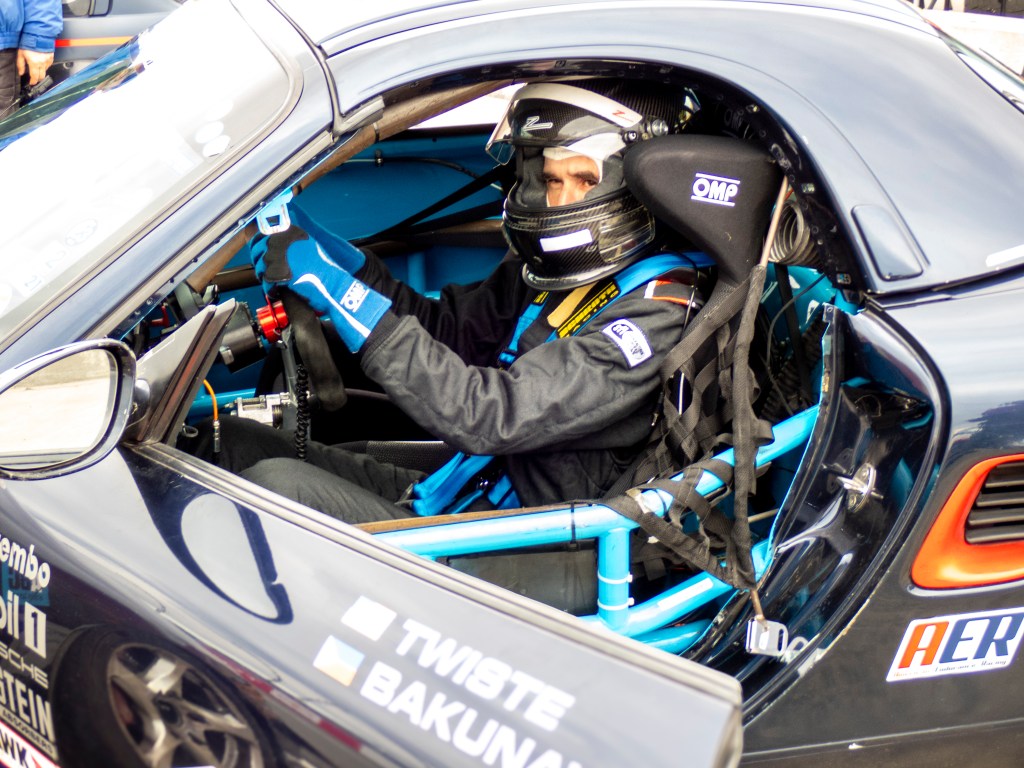
As I exited the pits and ascended the esses – a stretch of track where cars are going over a hundred miles per hour while turning right, then left, the right again – up hill – and the guard rails are so close a passenger could reach out and touch them – I had no idea what was going to happen, nor did the other cars have any idea that I was simply out there to test a fix that might or might not work. All one can do is hope they’d realize I was going a little slower than I should’ve been, hope that I had the situational awareness to spot any of the really fast cars coming up on me like rockets and avoid accidentally getting in their way, and hope that nothing else went wrong along the way. While I have been racing wheel to wheel since 2015, even under the best conditions there’s usually a moment when I first get out onto the track, when I wonder to myself what the freak I’m actually doing. To put this in perspective, a race car isn’t like a road car. You aren’t wearing regular clothes. Instead, you’re covered from head to toe in three layers of fire retardant material known as Nomex, heavy stuff that makes you start sweating after a short time even when it’s barely 40 degrees. You’re wearing a helmet and your neck is bound to your shoulders by a restraint because the weight of the helmet alone can snap it like a twig in even a non-high speed collision, and indeed famous racers have died from exactly that including Dale Earnhardt. The Head and Neck Restraint, or HANS for short, will save your life, but it limits your ability to look left and right beyond a few degrees and that’s far from the only obstruction. The seat itself has huge bolsters that line up roughly with your eyes, meaning that if you could look around normally, you wouldn’t be able to see anyway. On the driver’s side, there’s also a netting to prevent a limb from flying out of the car in a crash, making it so you can barely see the side view mirror much less anything smaller than another car. Otherwise, you are strapped in to tight in a harness across your shoulders, waist, and groin, you can pretty much move only your arms and legs. Of course, there are no lanes or any of the regular rules of the road. The faster cars blow by you from both sides, and while technically they aren’t supposed to get in your line as they do so, whether or not the other car was at fault, a wreck is a wreck regardless. The slower cars might not be as fast, but that presents its own challenges because they are closer to you for longer, creating more of an opportunity for an incident. Either way, there are cars everyone in what seems total chaos at first.
I’m not sure about anyone else, but before I come up to speed and settle in, getting into the rhythm of changing gears and feeling once again how fast thing can go, how hard it can brake coming into a tight turn, how close to the wall you can get, how that chaos can be controlled for at least a little while, I’ll admit it’s more than a little intimidating, much more so when there might be a problem with the car that could conceivably contribute to an incident. As you might have guessed at this point, we got lucky on Saturday afternoon. The zip tied and duct taped splitter completely resolved the issue. After a couple of laps, I headed back to the garage – unlike most teams, we do not have radios, mainly because reliable ones cost thousands of dollars – and gave my brother the thumbs up that we seemed good to go before completing my stint. The astoundingly pleased look on his face, somewhat surprised yet undeniably excited that our weekend was suddenly just beginning was probably worth the entire trip, but we didn’t stop there. We finished the race on Saturday – a far more frequent occurrence than starting it, but still no mean achievement when your car has had issues that very day – and then on Sunday I completed a thousand laps with this league, American Endurance Racing, shortly before completing the race for the second day in a row. Full disclosure: My brother was tearing it up in our car, about 2.5 seconds faster than me when we are usually a little closer together, but it didn’t matter. Both of us were much faster than the last time we raced at Watkins Glen in 2019 and we ended the day with a little awards ceremony on victory lane, capping one of our best weekends to date. I’m not sure if it would’ve been better if we didn’t have the issue in the first place, but certainly overcoming it with zip ties and duct tape added something to the experience and a valuable lesson for all things in life: Sometimes, you aren’t going to get perfection. You might just be able to keep going with a little grit, determination, spit and glue, and that just might be enough.


That seems like a crazy thing to me–racing for fun. But I get the duct tape fix. My brother had a saying , if it can’t be fixed with duct tape, it can’t be fixed.” Back in the day, we had a saying for such fixes, which would get one in a lot of trouble today. Also, my first ride was a 46 Whilly’s Jeep – and man was it something keeping it on the road. (I was a 4-wheeling freak.) One fix would be, when a fuse blew (not uncommon) was to wrap the fuse in tin foil. that would get you home. 🙂 Love these side-bars. Or off road trips.
LikeLiked by 1 person
Hahaha! My wife certainly thinks I am insane and to be sure, I never really had a plan to race for real myself. I was into cars since I was a kid, sold them in high school and college, but never considered performance driving until my brother found a track near us in NJ with an inexpensive little school. I did that in 2012, but still didn’t think of actually racing. In early 2015, some guys we did the open track with decided to start a team. My brother joined first, then they asked me. I remember my wife saying it’s freaking nuts. No way you can seriously do it. I said to her, I’m a red blooded American man. How can I possibly turn down a seat in a race car?
I ran three races in a 1986 BMW, then my brother got the Boxster in 2016. Ironically, I am not really an adrenaline guy either. Don’t get me wrong, I love driving itself and there is certainly a thrill to it, but I also just love the car and the overall scene. There’s always something happening and you learn a lot — not just how to use zip ties and duct tapes — but I never thought I could change the tires, the brakes, or figure out any of these mechanical issues until forced to.
For me, my first ride was a 1979 Firebird. 🙂
LikeLiked by 1 person