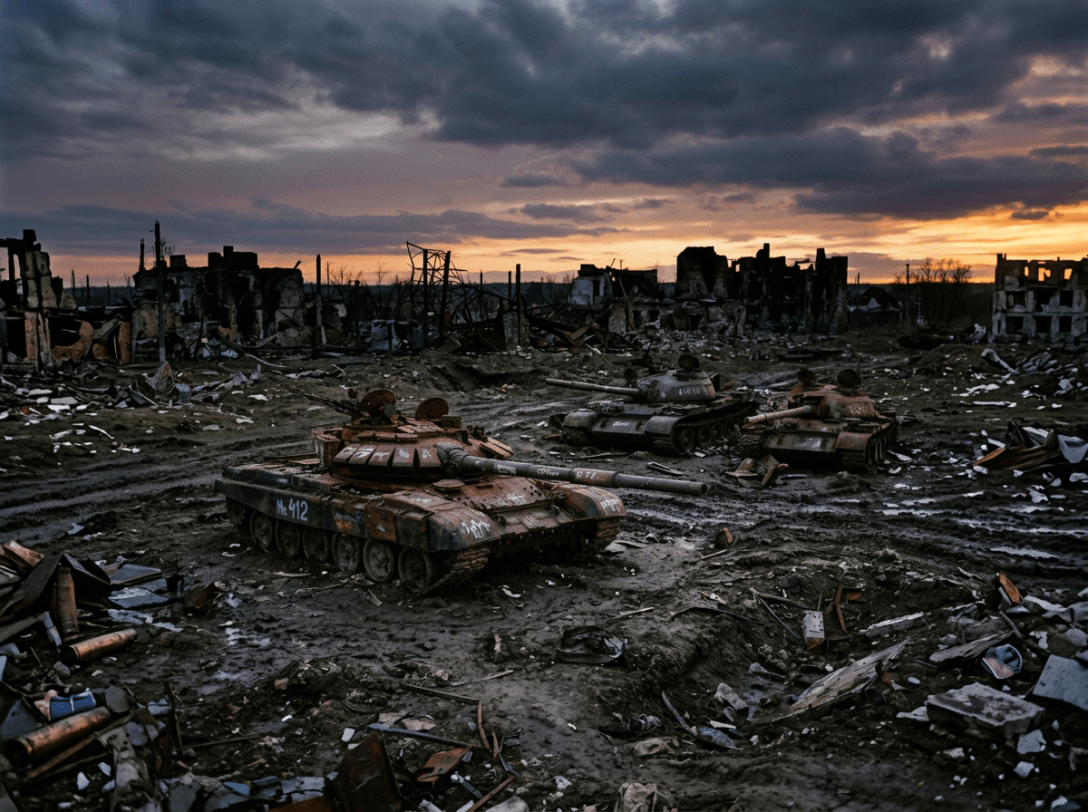
The war has entered a sort of slow moving stasis rather than anything resembling the frenetic pace of the first five weeks and time is running out to pivot to the midterm elections.
I’ll admit it upfront: I didn’t expect the Iran War to devolve into a non-ceasefire ceasefire for almost a full month. While I was never one to conclude full on Iraq-style regime change was essential and I expected the war to end with a shaky peace, perhaps after another round of combat operations, leaving major issues to be worked out over time, I didn’t think it would enter a prolonged period where nothing seemed to be happening, at least overtly. At the time, it seemed to me that there was simply too much at stake across the global economy for the rest of the world to leave the Strait of Hormuz either in Limbo at best or up to the whims of the remnants of a rogue regime at worst. The combination of international pressure on Iran from even key allies like China, which relies more on the Strait than the United States and is much more dependent on oil following through the Strait than we are, plus Iran itself deciding that pursuing simple self preservation, living to fight another day if they so chose in the future, was the best option available, would result in some kind of agreement over the Strait, nuclear weapons, and ballistic missiles at a minimum. Instead, the failed peace talks in Islamabad, Pakistan on April 10 and 11 led to the implementation of a blockade on Iranian ports followed by what appears to be a short lived mission to guide if not outright escort ships through the Strait followed by another series of virtual talks over the same issues that derailed the original ones. While those sitting at home, safe behind our computer screens do not have access to what’s happening behind the scenes, something certainly seems to be off. Somehow, the Strait isn’t the only thing left in Limbo. The entire conflict has entered a sort of slow moving stasis rather than anything resembling the frenetic pace of the first five weeks and at least to those of us not in either the Administration or the regime, the end no longer seems imminent or even obvious.
To be sure, this doesn’t mean that the last four weeks have been a total disaster or that the world isn’t already adjusting. While oil prices remain elevated as a result of the ongoing hostilities in the Strait, they have not continued to increase as some of the experts insisted and beyond the Strait itself, the ceasefire has mainly held. We have not directly attacked Iran since April 8, nor have they directly attacked an American base or outpost. Similarly, Iran has generally refrained from attacking neighboring countries in the region during this period (though they did strike the United Arab Emirates recently), resulting in the sort of uneasy calm one might expect in the eye of a strange storm. Nor has the Trump Administration remained idle in other areas. During this period, the President succeeded in brokering a ceasefire between longstanding adversaries Israel and Lebanon, further isolating Iran and cementing the radical changes in alignment that have swept the region, turning foes into potential allies. While it’s unclear if the decision was directly related to the war or the Administration, the United Arab Emirates itself departed the OPEC cartel as of May 1, and has promised to increase oil production, at least partially offsetting the tankers snarled in the Strait. In the US, oil production has also surged to a record. As CNBC put it earlier this week, “The Port of Corpus Christi has never been busier as tankers from around the world flock to the U.S. Gulf Coast to load up on crude oil during the Iran war. The Texas port was the third-largest oil export terminal in the world before the war behind Ras Tanura in Saudi Arabia and Basra in Iraq. Its importance has only grown since, as U.S. crude oil exports have surged to a record and the two big Persian Gulf ports are largely cut off from the world due to Iran’s blockade of the Strait of Hormuz. U.S. oil exports have jumped to 5.2 million barrels per day (bpd) in April, a more than 30% increase over the 3.9 million bpd exported in February before the war, according to data from Kpler. March was the busiest month in the history of the Port of Corpus Christi, and the first quarter was its busiest quarter ever, said CEO Kent Britton.” Venezuela, where the United States successfully captured socialist President Nicolas Maduro in early January, also appears poised to rapidly increase production far faster than the experts had previously estimated, complete with new investment from Chevron and other major companies.
Diplomatically, President Trump hosted King Charles III and Queen Camilla of England last week in what was widely regarded as a hugely successful visit. Despite claims the visit might not happen in the first place because of the war and an going tit-for-tat feud between British Prime Minister Keir Starmer and the Administration, the royal couple was hosted in the highest possible style at the White House and the overall feeling between the two leaders and their spouses was warm and cordial to the point where both were joking about past conflicts. While CNN maintained their default position that no credit can ever be given to President Trump personally, they generally raved about the trip overall. “King Charles III came to the United States to mark Britain’s loss in the war of independence. He left with an historic win. The 77-year-old monarch faced a number of possible pitfalls from a bombastic US president known for creating controversy and generating headlines at the lowest moment for US-UK relations in modern history. But Charles showed he could deliver a message of unity and celebrate the ‘eternal bond’ with America as it marks its 250th birthday, while at times disagreeing with its president and even cracking a few jokes.” The King also addressed a Joint Session of Congress, only the second monarch to do so, delivering what CNN described as a “bold address.” “The actions of this great nation matter even more,” he said. “President Lincoln understood this so well, with his reflection in the magisterial Gettysburg Address that the world may little note what we say but will never forget what we do.” “The speech was a high-stakes diplomatic moment,” CNN noted, “but he was met with a warm and bipartisan reception and received several standing ovations. Many read it as a judgment on the presidency, but Trump heralded the speech at a grand state dinner at the White House later, saying the King had ‘made a great speech. I was very jealous.’” “He’s a great king, and he’s a great friend of mine. And I think if he were doing that, if that were up to him, he would have probably helped us with Iran. He would have followed the suggestions we made with respect to Ukraine,” the President gushed, claiming he was “the greatest king” while delivering his farewell to the royal couple. He even removed some tariffs on whisky from Scotland, and who can forget the instantly meme-worthy photo of the President with a bee on his hand while the First Lady looked on the sort of shock and concern familiar to almost every husband and wife on the planet?
Regardless, the conflict lumbers on and while that might not be an issue in principle on many levels, the increase in gas prices represents a mortal threat to President Trump’s Presidency in particular and Republican prospects in the November midterm elections generally. As I have been saying since last summer, if the public feels the walls are coming off the economic cart much later than Memorial Day, they will punish the party in power. Overall, the President has seen his polling numbers on the economy and inflation crumble to levels lower than his much-maligned predecessor, and the Republicans remain behind in November. The war needs to end to have any hope of changing that dynamic, at least in my opinion, but how to do so after four weeks of rather freaky stasis? Some have been questioning why the President has gotten more aggressive, effectively restarting the conflict by launching further attacks inside Iran. While it’s certainly a reasonable question, it’s also unclear what else we could hit without causing major damage to critical infrastructure that could further jeopardize oil supplies and based on the damage we’ve already done to their military and leadership, might not be effective in any event. The President, at least, appears convinced the blockade, which he’s described as “genius,” is the best path forward and there seems a reasonable argument to be made there as well. In addition to being relatively low cost and minimal risk, the blockade has the benefit of making Iran pay the costs for closing the Strait, the same as everyone else. Before the effort was in place, Iranian allied ships enjoyed close-to free passage, meaning Iran kept making money and its allies kept being supplied with oil, but now, Iran is losing tens of millions per day and running out of places to store the excess production. According to CNBC, their economy is in freefall as a result. “The effective closure of the Strait of Hormuz and the U.S.’ subsequent blockade have cut off most of Iran’s international trade, including oil exports. More than 90% of its annual trade passes through the strait. Renewed strains amid the U.S. blockade could cut off 70% of Iran’s export revenues, Jason Tuvey, deputy chief emerging markets economist at Oxford Economics, wrote in an April 15 note. The war has also triggered a collapse in domestic demand and imports, Tuvey said, adding that while official data are scarce, trade figures for March from trading partners showed exports to Iran have plummeted…The combined pressure of the blockade and the threat of sanctions on Chinese banks supporting Iranian oil trade may be dealing a more severe blow to Iran’s economy than many anticipated, said Robin Brooks, a senior fellow at the Washington-based think tank Brookings Institution” “It shuts down one of Tehran’s main lifelines, and brings forward the point when Iran’s balance of payments hits a wall,” he added. “The efficacy of this blockade and the fear it instils in Iran will [likely] bring Tehran back to the negotiating table in good faith.”
Though this is probably true, the question becomes how much time it will take, especially knowing President Trump and his fellow Republicans are rapidly running out. Personally, it seems like something more needs to happen to force Iran to accept something close to our terms and as of Monday, it appeared the Administration was in agreement. Announced the evening before, Operation Freedom was supposed to work in tandem with the blockade to open the Strait to friendly traffic and shortly after, at least two ships successfully made it through, suggesting that more could follow. While the operation stopped short of providing an actual escort, Navy ships were going to be close by vessels at all times and the US would provide information on safe routes. According to US Central Command, the effort was supported by “guided-missile destroyers, over 100 land and sea-based aircraft, multi-domain unmanned platforms, and 15,000 service members” As late as Tuesday morning, Secretary of War Pete Hegseth claimed it was a success that served to embarrass Iran by demonstrating they really didn’t control the Strait as they claimed. “We know the Iranians are embarrassed by this fact,” he said during a press conference. “They said they control the strait — they do not. So, American ships led the way, commercial and military, shouldering the initial risk from the front — as Americans always do. Right now, hundreds more ships from nations around the world are lining up to transit.” While this strikes me as true and me along with many others have been claiming that Iran’s control over the Strait has been overstated since the beginning of the war, the statement only made it doubly strange when President Trump abruptly announced that the operation was at least temporarily paused that very same evening. “Based on the request of Pakistan and other Countries, the tremendous Military Success that we have had during the Campaign against the Country of Iran and, additionally, the fact that Great Progress has been made toward a Complete and Final Agreement with Representatives of Iran, we have mutually agreed that, while the Blockade will remain in full force and effect, Project Freedom (The Movement of Ships through the Strait of Hormuz) will be paused for a short period of time to see whether or not the Agreement can be finalized and signed,” he wrote in a post on Truth Social.
Obviously, he knows more than me and there are reports that a deal is close, but what sense does it make to let up the pressure before a deal is formalized, when the goal should be to assert maximum pressure until then, especially based on Iran’s long history of using stop and start tactics to delay negotiations, forget actually conforming to a deal once it’s signed? There are claims that Iran will respond to a potential deal as soon as today, and that some of the timing is being driven by China where the Iranian Foreign Minister has recently made a trip and where President Trump is expected to make a trip next week. If that’s the case, it’s certainly possible the stasis that’s pervaded for the last month will suddenly be broken. Whatever the case, something needs to happen and it needs to happen soon.


