The irony of progressives sneering at Mr. Musk for doing what has never been done before while the governments they control and on whose behalf they advocate for cannot get the job done on time or budget should be obvious.
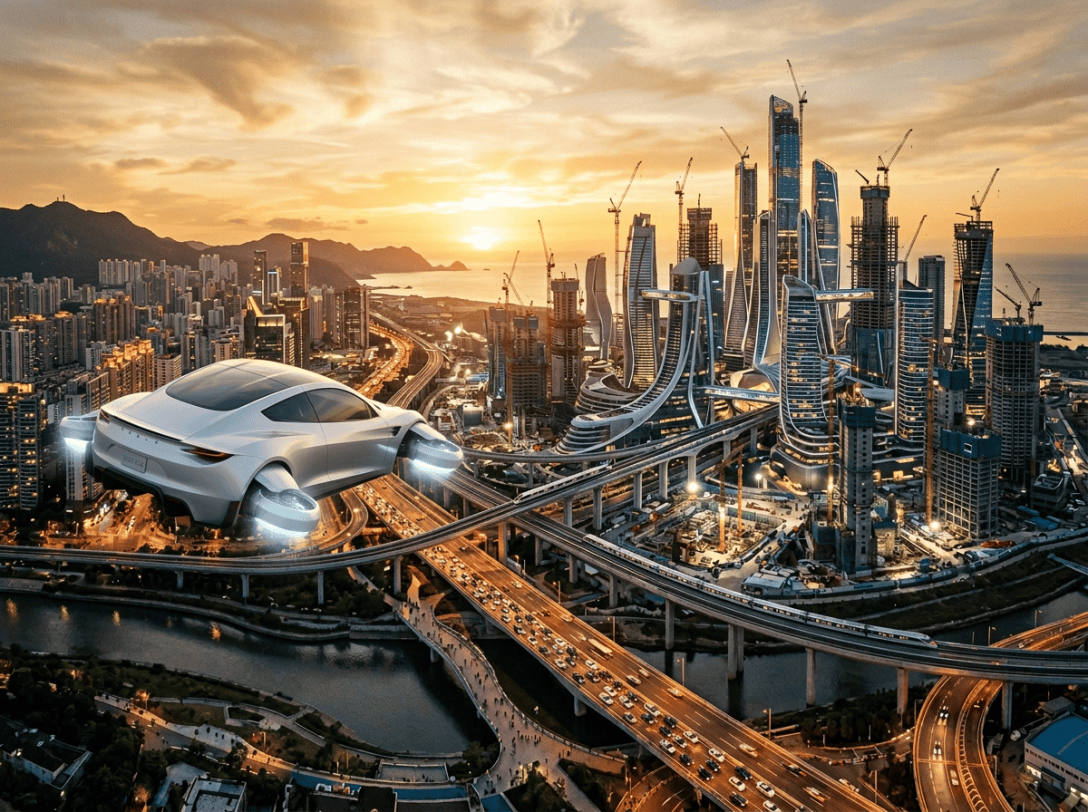
Last month, Elon Musk stunned the world with the Tesla Roadster, a sleek, two seater car equipped with gas jets, rockets, and a suction fan that can fly and cling to walls for short periods. At the SpaceX test facility in McGregor, Texas, engineers built a loop that curved up from the ground, rising some 66 feet into the sky straight out of a child’s Hot Wheels set. Much to everyone’s amazement, the prototype car proceeded onto the loop, drove about half way up until it was perpendicular with the ground and then just stayed there, clinging like an insect on a wall. Ultimately, the Roadster travelled all the way to the top, leaving it completely upside down and after remaining there for a few seconds as well, launched itself into the air, performed a flip, and landed smoothly on four wheels, driving away as though it were an ordinary street. As if that wasn’t enough, the Roadster almost immediately went on to fulfill another childhood dream, Knight Rider’s famous or infamous Turbo Boost. This time, the car approached a line of Tesla’s other vehicles, including the upcoming semi-truck, and launched itself right over them on puffs of compressed air, then did another kick flip for good measure. During this display, Mr. Musk and his team revealed a number of incredibly impressive stats, describing how the car combined an electric motor, compressed gas rockets, actual rockets, and a fan to keep it glued to the ground. The suction fan can produce up two g’s of force on its own to overcome gravity and the combination of the electric motor and rocket propulsion can launch the car to 60 MPH in under a second, the sort of numbers even multi-million dollar hyper cars from automakers such as Bugatti, Lamborghini, and Ferrari can’t match.
While most of the world was rightfully amazed, at least some were less enthused, claiming the world’s first and only trillionaire was either engaging in parlor tricks to distract from abusing his workers, or wasting his money developing technology nobody needs or wants when he could be feeding the world or something. Of the former, the website autoevolution.com complained, “If there is one thing that Elon Musk has become famous for, apart from amassing a huge amount of wealth, is the downright supernatural talent he has for convincing people he is a genius and a messiah of technology.” In fact, “The theatrical launch event is a bit antithetical to what workers who have been building Tesla’s actual production vehicles experience in the company they work for…Over the years, numerous Tesla workers who raised concerns were apparently required to sign confidentiality agreements that allegedly threatened consequences if they exercised their rights to speak out about wages and/or working conditions. On top of it some workers’ contracts were even terminated as a direct consequence of them participating in strikes. In 2024, the UAW filed federal labor charges against both Donald Trump and Elon Musk for their attempts to threaten and intimidate workers who engaged in protected concerted activities, such as strikes.” Otherwise, “the entire launch event was nothing more than a very expensive commercial for a product that does not yet exist, built by a car company that isn’t one, led by a person who is allergic to truth. I don’t know about you, but the most shocking part for me is how there are still so many people worshipping all this circus and its clowns.” Dr. Dave, a psychologist with over 50,000 followers on X somehow connected it to President Donald Trump and other recent events in the news, “Some Americans not only voted for Trump repeatedly— despite voluminous evidence that he’s a demented, fascist monster— but are driving Teslas, even though Musk’s a fucking Nazi who sabotaged Ukraine’s ability to protect itself from Russia. Hell won’t be sufficient punishment.”
Last week, the city of Los Angeles and perhaps the entire state of California along with much of the progressive movement embarrassed itself by announcing yet another delay in the opening of a simple people moving train at Los Angeles International Airport. The LAX SkyLink, as the system is known, should be a relatively non-controversial 2.25 mile elevated transit system that connects the Central Terminal, the Intermodal Transportation Facilities, and the Consolidated Rental Car Center to ease congestion around the airport, which is said to be so extreme getting in and out can take more than a half hour. Though the project originally broke ground in 2019 with a planned completion date of 2023, it has yet to be opened to the public and is now expected to take until at least next year, prompting even the normally sympathetic LA Times to quip, “Almost eight years, and the train has not left the station. It’s the little engine that can’t. The people mover that doesn’t.” Perhaps needless to say, costs have exploded in addition to timelines. Originally budgeted at an eye opening $1.9 billion – almost $850 million per mile – the project is expected to exceed $3.3 billion, and equally needless to say it has been plagued with embarrassing problems including lawsuits complete with grand jury investigations and technical debacles. Most recently, a test of the train produced what appeared to be an explosion on the track, known as an “arc flash.” As described by The New York Post, “Footage obtained by Fox LA from late September shows a massive electrical blast followed by fire and smoke on the tracks amid a test run of the highly anticipated train. People-mover expert Timothy Borchers said the incident is called an arc flash, or flashover, which results from electrical issues relating to the path of the electrical current. Borchers said the video was concerning.” “This is one of the most severe flashovers I’ve ever witnessed,” he told the network. “It could lead to a potentially catastrophic electrical incident.” “This is an embarrassment, by all means,” explained James Moore, emeritus engineering professor at USC. “Should it have taken this long? No,” he continued, but “when anything goes right in Los Angeles, that’s when I’m surprised.”
To put this in perspective, Walt Disney, inspired by a train he saw in Europe, built the original monorail in less than a year way back in 1958, prompting the Times to ask whether the city simply should have hired them. “Tell me about it,” said Los Angeles City Councilmember Monica Rodriguez, “who noted that Disney imagineer Bob Gurr, who helped design the monorail and other iconic Disneyland attractions, lives in her district.” The outlet actually contacted Mr. Gurr himself, who at 95 years old still appeared to be abreast of the news and in command of his faculties, though he said he would not be willing to help under any circumstances, noting “Some of the technical details don’t look so good,” and quipped himself, “I’m holding my breath on that train.” Regarding the legal issues, a “grand jury report [went] into great detail about an arrangement in which L.A. World Airports awarded designing, building and operating authority to a private contracting consortium called LINXS, for LAX Integrated Express Solution…The grand jury found no criminal activity on anyone’s part, but you’ll be shocked to know there was a considerable amount of eyebrow-raising behavior. The contractor has sued the city, blaming it for delays, but the grand jury suggested it was the contractor who caused the delays, essentially holding out for payment of $550 million in settlement claims.”
Perhaps if this were the only project in the city or the state plagued with these sorts of embarrassing delays and massive increases in an already bloated budget, we might consider it an outlier. Unfortunately, the same exact thing is unfolding elsewhere. Last week, construction began on the Van Nuys-Pacoima light rail line five years behind schedule, during which the costs increased from $1.3 billion to almost $4 billion. As the Times put it, “It’s like every other major public project in L.A. and beyond. They come with no firm starting time and no firm completion date, and the only two guarantees are that the tab will keep growing, and when the job finally is complete, public officials will take bows at the ribbon cutting.” At the state level, the picture might be even worse. Way back in 2009, President Barack Obama crowed about funding a high speed rail project that would connect Sacramento and San Diego, but almost twenty years later, not a single mile of completed track has been built. So far, only 119 miles are under “active” construction – out of a planned 494 miles in Phase 1 alone – with only 80 miles of “structural guideway” in place, consisting of about 60 major structures including highway and railway separations and aqueducts. As The Wall Street Journal described it in August, “Some 18 years after California voted to launch a bullet train that would travel between San Francisco and Los Angeles in under three hours, the project now costs billions more than planned, is years behind schedule and has yet to lay its first track.” Even at this late date, there is no firm completion timeline for even this small portion of the imagined project, merely a target of sometime in the next ten years. There is also no known start date or end date for Phase 2. Not surprisingly, costs have exploded over this period with the full project expected to run an astronomical $126 to $231 billion, up from the $33 to $45 billion estimate originally approved by voters, meaning it might cost more than five times as much as planned. On top of that, the chief executive of the authority responsible was recently forced to resign for misusing $600,000 in travel expenses.
When you consider that Europe, Japan, and even China had successfully completed high speed rail projects long before this one even began, it becomes even more embarrassing. In one sense, this should be surprising even for the government. To be eighteen years into a project that’s already been proven and has no end date in sight is shocking on its own, as is LA’s inability to build basic people movers that are already in place around the world. In another, however, this is fundamentally the way the government works in the modern era, especially when progressives are in charge, but you don’t have to take my word for it. As progressive journalist Jonathan Chait recently noted, efficiency and accountability isn’t the point of any of this, or as he put it “efficiency creates tension with progressive interest groups, which generally care less about maximizing taxpayers’ bang for the buck than maintaining secure jobs and high wages for public employees.” The irony of progressives sneering at Mr. Musk for doing what has never been done before, pushing automotive technology forward at likely a lower cost than even building a basic monorail (estimates put development of the Roadster at $2 to $3 billion) while the governments they control and on whose behalf they advocate for cannot get the job done on time or budget should be obvious. What might be less obvious, but no less important: When Democrats advocate for government run healthcare and government run everything else, the end result will be the same. There will not be some magical efficiency in these programs while others flounder; there is no reason to believe the government would be better at one thing than another. Indeed, there will be nothing between them except beyond wasting tax payer dollars, your life might just waste away.


