Complaining about prices and blaming President Trump is one thing, but actually doing something is quite another, and in this regard, Democrats simply aren’t saying and the media is rather bizarrely uninterested in the plan.
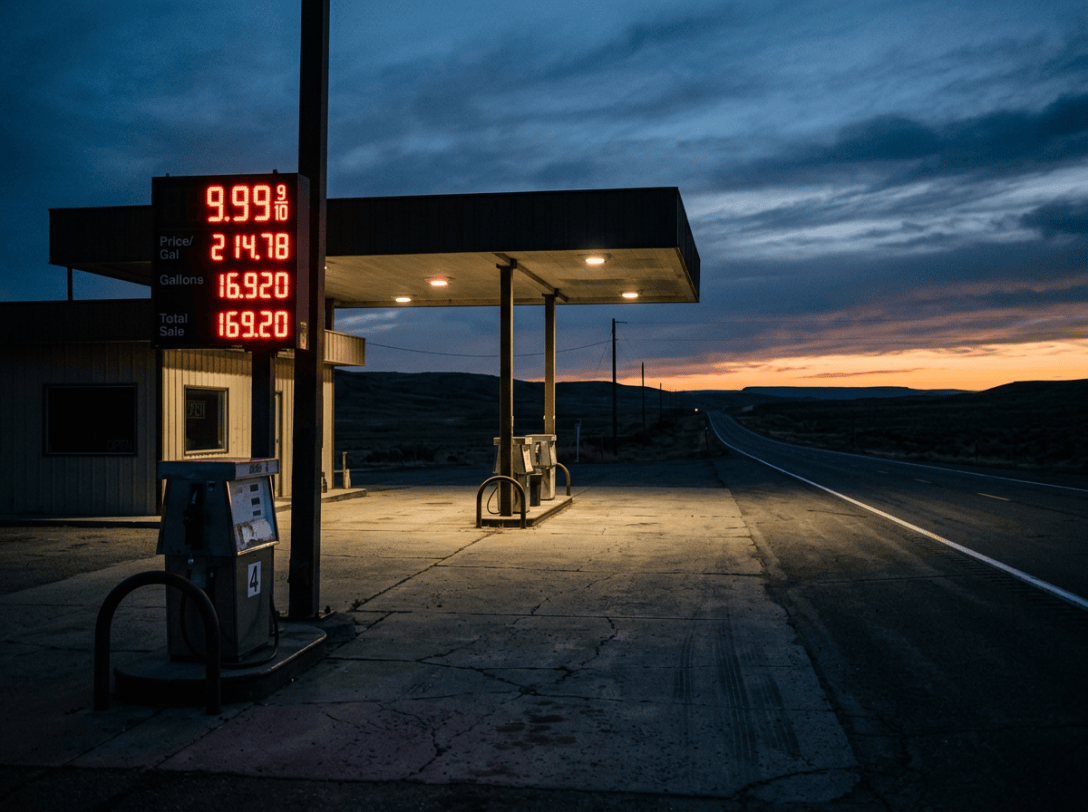
As everyone knows by now, gas prices are high and for far too many people, the elevated costs are putting a strain on their budget and contributing to an increase in inflation. According to AAA, prices currently average $4.3667 per gallon for regular, $4.8891 for mid-grade, $5.2804 for premium and $6.3015 for diesel as compared to $3.1214, $3.6169, $3.9741, and $3.6803 a year ago respectively, representing an increase of almost forty percent over just twelve months, a not insignificant jump by any means. Everyone also knows that the increase is largely President Donald Trump’s fault, responsibility, or whatever you would like to call it for choosing to engage in hostilities with Iran on February 28, escalating what had been a slow-simmering war, conflict, or whatever you want to call it since 1979, into a truly hot war for the first time and prompting Iran to threaten traffic in the vital Strait of Hormuz. While this is largely true, part of the reality all of us are dealing with, taken in isolation in tells us precisely nothing about where these prices lie in the historical context, how they compare to the expectations from the experts when the conflict in Iran began, and what are the best means to reduce prices back to levels beforehand. In other words, it’s merely a talking point, one that is true, but entirely incomplete, especially in the context of an election where voters are being asked to choose between candidates, and if the media were remotely interested in educating the public rather than effectively proselytizing for one party over another, a lot more information would be provided to make an informed decision.
For starters, as high as gasoline prices seem right now they were in fact, higher in adjusted dollars not once, but twice under Democrat Presidents. Given that inflation is all the rage and the reality that prices generally rise has been positioned as some radical new discovery, one might think it important to note that in 2008 into 2009 prices for regular averaged between $5.10 and $5.30 per gallon in adjusted dollars (some stats put this over $6), almost 20% higher, and in 2012 they hit another record at $5.22 per gallon, followed by yet another high of $5.40 per gallon in 2022, which is largely considered the record. Thus, by any honest assessment gas prices are high today, but they have been higher by a significant amount in the past and yet for some inexplicable reason they weren’t used back then to define the merits of an entire Presidency and political party. Instead, they were positioned generally as a fact of life, beyond anyone’s control. Under President Obama, the Republicans were certainly critical, but the media and think tanks, not so much. In 2012, Politico actually claimed that Obama had successfully “fend[ed] off energy criticism.” Rather than questioning what he was doing to lower energy prices, they almost immediately quoted his political spin that green energy was somehow an answer. “Whether you’re paying for a plane ticket, or filling up your gas tank, technology that helps us get more miles to the gallon is one of the easiest ways to save money and reduce our dependence on foreign oil,” he claimed in his weekly address to the nation at the time without bothering to mention what that technology was beyond government hand outs and mandates. “The recent spike in gas prices has been another painful reminder of why we have to invest in this technology,” he added. From there, Politico launched into a list of policies that had nothing to do with the price of oil, “He recounted his trip to North Carolina Wednesday, when he announced a set of proposals to spur clean-car ownership and technology, including investments in research and development, expansion of tax credits for buyers of alternatively fueled vehicles and the launch of a $1 billion grant competition to prompt communities to develop infrastructure to support such vehicles.”
Ultimately, they closed what can only be called a puff piece with the President’s belief that Congress was the real problem. “I want this Congress to stop the giveaways to an oil industry that’s never been more profitable, and invest in a clean energy industry that’s never been more promising,” he said. “We should be investing in the technology that’s building the cars and trucks and jets that will prevent us from dealing with these high gas prices year after year after year.” At no point did they bother to note that as a candidate, the future President went on record claiming the problem was not the high prices, that was indeed a good thing in his view because it would force the transition to renewable energy, but instead how quickly they rose. If anything, the supposedly libertarian CATO institute was even worse. Their experts, such as Peter Van Doren insisted the high prices simply weren’t the President’s fault and that no decision he made, such as denying the permit for the infamous Keystone XL pipeline, had anything to do with the spike. “The hardest thing to get across to the public is that discussions about lower cost sources of anything in commodity markets are irrelevant to market prices, as long as you need anything other than zero of the highest cost thing that you’re currently using,” he claimed. A similar story played out under President Joe Biden. Though prices hit record highs that have not been broken in adjusted dollars, The New York Times claimed “Republicans Wrongly Blame Biden for Rising Gas Prices,” writing that “the specific policies cited by Republican lawmakers as evidence of Mr. Biden’s supposed ‘war on American energy’ have had little impact on rising gas prices.” Instead, “the primary reason for rising gas prices over the past year is the coronavirus pandemic and its disruptions to global supply and demand,” and “Russia’s invasion of Ukraine has only compounded the issues.” Once again, there was no mention of what President Biden could’ve, much less should’ve done to lower prices, nor the incredible fact that when his Energy Secretary was asked what the Administration was doing to increase drilling, Jennifer Granholm flat out laughed in a reporter’s face, “Oh my gosh. That is hilarious. Would that I have a magic wand on this,” suggesting clearly that Americans were screwed and they should simply accept it.
Today, it’s also a valid question as to how screwed. When the Iran War began in February, the experts almost universally insisted there would be a global economic calamity because oil would spike to $150 or more per barrel. In between claiming we were certain to lose the war, that Iran was undoubtedly winning, and there was nothing we could do to change the dynamic against a regime said to be more resilient than the bad guy in a slasher movie, we were told over and over again that oil prices would doom us all. Bank of America, Capital Economics, JP Morgan, Citi, Wood Mackenzie, Goldman Sachs, and others all repeated the $150 or higher figure in some cases as high as $200. In April, EnergyNow.com reported that “Citi raised its outlook for average Brent crude prices for the rest of 2026 late on Sunday, warning prices could surge to $150 a barrel if oil flows through the Strait of Hormuz remain disrupted through the end of June.” As late as September 22, 2026, Yahoo Finance reported, “Oil could top $150 a barrel if supplies tighten further, Bank of America warns.” “Oil prices could reach upward of $150 a barrel if inventories continue to deplete as the war in Iran rages on, according to Bank of America, and the bank has raised its year-end forecast for Brent crude from $83 a barrel to a new target of $95 a barrel.” “Although alternative routes and escorted Hormuz shipments have mitigated some of the shortfall, damaged infrastructure and rising geopolitical tensions make rapid normalization unlikely” strategists led by Francisco Blanch, head of global commodities, equity derivatives and cross-asset quantitative investment strategies, told the media in a note at the time. Setting aside that only a handful of analysts made such predictions during the highest spike in history in 2022 and those claims were not widely broadcast by the mainstream media (the only article I could find was from CBNC), prices as of this writing are around $92 per barrel for WTI and $105 for Brent crude, and have fallen since the end of September, meaning they are definitely higher than we would like, but not nearly as high as many claimed they would be.
While this doesn’t help fill up your tank, it does suggest that the media and the expert class have been more interested in scoring political points than accurately reflecting reality, especially when you compare the nonstop coverage today to higher spikes under previous Presidents. Perhaps needless to say, the most important thing everyone should be asking themselves is what will actually help fill up the tank. Bitching that gas prices are high and blaming President Trump is one thing. Actually doing something about it is quite another, and in this regard, the Democrats simply aren’t saying and the media is rather bizarrely uninterested in the plan. Under normal circumstances, if a politician were to complain about the state of something, they’d be expected to put forth even the haziest of ideas as to how to address it, but we have seen nothing of the sort. Democrats are more than happy to complain about high prices and blame the President, but not a one has actually put forth a plan, any plan, even one they have no intention of pursuing. While President Trump has been busy making deals to secure huge oil reserves in Venezuela, increase output in the United States, relax rules on diesel, carve out a pathway the the Strait, and most recently, obtain more diesel from Russia, and more, all of which will result in declining prices over time, Democrats have largely opposed him at every turn, essentially claiming prices should be lower while arguing against the very things that will make them lower. Of course, this shouldn’t be surprising. The progressive platform has called for higher gas prices for a generation or more, starting even before President Obama.
Whether those higher prices were the result of cap and trade, a carbon tax, or some other scheme, increasing the cost of fossil fuels has been a critical part of their plan to fight global warming, and while the terminology has changed, the policies haven’t. According to Inside Climate News, the new strategy is known as “climate hushing,” which means don’t talk about climate changes while still embracing the anti-fossil fuel policies that will drive up prices. “It’s clear that the high cost of gasoline and electricity is a top concern for voters. But the idea that mentioning climate change poses a risk for Democratic candidates in the upcoming midterm elections is generating pushback from many academics who study public opinion on energy and climate, and from some leading Democrats who argue that failing to link the energy affordability message to a wider picture of clean energy and climate change is a mistake.” ‘Whatever their motives, the climate hushers are wrong about pretty much everything,” Democrat Senator Sheldon Whitehouse recently argued, suggesting climate change should remain a priority. For their part, The New York Times has argued that Democrats don’t have to run on climate change directly, but can instead focus on carbon reduction such as clean energy, public transit, and infrastructure, all of which would increase the cost of gasoline. Incredibly, CNN of all places managed to say the quiet part aloud in a way perhaps only they could. While musing how “the Iran war could make Trump an accidental climate president,” Laura Paddison noted, “As oil and gas prices soar, there have been noticeable shifts toward clean energy, and it’s raised a profoundly weird question: Could this war make President Donald Trump an accidental climate president, at least on the global stage?”
Putting this another way, Democrats are running against high prices while secretly or not so secretly planning to increase them even further, and so far, they seem to be getting away with it. Fortunately or unfortunately, it’s up to Republican candidates to make the case: Democrats simply can’t be trusted when it comes to energy, their track record and their behavior this cycle confirms it, and if you doubt that, why not just ask them what their plans actually are?


