While many have claimed the classic song is anti-union and anti-socialist and some of have argued the opposite, to my knowledge, no one has attempted to interpret it literally, as in this is what trees and other plants actually do and have done for hundreds of millions of years.
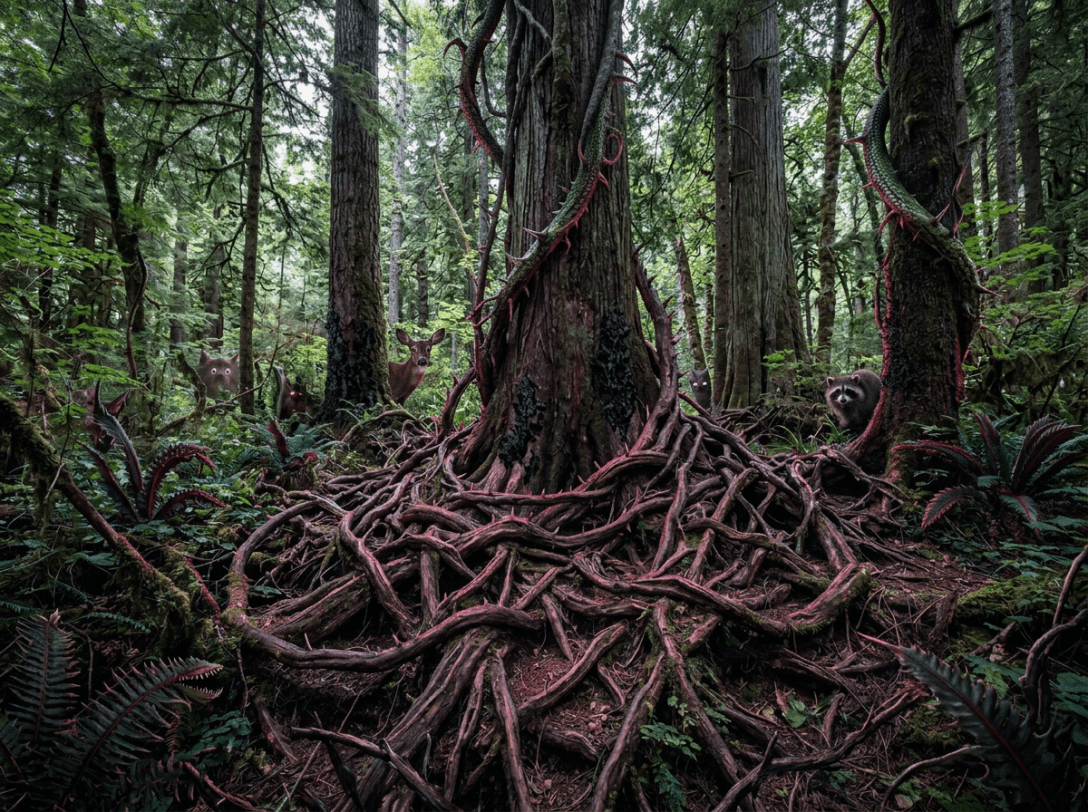
On the surface, Rush’s classic “The Trees” might seem like a whimsical allegory or metaphor, imagining a world with “unrest in the forest, Trouble with the trees, For the maples want more sunlight, The oaks ignore their pleas.” According to the song’s personified – personally, I always imagined them as animated like Ents from J. R. R. Tolkien’s Lord of the Rings – maples, the oaks “are just too lofty And they grab up all the light.” Though they are “quite convinced they’re right,” the oaks disagree, and can’t “help their feelings If they like the way they’re made And they wonder why the maples Can’t be happy in their shade.” The conflict between the oaks and the maples causes chaos in the forest, prompting all the creatures to flee before the maples come up with a solution. Angry at what they perceive as the oppression of the oaks, who they say are “just too greedy, We will make them give us light,” they form a union and demand equal rights to resolve the impasse. Afterwards, “there’s no more oak oppression, For they passed a noble law, And the trees are all kept equal By hatchet, axe, and saw.” Of course, real forests don’t work that way and the song has rightly been seen as a political commentary, though whether one that is anti-union and anti-socialism, or pro-union and pro-revolutionary, is the subject of debate to this day. For their part, Rush itself has been rather coy about the meaning. Way back in 1979, lyricist and legendary drummer Neal Peart was asked by John Hamlet of New Music Express if the song was a “definite and resolute dictum against trade unionism and organized labour,” but he would only respond by claiming, “Really, I can assure you that that wasn’t the intention. Initially that song came about as a cartoon. I sat down after a gig somewhere and it came to me all of a sudden, this very vivid, visual cartoon. It was the fastest song I ever wrote; I wrote it in about five minutes, actually.” “I suppose it’s basically about the crazy way people act,” he added, hinting that maybe there was more to it after all. “This false ideal of equality they try and create. I simply believe that certain people are better at doing certain things than other people. Some people are naturally talented—they have a gift or whatever—and some people aren’t. This doesn’t mean that these people are greater human beings, by virtue of that talent, it merely means they are more talented.”
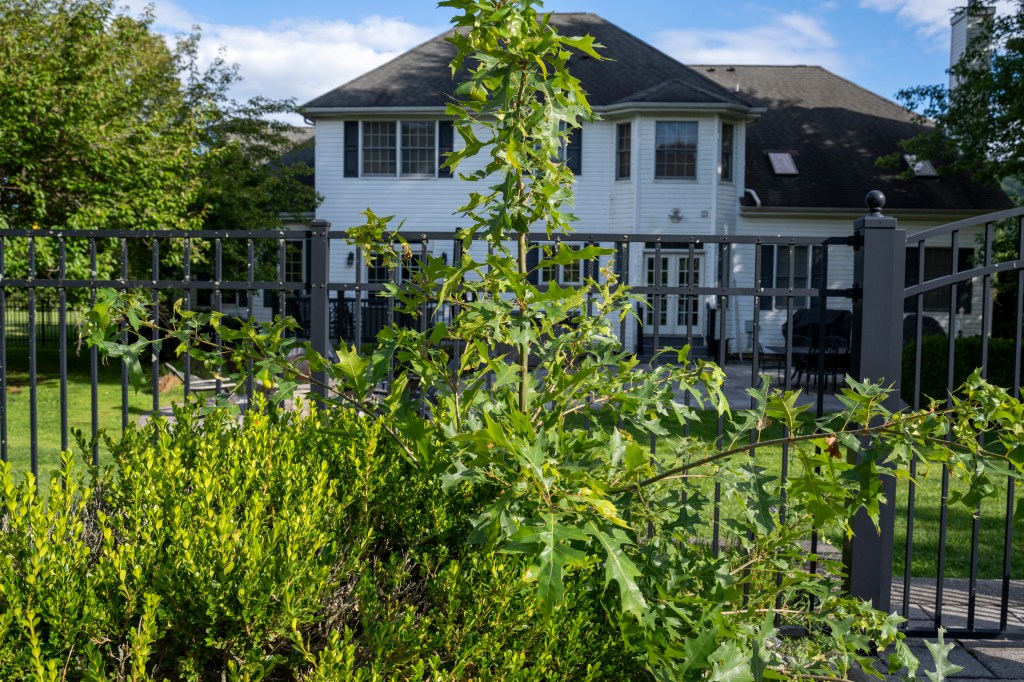
While this might suggest a more anti-collectivist meaning, to my knowledge, no one has attempted to interpret the song literally, as in this is what trees and other plants actually do and have done for hundreds of millions of years. To many, the very idea might seem absurd. Plants battling with one another for supremacy over the forest when they don’t even move, much less have brains and nervous systems with which to do so? You have to be crazy to think such a thing and admittedly, I never quite saw it that way myself even as I understood some of the evolutionary history until recently, but right now – as in as we speak – there’s a battle going on my backyard and it’s a brutal one by all accounts, where life and death hang in the balance, and the victor will live, the loser die. Allow me to explain: At some point earlier this year, a seed took root beneath a bush in the backyard. I didn’t think anything of it at first, couldn’t so much as see it happening below the ground and didn’t even notice it for a while after the trunk first pierced the surface, but over the past two months, the seed has begun to grow through the bush, using the height advantage of a thin, narrow trunk to both spread leaves to catch sunlight which would’ve otherwise fallen on the bush and as something of a spear, growing straight through the branches of the bush itself. Below ground, the struggle is probably even more intense as the roots of both the bush and the young tree compete for vital space and nutrients, growing into, around, and through one another in a desperate quest to ensure their survival. The bush can’t talk like the oaks and maples do in the song, but I can certainly imagine it outraged at first by this intrusion, then frightened that the upstart tree might well suck up all its light and ultimately kill it. Likewise, I can imagine the tree telling the bush that it’s not doing anything wrong. This is simply the way the world works, how it’s made, and therefore, it has no choice except to grow and prosper. If that comes at the expense of the bush, so be it, nature is red in tooth and claw, though perhaps in this case, branch and root might be a better description.
In that regard, I think most of us are familiar with the brutality of this struggle in the animal kingdom. Beyond what we might have seen in nature shows, where lions stalk the savannah and only the strongest and fittest survive by feeding on the rest, the struggle happens on a smaller level all around us, from birds feeding on insects to turkey vultures devouring a dead deer on the side of the road. Whatever we have seen or studied, we know almost instinctively that animals must hunt and kill to survive because we have to eat ourselves, while those who are hunted must figure out ways to avoid getting killed. Plants, however, strike us as instinctively different. Since they don’t hunt for food, having their own manufacturing plants in the form of chlorophyl, why would they need to kill, even if you set aside the lack of a brain, spinal cord, muscles, teeth, and claws to do so? Unfortunately, the answer isn’t a pleasant one, suggesting only that life is even more brutal than it seems on the surface, that killing isn’t the only way we kill. The struggle to survive requires more than taking the life of another for food, even if that is simply an herbivore munching on plants, and the competition between species – or more properly the genes carried in each individual species – and even within species themselves, is far broader than that between predator and prey. Even as those battles tend to be the most dramatic and gut wrenching, organisms of all kinds including plants also compete for resources. While this competition can frequently be invisible to us, most animals and plants need a place to call home, a burrow or patch of land on which to grow, water to drink, air to breathe (though plants and animals do this quite differently), heat to warm their bodies, light (assuming they aren’t nocturnal and especially for plants), a medium to safely spread their seed and birth their young (excluding mammals and other species that carry their young inside their bodies and again, especially plants) and other things that make living possible in the first place.
If anything, plants make this battle even plainer than animals in many ways if we care to look, access to resources being even more important to their survival because they can grow their own food. Though it occurs on timescales too slow and sluggish for us to easily observe, the plants we see around us today are the current victors of a war that has been waging for close to 1.5 billion years, when an early eukaryotic cell – much like our own – engulfed a specialized bacteria, known as cyanobacterium, that captured energy from the sun, creating the first chloroplast and birthing an entire kingdom of life. The early days of this competition are largely lost to us, occurring between organisms that do not fossilize well, but around 470 million years ago, around the same time early animals began doing the same, plants clawed their way onto the Earth’s open landmasses (usage of the verb normally reserved for animals is intentional considering the theme of the post) and began leaving more and more signs of the struggle, the latest result of which is visible all around us. Though these early land-based plants were simple things that barely deserved the name – mosses, liverworts, and hornworts – the conditions they had to cope with and the competition for resources was fiercer than ever before. In water, plants can absorb nutrients – including water itself – directly from their surroundings, but on land there is far less space to spread out and far more complicated strategies are required to survive. Ironically, this began with having to deal with water itself. In the open air, water, essential to all life, quickly evaporates and to survive on land, plants needed to evolve both a protective cuticle to keep water in and a means to pump necessary elements in and out, leading to stomata that essentially allow it to breathe, but once these necessities were dealt with, competition over everything else was inevitable, leading to more and more advancements and more and more extinct species who failed to adapt.
Around 450 million years ago, when the fossil record begins to become more clear, plants repurposed existing mechanisms that provided protection from ultraviolet light and allowed them to grow in distinct structures in the ocean to create something new, lignin. The same way land-based animals developed legs and other appendages from fins to navigate life on the ground, lignin is an updated version of an earlier adaptation that was now used for plant cells to encase themselves in a rigid, yet flexible wall, enabling them to become sturdier when assembled in large numbers and overcome gravity itself. (Perhaps, I should have said similar yet different. The principle is the same, but legs and other appendages evolved from already complex structures that are formed in certain places on the animal while lignin is everywhere in the plant, used as a most basic building block, though perhaps this hints at why it took longer for plants to figure it out when you consider animals had basic appendages about a hundred million years earlier.) There were still limits, however. The stomata allowed plants to breathe only at the level of the individual cell. While lignin offered the opportunity to take new shapes and grow taller and larger, the cells themselves had to be positioned close enough to the surface for them to exchange gases and nutrients with the atmosphere. There was no means for the cells to differentiate into complex body parts with unique functions; animals had faced this challenge as well, though our ancestors solved it earlier as well, as early as 700 million years ago, while we were still living exclusively in the ocean. For their part, plants would have to wait until around 420 million years ago, when early scorpions and mites roamed the land and nothing grew taller than a twenty foot fungus, to develop the equivalent of a circulatory system, known as xylem and phloem, which allowed them to harvest water from the soil and transport sugar through their physical forms, opening up never before seen possibilities.
At the same time, there was a key ingredient missing that would unlock even more opportunity: Seeds. As complex as they had become, these early plants produced spores that could only grow in water, but about 60 million years after developing a circulatory system, seeds fully evolved, taking advantage of the protective coating and other key chemicals and processes which already existed, as natural selection had done with lignin, and plants were both able to procreate without being near water and began to resemble their modern form, mostly. In what is known as the carboniferous expansion – a period scientists consider to be among the most explosive in the entire history of plants – true forests appeared over the course of the next 60 million years, rich, dense, and admittedly somewhat alien for two reasons. First, there were no flowers – that would have to wait another 160 million years, when dinosaurs were the dominant animal – and second, there were no organisms on land capable of breaking down the lignin in the cell wall and causing the trunk of a tree to decay, meaning the floor of this ancient forest would’ve been littered with large pieces of wood, almost as if they were petrified, at least until a wildfire burned it all away. The combination of plant matter decaying and plants propagating themselves using flowers to attract insects and other pollinators to increase their range prompted a second explosion, leading to landscapes that are almost identical to the modern world. Today, flowers are among the most complicated and varied structures plants produce, composed of petals, anthers and pistils arranged precisely to lure pollinators like insects and birds, manipulating them into spreading pollen far and wide. In that sense, it’s not surprising that they appeared last, but when you consider that using insects and animals to spread pollen and seeds as early as 300 million years ago, the long period with seemingly very few major changes is somewhat surprising especially considering the rapid evolution of animal life. “Insect pollination and animal seed dispersal may have appeared as early as 300 million years ago, but it’s not until the last 100 million years that these really intricate interactions with pollinators are driving this super high complexity in flowering plants,” explained Andrew Leslie, an assistant professor of geological sciences at Stanford’s School of Earth, Energy & Environmental Sciences who has studied these two epochs. “There was such a long period of time where plants could have interacted with insects in the way that flowering plants do now, but they didn’t to the same degree of intricacy.”
While we do not know the precise reason for this, two things are clear. First, at each and every step of the way, the ancestors of modern plants either evolved or died, and the competition was fierce the entire time as plants literally and figuratively killed each other in ways we do not often see or consider. Even if a plant that ultimately went extinct was reasonably well adapted to their conditions in isolation, they couldn’t compete with another species that was more adapted, resulting in the extinction of millions of species, the same as we would see in the animal kingdom. Second, the plants we see today are not that way because they want to be. A tree – whether one of Rush’s maples, oaks, or another species – doesn’t grow a large trunk or flowers because it wants to. Left to its own devices, both of these adaptations we see all over the world around us do not directly contribute to the business of living or even reproducing, which can be accomplished with much simpler means. They don’t contain chlorophyll to produce food. Indeed, they only increase the amount of food the plant needs to produce to continue living in the first place. They don’t absorb nutrients. Indeed, trunks actually make it harder to do so, because water and nutrients need to be pumped up great distances, requiring larger and larger amounts of energy even beyond what goes into growing them in the first place. They don’t even directly allow the plant to reproduce. Indeed, plants had been doing so for millions upon millions of years without either. They do, however, allow the plant to capture light – growing taller than its fellows, where it can bask in the sun, or as Rush had it, effectively steal the sun from a shorter species – and more easily reproduce – spreading its seed further and wider than competitors. In that way, they are just like the leopard, which does not have sharp fangs and retractable claws because it wants them, but because it could not hunt and kill successfully enough without them.
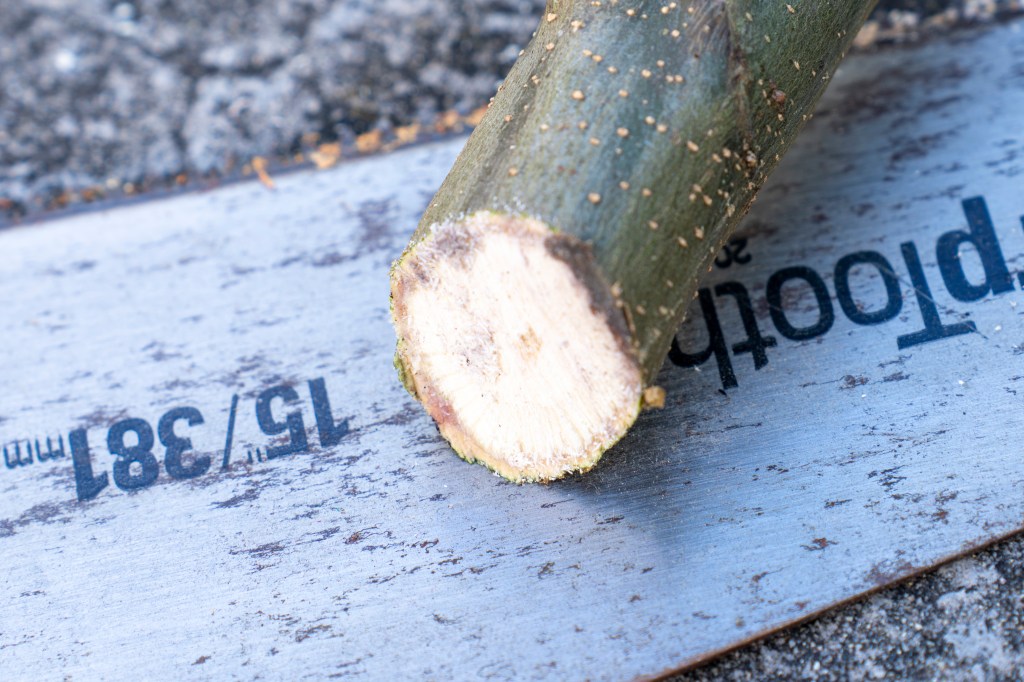
Thus, nature follows the law of the jungle, again literally and figuratively, whether we are plants or animals, but returning to where we began: Our backyard doesn’t and like the Rush song originally claimed, the trees can all be kept equal by hatchet, axe, and saw. In this case, the bush has aesthetic value, but the upstart does not. Though it may outcompete the bush according to the law of the jungle, it will not once it’s cut down. There’s a lesson in there somewhere, especially when you consider that this battle created both the delicate beauty of the flower and the fiercer beauty of the leopard, but I’ll leave it to you to find it.