If you are remotely interested in outdoor activities and don’t mind paying ridiculously high prices for food and other necessities, the number of things to do is staggering and the landscapes stunning practically wherever you may look.
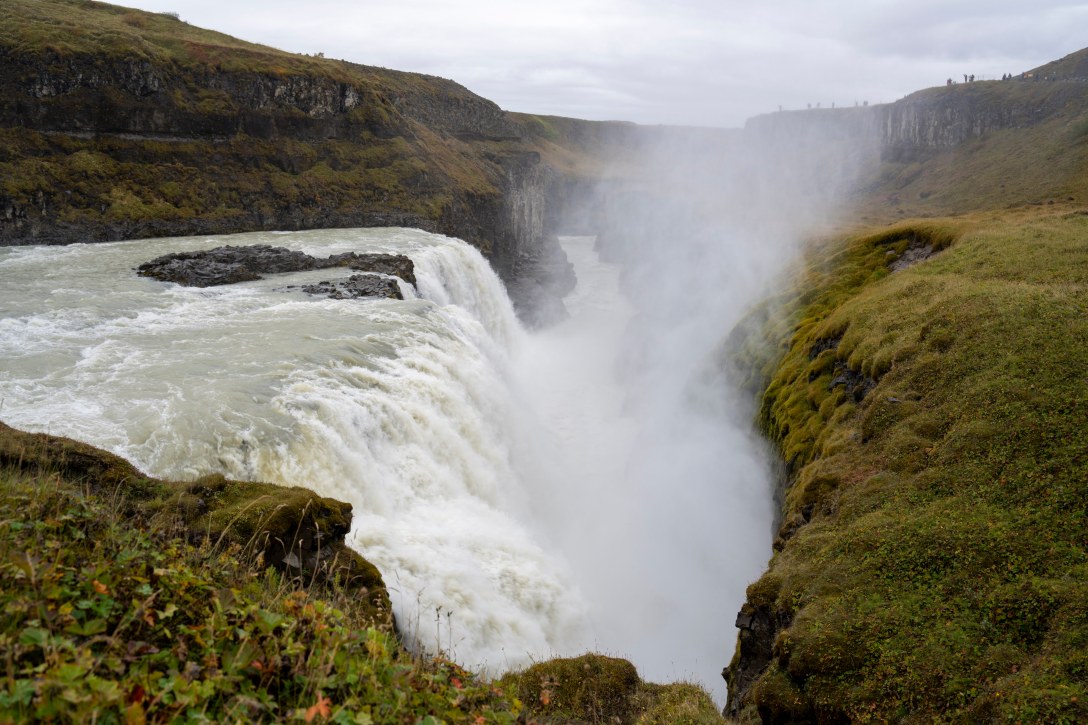
Iceland is a country of almost alien beauty. Situated at the juncture of two tectonic plates, the bridge between the North American and Eurasian land masses, produced by ongoing volcanic activity that literally bubbles right underneath the surface, and sparsely populated by both people – the total population only numbers around 403,000 – and trees, the landscapes vary between fields of black rock lined by bright green mosses and low green grasses that line the low, cragged hills. Both are broken by near endless streams and rivers, dotted by waterfalls large and small, ponds and lakes, patches of unmelted snow and outright glaciers, all of the water so pure, you could practically drink it from anywhere. If you are remotely interested in outdoor activities, the number of things to do is staggering. Over the course of five full days, we snorkeled between the plates themselves, where the hemispheres are close enough to touch if you spread your arms wide and the water measures barely 33 degrees, snowmobiled across a barren glacier and explored an ice cave, visited two heated pools nestled in a canyon, kayaked in a reedy, inland waterway that was home to swans, gulls, even seals, hiked to a geothermal river nestled in the mountains where the water runs warm, went actual spelunking in a volcanic cave accessible via a literal hole in the ground, and would’ve gone whale watching if ocean conditions didn’t cause it to be cancelled twice. We also found time for two museums, one which was the excavation site of one of the original settlements, dating back to the 900s, two waterfalls, a visit to a beach made of sea shells, a geyser, exploring a lake, taking a more formal tour of a volcanic cave, one that was lighted rather than completely dark, and other explorations, all of which was within 100 miles of the capital city of Reykjavik. If we had more time, the northern and eastern coasts hold even more wonders.
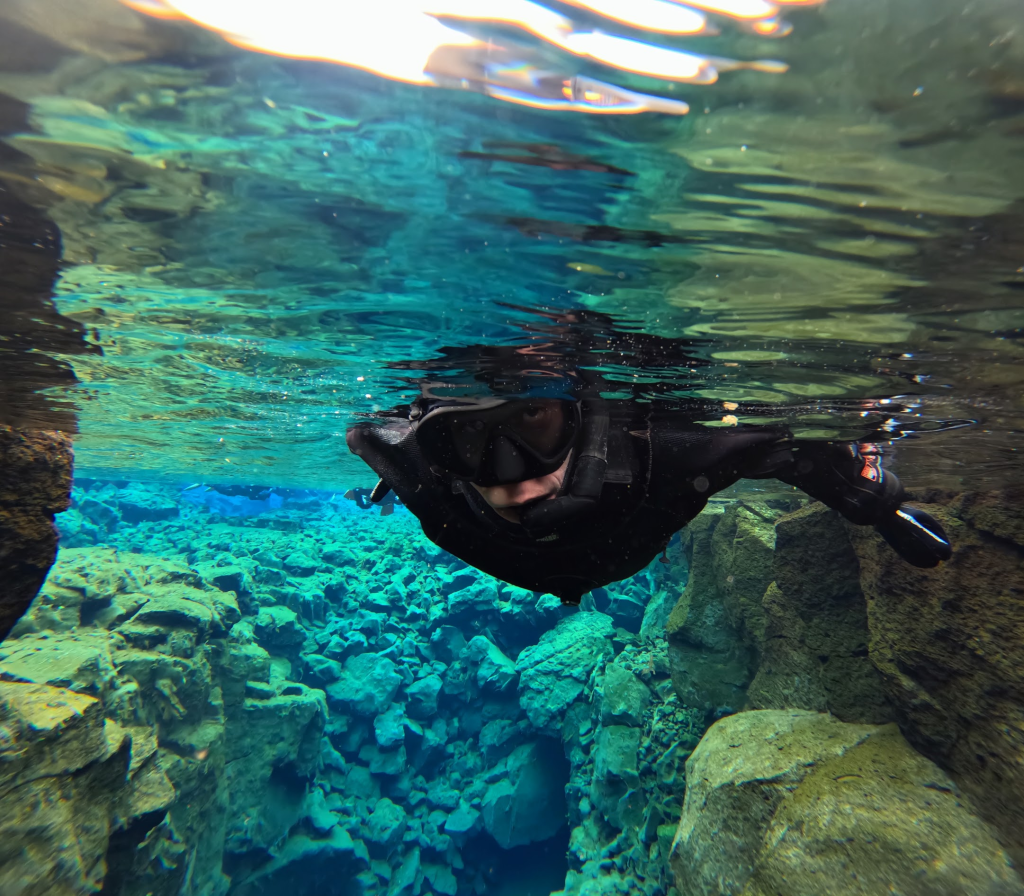
The highlights are too many to be described here, but a few moments stand out even beyond the breathtaking beauty of all of these various places. First, while the population is sparse, even a month off of peak season, people flock to these areas, tourists but also locals, especially in the more remote spots. The number of individuals, men and women, wanting to snorkel in 33 degree water, where your body is somewhat warmed by a dry suit that looks like something more suited for a black space craft than the planet earth, but your hands and face are freezing, lips so numb you can’t even tell if water is coming in and out was astounding. There were more than 24 in our group alone, and there are around nine groups per day. I was surprised at the turn out considering the conditions, until we got into the water and the cold didn’t seem to matter when the stream was so clear, it’s like you weren’t underwater in the first place and could see for miles. As the water gently pushes you along the channel, the striations in the rock on both sides take on a whole rainbow of color; sometimes the bottom is just a few feet away, others so deep it is lost in darkness, as though you were floating over a chasm that went straight to the center of Earth. While the fish prefer the nearby lake because the water is a few degrees warmer, algae manage to prosper in the extreme temperature, blooming in colorful wisps, reds and yellows that rise from the rock like ghosts, drifting gently in the current. The combination of the colors, the cold, the gentle flow of the stream, and the peace of being submerged, drifting effortlessly, made it seem like you truly were exploring an alien landing on a planet for the first time, floating above it like a drone on Mars – until the cold seeps in. What starts as numb lips and a little water leaking into your mouth extends to numb hands and feet, and though a part of you wants to remain submerged, you have no choice except to get out.
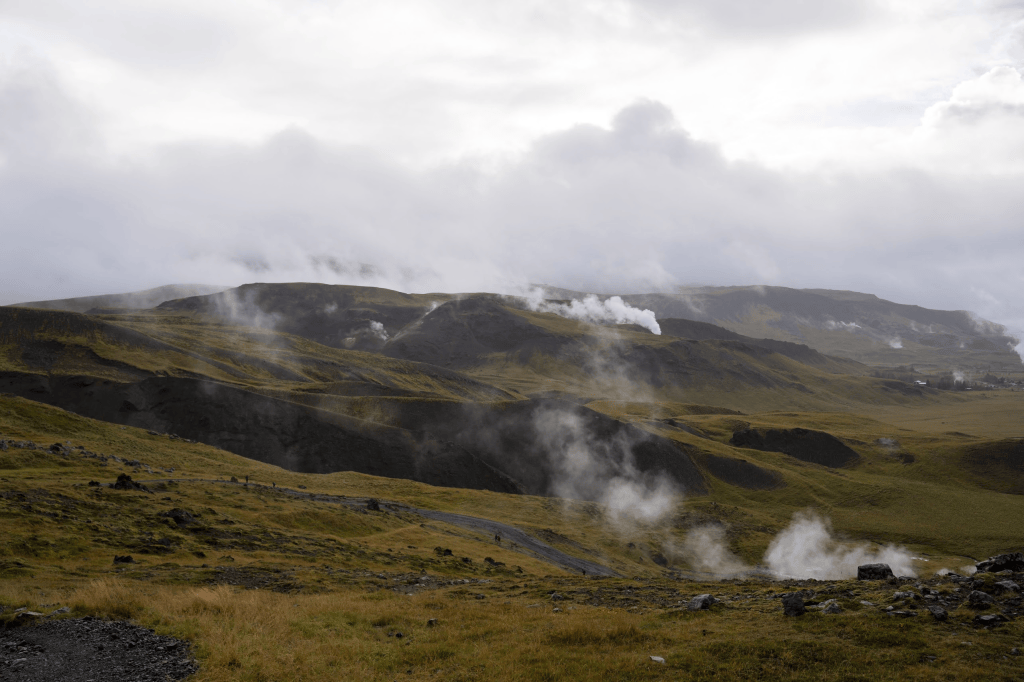
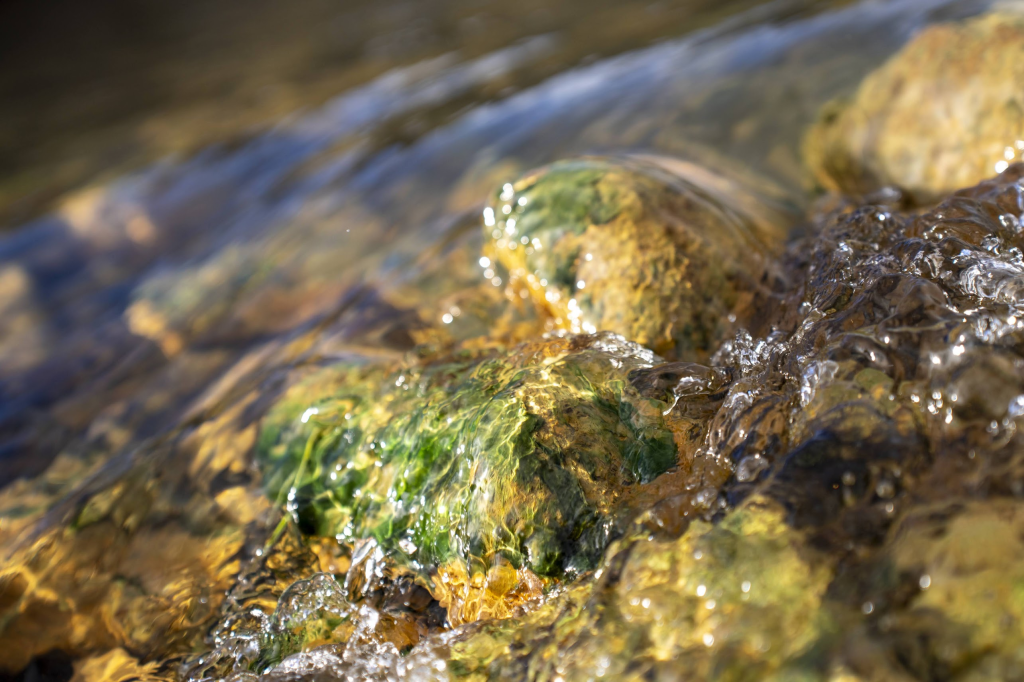
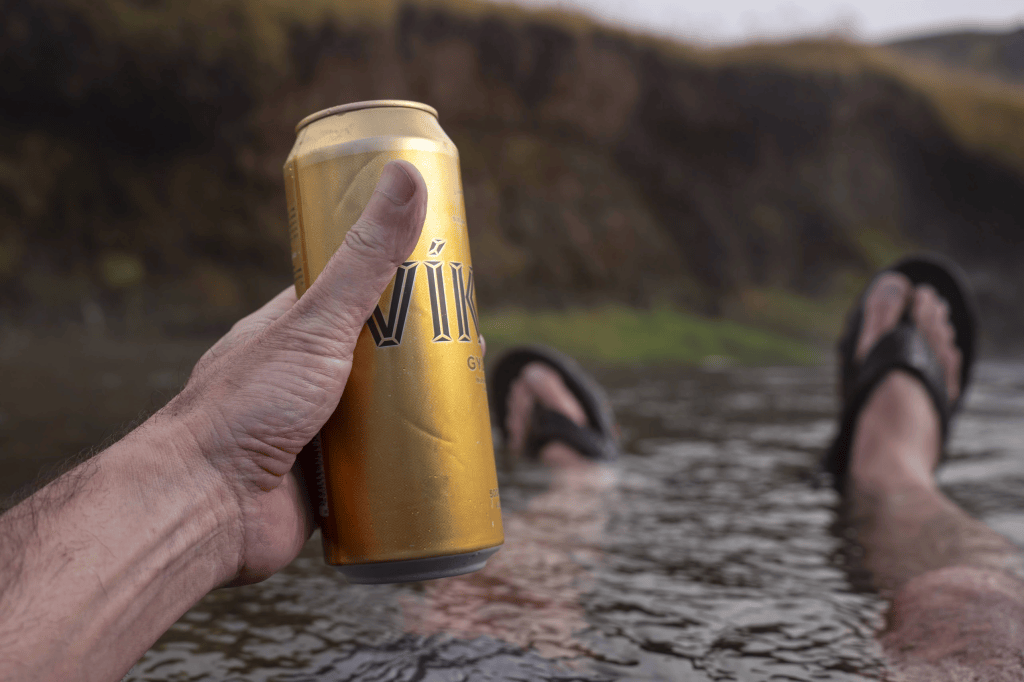
The contrast between the cold water coming off the glacier and the abundance of hot springs, even hot rivers, is as extreme as everything else. Not far north and west of Hveragerði, a small town in the South, the Reykjadalur Hot Spring Thermal River is nestled about 2.2 miles into the mountains. As you weave along the path, geothermal vents on both sides release plumes of steam, billowing white smoke with a faint sulfur smell, as though the mountains were on fire twenty four hours a day. Even at the base, the trickle of the river that flows out is warm to the touch, almost magically heated. After you clear the first hill, the rest of the world slips away behind you and the landscape ahead is entirely pristine except for the path, but even relatively early in the morning, you are not alone and by midday the parking lot will be full. Hikers were gathering well before 9 AM to make the journey, more will come in as the day goes on, even some on horseback mounting the summit. There are Americans, but also native Icelanders, and when we arrived at the spring itself, even an Australian couple. Situated around the part of the river warmest for bathing, are wooden walking paths and small changing stations (Icelanders aren’t very modest, as there’s no cover for your behind at these stations). Bathers lounge in the crystal clear water, feeling the contrast of the heat from the geothermal vents and the cool air above. The further upstream you go, the hotter it gets, encouraging a little exploring in addition to relaxing. While there were no fish that I could see in the river itself, bright green algae bloomed in places, as though the rocks were painted. If you’re anything like me, it’s the perfect spot for a beer and though Iceland technically has laws against drinking in public, good luck finding a cop to enforce them (we saw none the entire time we were there). In fact, when we arrived, a fellow American asked, can you bring beer here? I said, I have no idea, but who’s going to say otherwise? He replied, that’s genius.
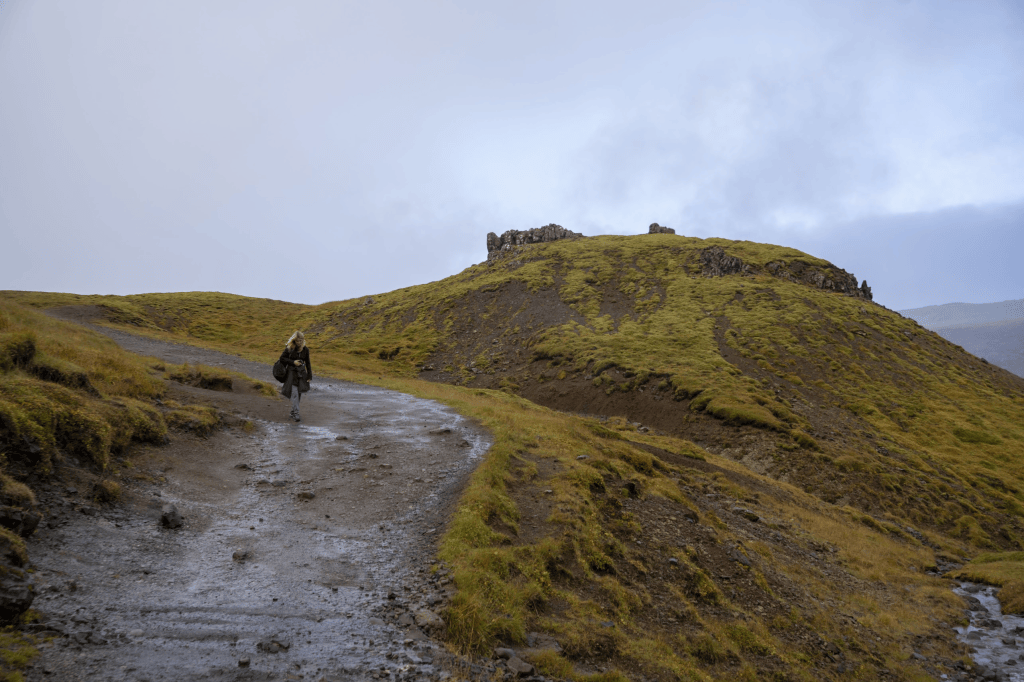
The trip to the glacier might have been a little less genius in the travel plans, though it was no less rewarding. These days, there’s always the risk that over reliance on Google can you lead you astray in some unexpected way, and in this case, Maps reported a pretty straight forward 90 minute drive from our AirBnB in Thingvellir to the Klaki Basecamp near the Langjökull glacier. The reality, however, was more than a bit different as we would learn. Rather than a regular road, the two regions were separated by some 35 miles of a single lane, dirt track heading north straight into the middle of nowhere, literally and figuratively. As you leave the UNESCO Heritage Site that surrounds the juncture of the tectonic plates and cross a low range of mountains, the landscape completely changes along with the road. The green grass broken up by a few trees common around Thingvellir completely disappears, replaced by miles of grey, brown, and black volcanic rock on both sides, mountains of the same color looming in the distance where it seems nothing grows or even can grow. Other than a few mile markers and the occasional way station, the landscape is completely barren as though you flew to the moon on a dirt road. For at least ten miles, we didn’t see another soul to the point where we wondered if we’d gone the wrong way and weren’t even on an actual road; overall, we might’ve seen five total vehicles the entire time, individuals taking photos and hiking on the lava plain. At some point, we were traveling so slowly, we called the tour company to tell them we might be a few minutes late. The woman who took the call was well aware of the road we were on, and stated matter of factly, yes, you need a special vehicle for that one, but – though we doubted our Hyundai Tucson rental qualified – we shouldn’t be more than a few minutes late and that shouldn’t be a problem, presumably if we didn’t get a flat tire on any of thousands of sharp rocks, damage the under carriage, or simply slide off on one of the sides.
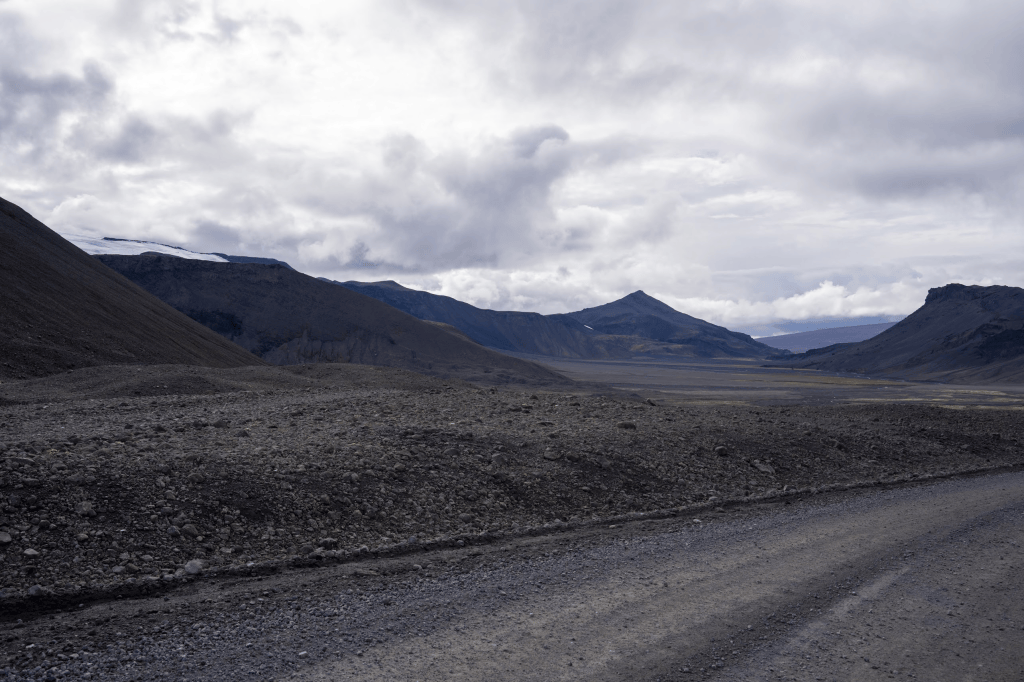
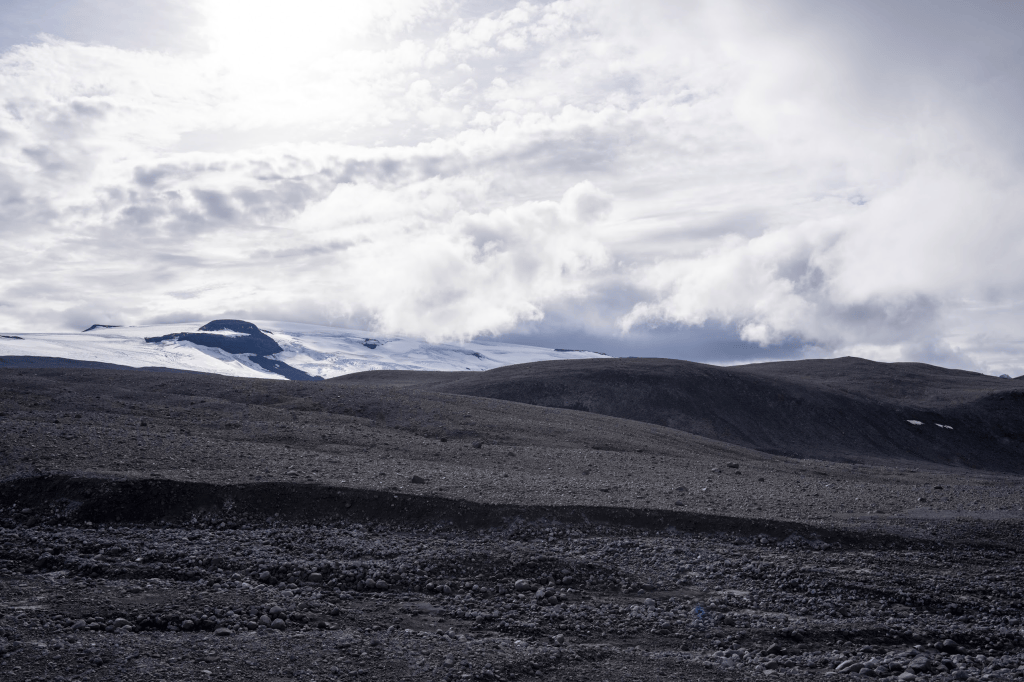
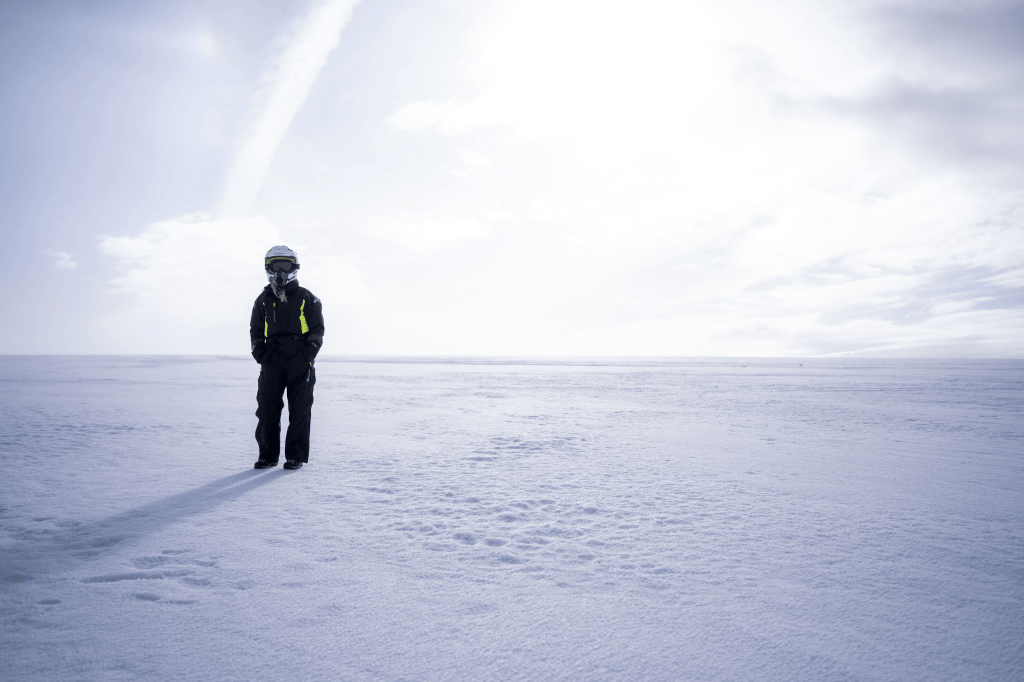
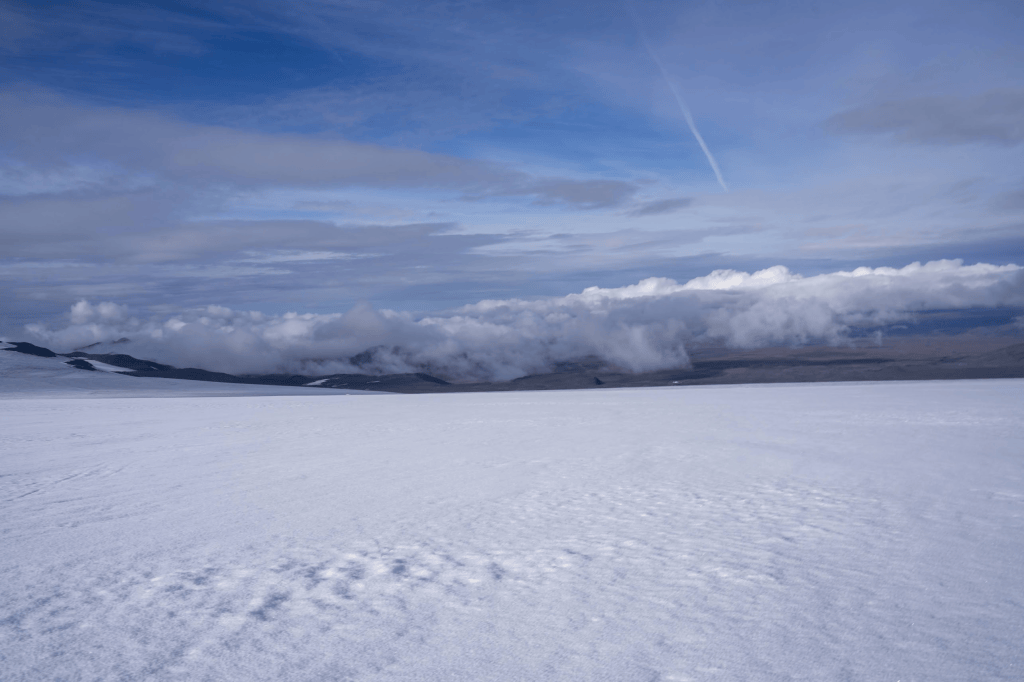
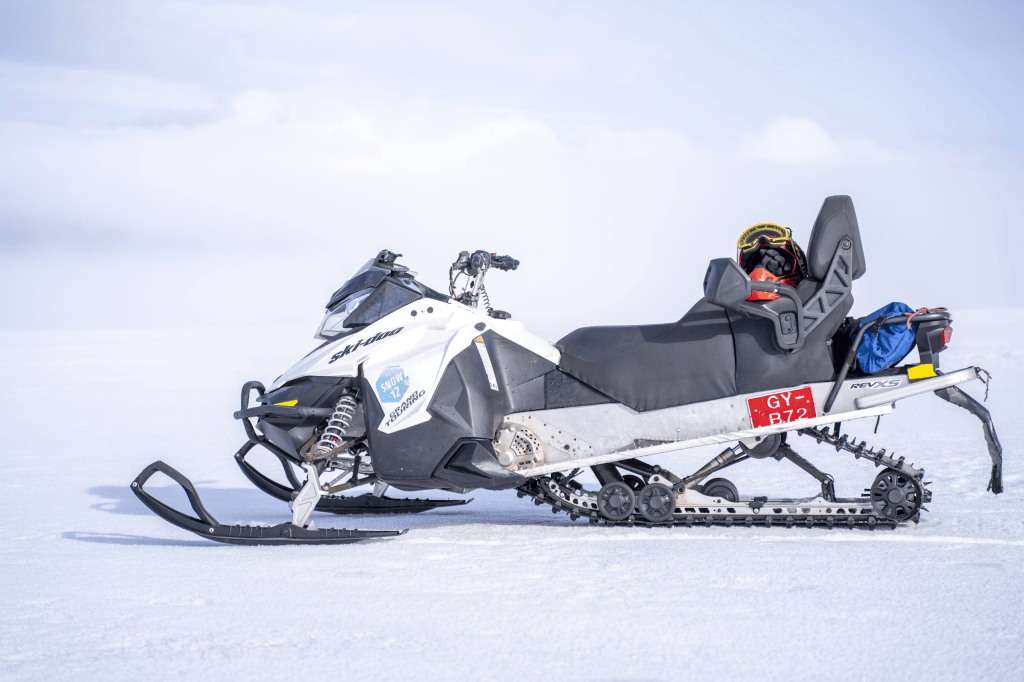
Long before reaching basecamp, you can see the glacier rising in the distance. The rock seems to stop at some point ahead, replaced by a sheet of ice stretching as far as the eye can see. The basecamp itself sits about a half mile from the ice, but there are no roads that go all the way there. To reach it, you ride in a huge tractor with wheels as tall as a person, grinding the rock, then the ice below as if it was a road, though it travels at barely five miles per hour. Up close, you can see that the dividing line between the rock and the ice isn’t nearly as clear. For a few hundred yards at least, the two blend together, patches of thin of ice which show the rock below, creating an impression that the earth itself is pocked, composed of small mounds and holes, slick with moisture, but this gradually thickens until there’s only the glacier and as you keep climbing, the ice grows to almost a thousand feet thick, as though you were on a completely frozen planet. When the sun shines, the reflection is so bright you can barely see and when you look back the way you came, it’s like you were above the clouds themselves, staring down a sheet of ice that ends in a wall of rock hidden below. Summer wasn’t officially over yet and though Iceland is significantly colder than my home state of New Jersey, it wasn’t as frigid as you might think standing on a huge slab of ice. Similar to snorkeling in nearly frozen water, there’s a strange peace that prevails, a silence as though the entire world was frozen over. The few creatures that survive there are notoriously reclusive. The ice stretches in all directions and from the surface at least, it seems almost perfectly smooth, evened out by the wind, though this can be deceptive when snow fills in dangerous crevasses. The scene is so lonely, desolate, and bright that the handful of humans on the tour and our snowmobiles stand so stark against everything else, we could’ve been on a movie set, removed from the real world entirely, until you get on the snowmobile, then it’s obvious which world you’re on as you fly across the open ice.
Later in the week, Iceland lived up to its nickname as the “Land of Fire and Ice.” After touring a cave carved of ice on the glacier, one complete with a little chapel where the adventurous get married, we descended into a natural one carved by liquid fire thousands of years ago. Arnarker is located at the end of another dirt road, albeit a much shorter, straighter one than the seemingly endless route to the glacier. What passes for a parking lot is a few gravel strewn spots, seemingly in the middle of nowhere. There are mountains in the distance on both sides, but otherwise the land is entirely flat, nothing except a small sign to indicate that you’ve arrived at your destination. From there, there is a short trail that leads to the entrance, essentially a hole in the ground opening up on a cave that extends in two opposite directions. There were no cars in the lot when we got there, but a lone bike was pulled up near the stair, and when we descended into the cave itself we could see a few belongings set aside. In both directions, the light only extends for a few meters of piled up boulders, slick from the rain going down into the cave proper. We could make out the light cast by the headlamp of the cyclist, flickering in the distance of one of the tunnels, but otherwise there was only darkness in both directions. We had simple headlamps for light and nothing else. If they were to go out, the world would be black as pitch, an eternity of nothingness (as we experienced later on a guided tour of another cave, where they intentionally turn out the lights at the end). The lamps were rated for four hours at maximum lumens and we only planned on being in the cave for about an hour, but who trusts that sort of thing, especially as there’d be no way out in the dark? I had my camera, my beer, another beer in my pocket, and my cell phone and a battery charger in another. My wife remarked that I couldn’t be serious marching down there, or rather scrambling down boulders of various sizes, with a beer in my hand, to which I replied, yes, of course, and I’ve got a back up in my pocket.
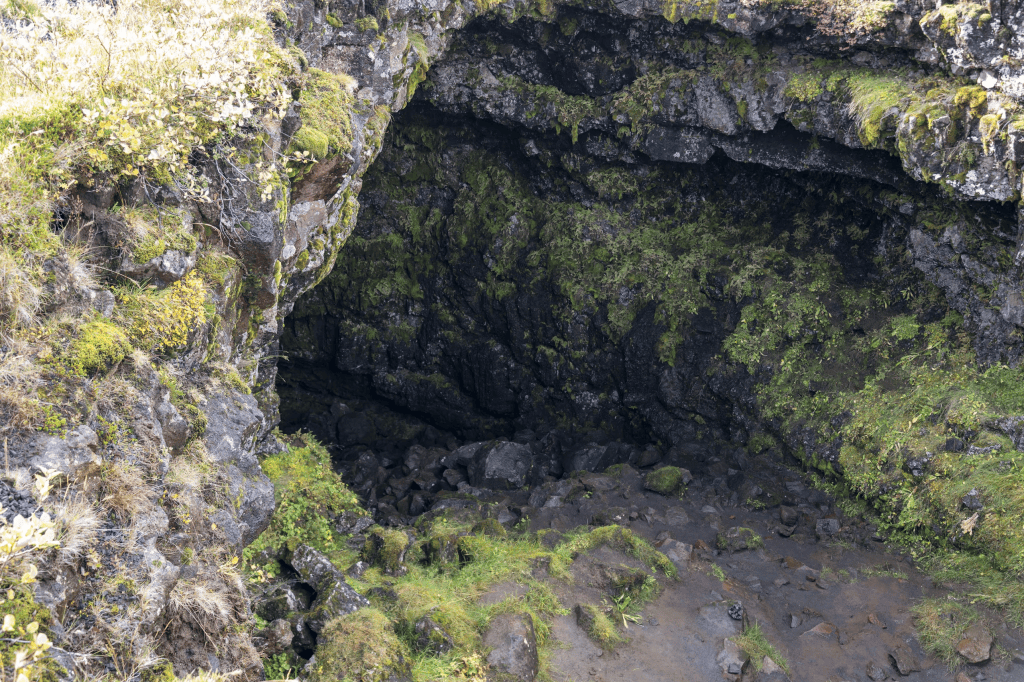
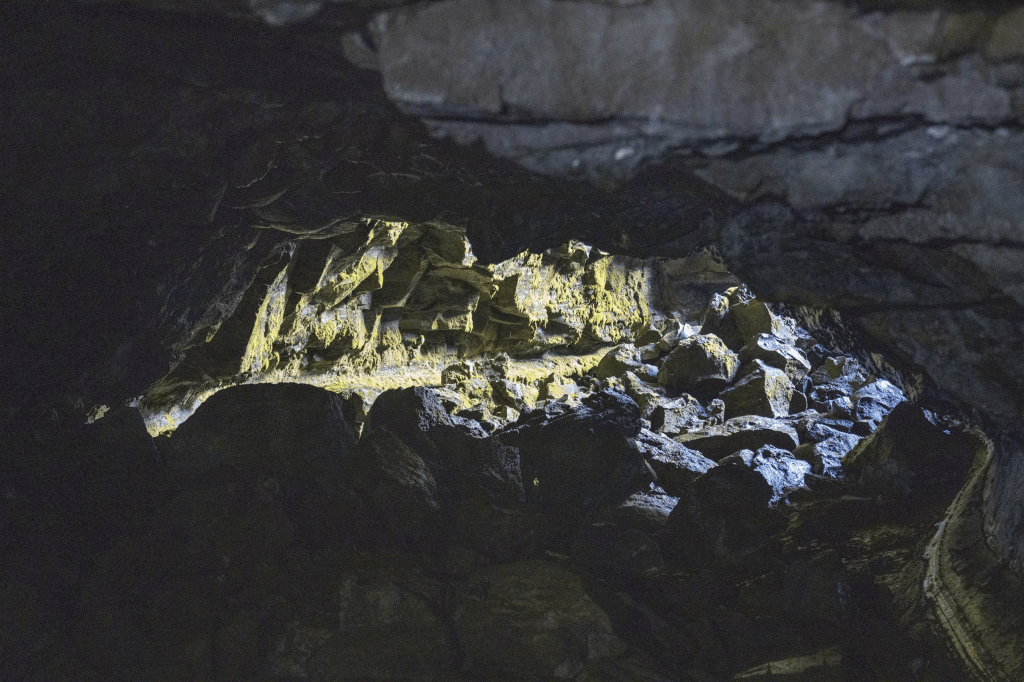
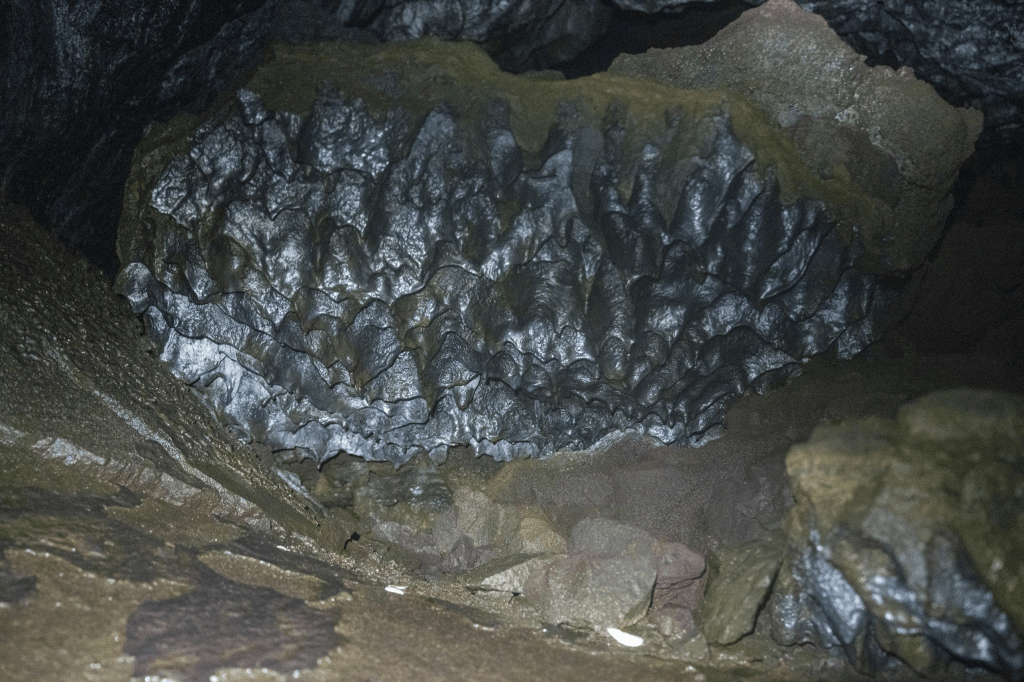
There are people out there that do this sort of thing every day, but neither my brother nor I had ever done anything like it. As he remarked, 99% of American travelers to Iceland take the Disneyfied tour, but we were different, probably too stupid for that, though I’d like to think it brave and adventurous. This wasn’t some lighted tour, after all. It was going into the unknown on your own with only the equivalent of a flashlight. Between the jaggedness of the uneven boulders, the variation in the height of the tunnel, the ups and downs as it wove through the crust of the Earth, there were shadows everywhere, on the ceiling, walls, and floor, any one of which you could slip on or catch your ankle, leading to disaster. The boulders themselves required no shortage of contortions to navigate, some of them were just pieces of rock piled on top that didn’t provide secure footing, and the way ahead remained unclear. According to the map, you just went straight, but the reality was a series of curving passages, steep inclines, steep downgrades, corners you had to slip past and climb up and around. The going was slow, but after a short while, that sense of a quiet peace returned. There was nothing above, under, or around us but solid rock. Nothing except bacteria lives down there and it was warmer than expected as well. The quiet except for our breathing and a few drops of condensation was absolute, as if you’d left the world entirely. While most of the rocks were of the ordinary volcanic variety, a dull brown to black, there were formations on the ceiling known as lava ice, where when the cave originally formed, the melting rock dripped down and became coated in obsidian, reminding one of black icicles hanging off the roof of your house. In some places, these took up an entire ceiling, setting it off from the regular rock as if there was a chandelier; in others the rock was yellow from the sulfur gas. If you looked closely at some of the walls, there were grooves cut in that ran almost perfectly straight. These were left behind as the lava drained from the cave, each line representing a different height.
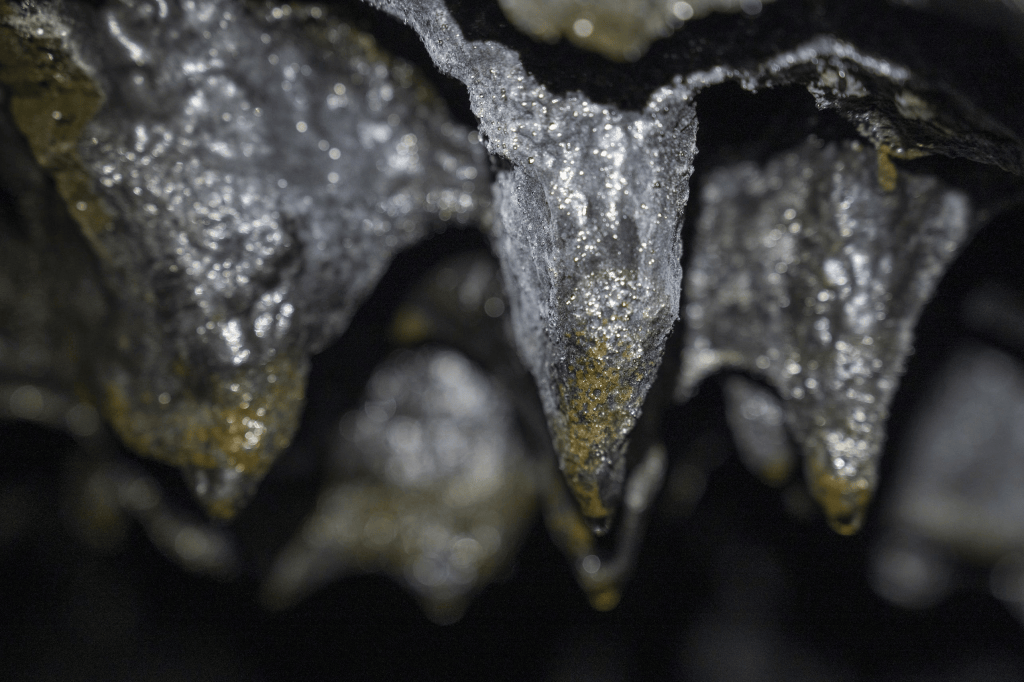
That we could see all this with our headlamps alone as my my mom and my wife waited for us in the car made it seem like a true adventure, an exploration, a true voyage into the unknown, but of course, if you think you’re adventurous, it’s only a matter of time before you meet someone even more so. About halfway down the tunnel, we caught up to the cyclist and introduced ourselves, our headlamps shining in each other’s faces the only light for this unexpected encounter. He was there on a German bike tour, and had rode two hours in high wind and freezing wind to explore the cave (the weather was crazy that day, alternating between periods of high wind and rain, and glimpses of bright sun). He was supposed to have two people with him, but they bailed on account of the weather and despite knowing how crazy it was to go down there alone, decided he wasn’t going to let the opportunity pass. He was, however, pleased to see us and asked to join our party, so we continued ahead as three. Strangely, he did not remark on my beer, as if it was the most normal thing in the world, and perhaps for Germans, it is, but as the smallest of the three, I was in the lead, plotting the best course forward. We believe the tunnel stretched another two hundred or so yards ahead, at least according to the map, and we planned to reach the end, then turn back, but at some point the going got even tougher, forcing us to crawl through narrow spaces. I couldn’t protect my camera and the beer at the same time, so I left the beer in a strategic spot, eager to return to it on the way out. The going, however, got even tougher, and at some point, I realized in a panic that my pockets were empty. My cell phone, battery pack, and camera flash had fallen out. I had no idea where and no idea if we would find it, ever, but as incredible as it sounds, our new German friend saw them both slip from my pocket and managed to pick the up, so we pressed ahead, going much further than we thought the map suggested, having no idea where the cave ended.
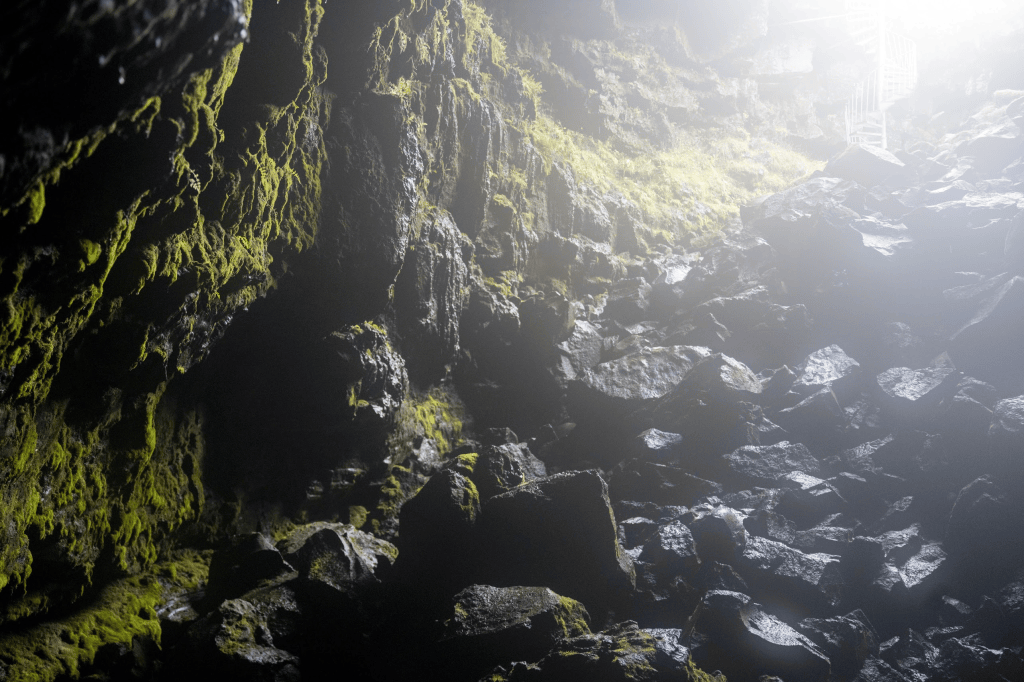
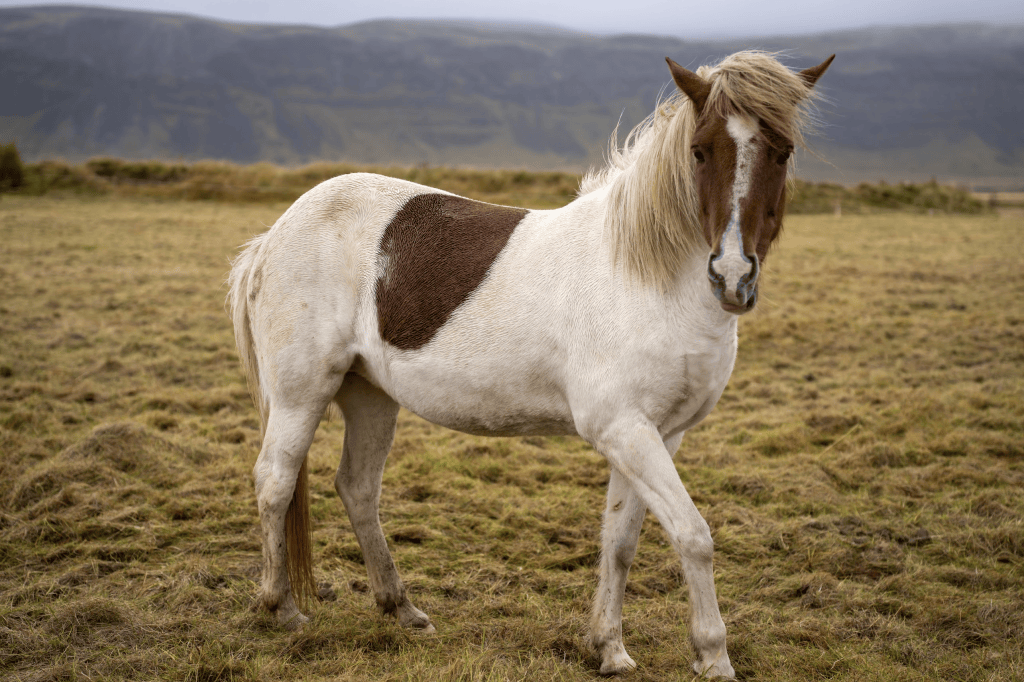
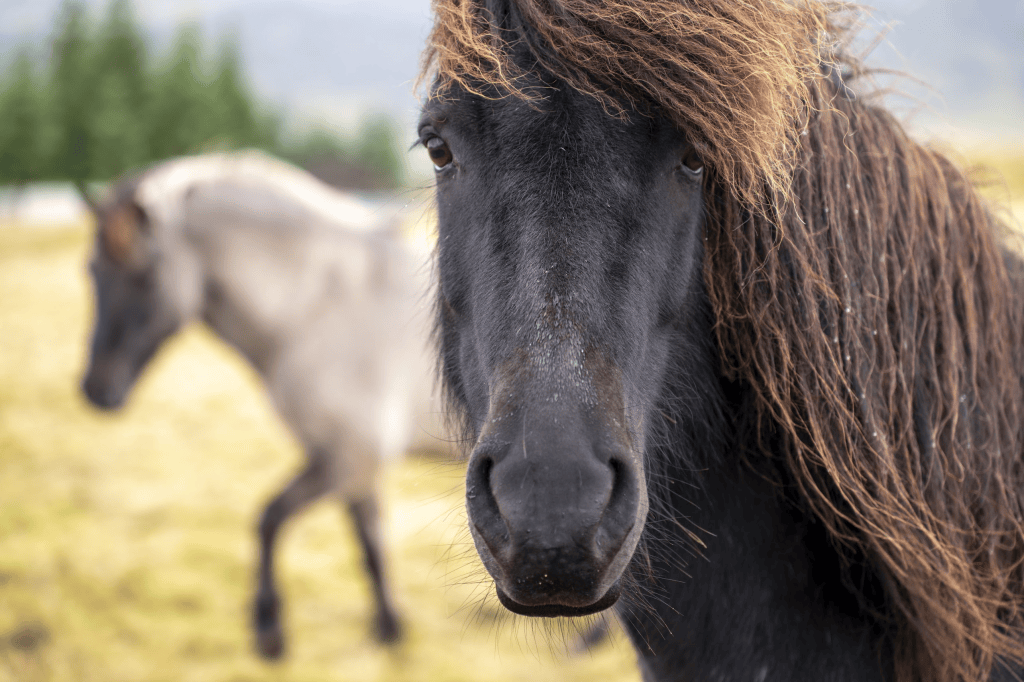
As it turns out, it ended where it began. Though it wasn’t marked on the map, we had apparently found a side passage and circled back around. As I rounded a corner, I could see the light of the hole in the ground and the stairs, as though they were waiting for us to emerge. The beer, however, remains down there, lost somewhere unintentionally, waiting for someone else to discover and likely think to themselves, did someone have a party down here in the dark? To which, the only answer is yes. Whether or not you’ll drink a beer in a cave in Iceland should you visit is up to you, but I highly recommend it and the other activities. The only thing to be aware of is the expense: The AirBnBs and the tours were not above and beyond what one would expect, but the price of just about everything else borders on the ludicrous wherever you go. Even in a small town, a beer at a bar is $12 or more and a simple bowl of soup runs almost $30, a lobster bisque up to $45. The pricier restaurants make some NYC or Paris eateries seem tame, and though you can save some money by shopping and cooking, groceries aren’t exactly cheaper either. The lamb Iceland is famous for runs around $19 a pound, pork chops around $8. Fish might be a little cheaper, but unless you are into fish jerky and fermented shark, the prices are likely to get really high, really quick. While Americans might be used to paying these prices at a stadium or a high end resort, these are simply the prices even in the more rural areas, not those jacked up for tourists. Apparently, Icelanders deal with it by paying over six figure salaries for basic jobs like manning the Hertz counter and limiting how much they go out. Though many praise the standard of living of countries with similar systems, and to be fair there’s a lot to be said for the lifestyle, it makes no sense to this conservative capitalist to pay everyone more so they can pay more for everything, whether or not they’re interested in finding a bargain. Personally I prefer the bargain, but you only live once and Iceland remains a magical, rugged, alien place, worthy of anyone who considers themselves the outdoor type’s time and money. If you go, stock up on beer at the duty free on your arrival, and bring one everywhere, I know I did, and be prepared to meet some horses with mohawks. They are everywhere as well.