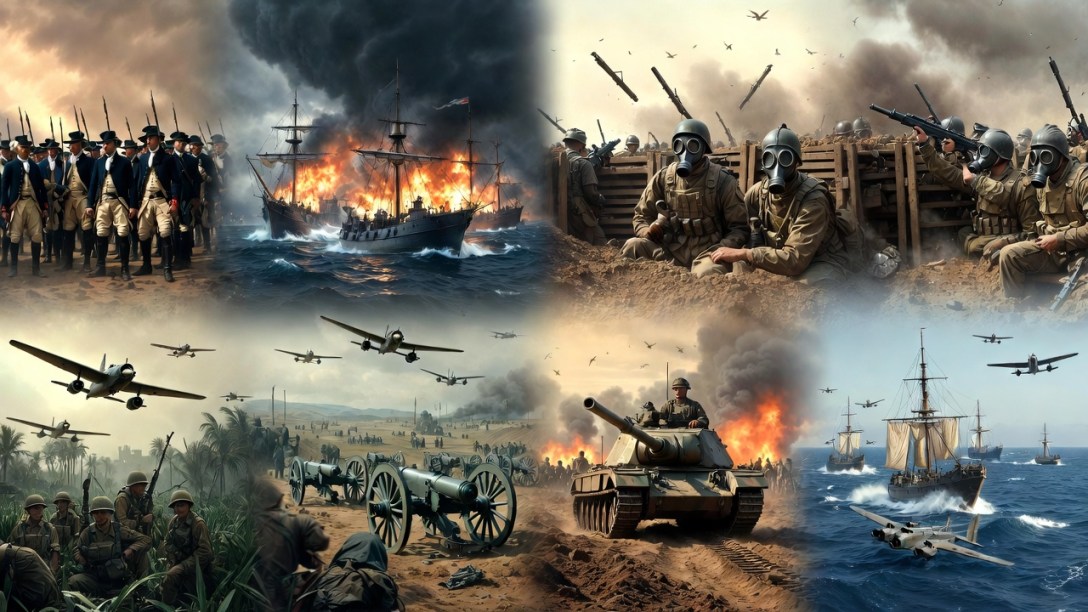
From the Revolutionary War to World War II, setbacks have been a reality, but perhaps never before has the United States dominated so objectively compared to the naysaying of detractors who are content to repeat Iranian propaganda and prefer to praise the Iranian regime.
George Washington has the dubious distinction of having lost more battles than he won as Commander of the Continental Armies during the Revolutionary War. Whether he lost seven or nine compared to winning three or six depends on what you consider a battle versus a smaller skirmish, but whatever criteria you prefer, he lost big time at Long Island, Kip’s Bay, White Plains, Fort Washington, Brandywine, and Germantown. Located on a Manhattan bluff facing the Hudson River across to Fort Lee in New Jersey, Fort Washington in particular is considered his worst defeat. At first, he planned to abandon the fort in question as his army was already fleeing New York in the face of the British General Sir William Howe, but ultimately deferred to the opinion of General Nathanael Greene and ordered the fort to mount a defense. By the end of the day on November 16, 1776, the British surrounded the location with an undefeatable force of four corps and inflicted heavy casualties before capturing 2,900 soldiers including officers along with a large cache of arms and artillery while Washington himself was watching from nearby. Greene described the scene “Yesterday morning General Washington, General Putnam, General Mercer, and myself went to the Island to determine what was best to be done, but Just at the instant we stept on board the Boat the Enemy made their appearance on the Hill where the monday action was, and began a severe Cannonade with several field pieces. Our Guards soon fled, the Enemy advanced up to the second lines. This was done while we were crossing the River and getting upon the Hill. The Enemy made several marches to the right and to the left, I suppose to reconnoiter the fortifications and lines. There we all stood in a very awkward situation; as the disposition was made and the Enemy advancing we durst not attempt to make any new disposition—indeed we saw nothing amiss. We all urged his Excellency to come off. I offerd to stay. General Putnam did the same and so did General Mercer, but his Excellency thought it best for us all to come off together, which we did about half an hour before the Enemy surrounded the fort.” Though Washington tried to cast blame on Greene, he ultimately took responsibility in a letter to his brother, acknowledging that he’d been there “a day or two before it surrendered” and “what adds to my Mortification” was not making a different decision.
Of course, Washington isn’t the only general who suffered defeats before victory. History is filled with countless examples of the phrase it’s always darkest just before dawn. During World War II, US and Philippine forces suffered a devastating loss at the Battle of Bataan, a peninsula near Manila Bay on Luzon Island. Though American war planners believed they had until April 1942 to secure the region against a Japanese attack, the enemy moved faster than anticipated. By November 27 the year before, the legendary general Douglas MacArthur received word that “Japanese future action unpredictable but hostile action possible at any moment” and though he summoned up as many forces as possible, Japan began landing on Luzon Island by December 10. Less than two weeks later, a US submarine, the USS Stingray, Spotted a larger convoy of transports and escorts including 85 troop ships, two dozen destroyers, and six cruisers. We attempted to attack them at sea, but an issue with the torpedo detonators limited us to sinking only two of the troop ships, allowing the bulk of the force to land on the island. MacArthur planned a strategic retreat to their defensive positions, leaving behind a smaller force to defend against the Japanese landing. When the enemy came ashore in mass on December 22, however, the Americans and our Philippine allies were quickly overrun with the Japanese securing the landing zone and in position to move onto the peninsula by the end of the day. Though we continued to fight a rear guard action, Japanese planes and tanks decimated the Filipino infantry, leaving artillery and other assets exposed even as another Japanese force landed at Lamon Bay the next day. Realizing they would soon be overwhelmed, General Jonathan Wainwright faced an agonizing decision, either continue to fight a losing battle or completely withdraw to Bataan and mount a defense there. Though fierce fighting occurred across the entire peninsula over the next several months, the Japanese continued to advance and eventually surrounded the army at Bataan. Before attacking with infantry, they pounded the area with artillery beginning on April 3. In addition to the fierceness of the bombardment and the heavy fighting, the American and Philippine troops were tired, sick, and hungry. Wainwright informed MacArthur, “The troops have been on half rations for three months and are now on less than that amount which results in much loss of physical vigor and sickness,” and by April 6, the United States was reporting disaster after disaster, “General Homma’s army had destroyed two divisions, the 21st and the 41st, and one regiment, the 51st. Homma had also cut off two regiments from the main area of interest, the 41st and 45th infantry, and isolated Sector D headquarters from its troops. The left flank of II Corps was smashed, the two corps split apart, Mount Samat lost, defending artillery all but neutralized, and the rear of Parker’s II Corps invitingly open to Japanese exploitation.”
On April 9, Bataan officially fell, though whether it was a negotiated surrender or otherwise remains in dispute. The Voice of Freedom broadcast the outcome either way, claiming “Bataan has fallen. The Philippine-American troops on this war-ravaged and bloodstained peninsula have laid down their arms. With heads bloody but unbowed, they have yielded to the superior force and numbers of the enemy. The world will long remember the epic struggle that Filipino and American soldiers put up in the jungle fastnesses and along the rugged coast of Bataan. They have stood up uncomplaining under the constant and grueling fire of the enemy for more than three months. Besieged on land and blockaded by sea, cut off from all sources of help in the Philippines and in America, the intrepid fighters have done all that human endurance could bear.” Afterwards, historians would debate whether the valiant effort to slow the Japanese for several months prevented an even worse outcome than losing the peninsula, but for the soldiers involved the horrors didn’t end on April 9. Instead, the Japanese forced some 60,000 Filipinos and 15,000 American prisoners of war to march more than 60 miles without food or water. The American Lieutenant Kermit Lay recounted the horror of being rounded up, “They pulled us off into a rice paddy and began shaking us down. There [were] about a hundred of us so it took time to get to all of us. Everyone had pulled their pockets wrong side out and laid all their things out in front. They were taking jewelry and doing a lot of slapping. I laid out my New Testament. … After the shakedown, the Japs took an officer and two enlisted men behind a rice shack and shot them. The men who had been next to them said they had Japanese souvenirs and money.” By the end of the march, somewhere between 5,500 and 18,650 of the men died from dehydration, starvation, or outright execution. All told, the Battle of Bataan resulted in over 10,000 dead and 20,000 wounded, and yet the loss might have provided critical to future victories.
As the Iran War enters its third week, the United States and Israel are dominating by almost every possible objective measure. In addition to wiping out the top echelons of Iranian leadership, we have reduced their ability to strike outside their borders by around 90% with the number of missiles and drones per day plummeting. The day the war began, Iran was able to launch 480 missiles and 720 drones, but by March 10 the output had fallen to 40 and 60 respectively with some 60% of their launchers having been destroyed. The Iranian Navy has been equally routed, losing around 60 vessels including major warships. They no longer have an air force or any operational control over their own airspace. Their radar and communications have been heavily disrupted as well. On a more figurative level, it is not even clear if the person the Iranians selected as their new Supreme Leader, the son of the deceased Supreme Leader, is even alive. Some reports indicate he was dead before they selected him. Others suggest they selected him when he was in a medically induced coma after losing a leg in one of the initial raids. Still others suggest he is conscious, but disfigured. Whatever the case, Iran has provided no proof of life in over a week, and the only thing the world has supposedly heard from him was a defiant message read on state television by someone else. Clearly, these are not the actions of a man in charge and on the verge of victory whatever his state. To be certain, these successes have not come without costs and challenges. Thirteen US soldiers have died, seven in an attack on one of our bases and six when a refueling plane crashed. Iran has also managed to roil worldwide oil markets by striking ships in the Strait of Hormuz with what appear to be drones, causing prices to spike and stocks to fall. While any loss of life is tragic and the situation in the Strait needs to be addressed, the reality remains that in comparison with other conflicts, nothing so far has occurred which would lead any objective observer to believe the United States will not ultimately prevail, and yet the idea that we are somehow losing and Iran is soon to be ascendant dominates among detractors.
Whatever the event, the Orange Man Bad Theory of Everything ensures that the outcome is positive for them and negative for us to the point where CNN recently argued that Iran’s new Supreme Leader might not need to appear, ever, in a supposed “analysis” by Leila Gharagozlou. “Almost a week after his appointment as Iran’s supreme leader, Mojtaba Khamenei remains in the shadows…It’s now been six days since he was named the supreme leader, and the Iranian people have not seen him or heard his voice,” but “His absence has done little to dampen the fervor of those faithful to the regime, thousands of whom have taken to the streets to pledge their allegiance.” Incredibly, Ms. Gharagozlou continued to cite supposed supporters of the new supreme leader as evidence this is a perfectly normal and sustainable state of affairs, not a sign of weakness, those who see his lack of being seen “not as vulnerability, but as virtue.” So virtuous in fact that the regime itself “have resorted to circulating AI-generated videos of him to drum up support.” While that alone should warrant a healthy suspicion about the overall health of the entire Iranian government, “The regime can sustain a period of time without public appearances, said Sanam Vakil, director of the Middle East and North Africa program at London’s Chatham House thing tank…Some analysts say what matters most in Tehran right now is not the visibility of the supreme leader, but the cohesion of the institutions beneath him.” For its part, ABC News is taking a similar approach, lauding Iranian resolve and the rational nature of their institutions for both “adapting and expanding its military tactics” after being pummeled by the US and Israel. “The U.S. and Israel have shown with their ‘industrial application of military force’ that their strikes have been ‘incredibly sophisticated,’ retired British Gen. Richard Shirreff, a former NATO deputy supreme allied commander between 2011-14, told ABC News on Wednesday. But, he added, history has demonstrated that aerial bombing has not always been effective at changing hearts and minds.” “It only reinforces determination to resist against the attacker,” he said. “So long as they’ve got breath left in their bodies, the regime will look for the asymmetric approach to undermine the Americans.”
The same as CNN, ABC News went on to quote the Iranians themselves as evidence of this resolve as though they were a reliable source. “We’ve had two decades to study defeats of the U.S. military to our immediate east and west. We’ve incorporated lessons accordingly,” explained Abbas Araghchi, the Iranian foreign minister the day after the first strikes. “Bombings in our capital have no impact on our ability to conduct war” because the Iranian military created a “decentralized” force “which enables us to decide when—and how—war will end.” This is somehow true even though Iran “hasn’t detailed the ways in which its defensive plans have adapted or changed since the first U.S.-Israeli strikes on Feb. 28, but Tehran said on Wednesday that it had continued amplifying the scale and reach of its overnight drone-and-missile strikes, which continue.” From there, ABC quoted yet another expert to praise the wisdom of the Iranian government, Jonathan Graubart, the political science chair at San Diego State University. “One thing that is rarely denied is that its government has been a rational one.” “So, it had a strategy in place, including planning for the killings of the ayatollah and many top military and political leaders,” he added. In contrast, many in the media including ABC News, CNN, and others have been questioning whether the United States has a strategy at all, or claiming that whatever strategy we had is incompetent. In addition to easily falsifiable claims that the Administration was unaware Iran would seek to snarl the Strait of Hormuz – especially ridiculous considering the President himself has been talking about its importance since at least 1998 – there has been endless discussion over whether or not the United States has any plan for the endgame. ABC phrased it this way in the same article, “Questions remain about what a U.S. and Israeli victory would entail, observers told ABC News, in part because the air strikes are unlikely to change the way Iranian officials view themselves and their place in the Middle East,” then continued to quote the same naysaying experts. “I think Trump genuinely thinks that he could do to Iran what he’s done to Venezuela,” General Shirreff claimed. “In other words, decapitate the regime and put in place somebody who Trump can bribe to do what America wants to do. That is not going to happen in Iran.” Mr. Graubart added that it was a “fantasy” and another expert claimed it’s “in no way sufficient.” “Especially if the goal is regime change, although that’s unclear since the stated objectives of the conflict are vague and seem to keep changing, there is no way this can be achieved without boots on the ground,” Vicki J. Gilbert said, an associate professor in international affairs at Wofford College.
A few things come to mind. First, the enemy in every war insists they will never surrender–until they do. The Japanese were defiant after the first nuclear weapon at Hiroshima. We can expect the Iranians to be defiant before they suddenly are not. Second, what the experts perceive as a lack of strategy is actually one of the key benefits of the strategy. At this point, there are three ways this war could end, ranging from most desirable to least. The Iranian people could overthrow the regime and put in place an entirely new government, someone from the existing government steps forward and agrees to make verifiable reforms, or we leave the country to lumber on as a smoking ruin, set back a decade or more in their plans. All three of these options are superior to the status quo, and while the third would be the least desirable and many would debate whether it was worth the effort, whether or not it happens is entirely in our control. Contrary to CNN, other outlets, and the Iranians themselves, the idea that Iran would not agree to a ceasefire right now is absurd, especially when we could wipe out their ports, power plants, and other infrastructure if we chose and they are surely aware their country would be trapped in the dark ages in that case. Third, and perhaps most importantly for the future, it is inconceivable to me that the United States is capable of fighting a full scale war with a major power under these conditions. As some have mocked, if this was World War II, CNN would be broadcasting in German. It is not much of a stretch to believe half the country would want to surrender in a week.

 Confessions of a Conservative Atheist