Military conflict is never without risk, but if the media was championing our ability to prevent Iran from striking last year, why are they not doing so now and why are mainstream outlets seemingly silent on the role other Arab nations are playing and how it seems the overall tide in the region is rapidly turning against Iran?
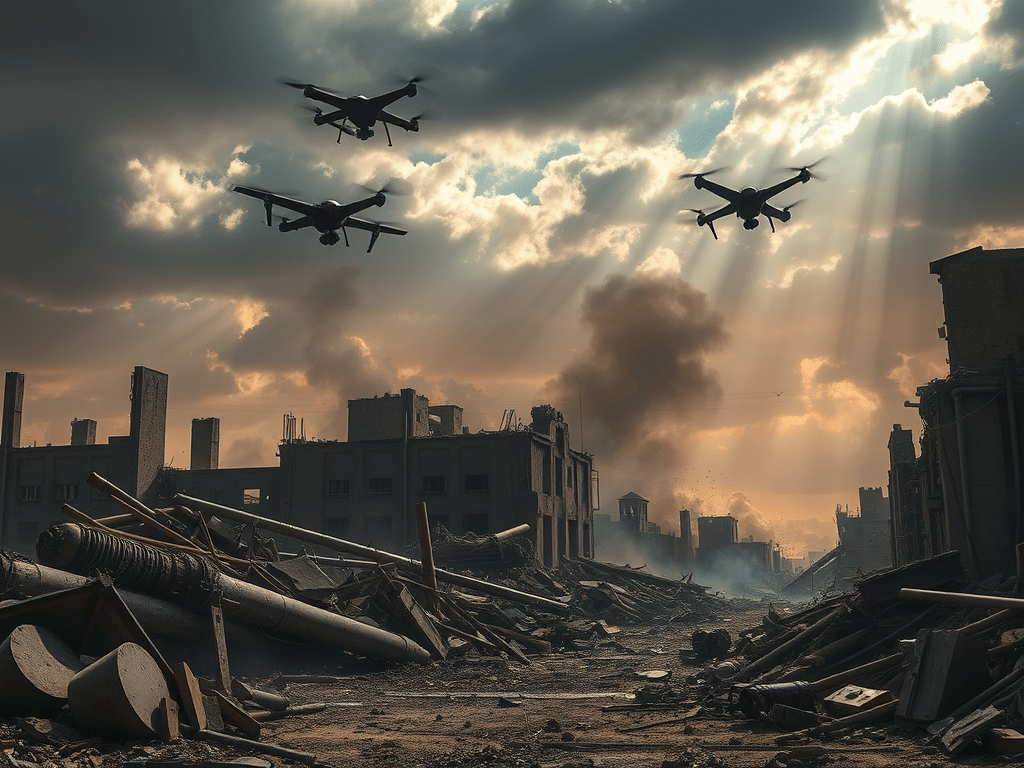
Last week, the world was shocked when Israel unleashed a brutal airstrike against nuclear facilities in Iran, taking out three senior leaders in the process. “Not since the Iran-Iraq war of the 1980s has Iran seen such a devastating series of strikes in a single day,” CNN described the scale of the attacks, and they were not wrong. The logistics alone are staggering. Apparently, the Israeli secret service, Mossad, has spent around two years constructing a secret drone base inside the border of Iran and have been able to smuggle weapons and equipment in and out. Further, senior Iranian military leaders were intentionally lured to a specific location and tricked into remaining there for slaughter. According to The Times of Israel, “Israel spent years preparing for the operation against Iran’s nuclear and missile programs, a security official tells The Times of Israel, including building a drone base inside Iran and smuggling precision weapons systems and commandos into the country. The effort hinged on tight joint planning between the IDF and the Mossad intelligence agency. According to the official, Mossad agents set up a drone base on Iranian soil near Tehran. The drones were activated overnight, striking surface-to-surface missile launchers aimed at Israel. In addition, vehicles carrying weapons systems were smuggled into Iran. These systems took out Iran’s air defenses and gave Israeli planes air supremacy and freedom of action over Iran. The third covert effort was Mossad commandos deploying precision missiles near anti-aircraft sites in central Iran.” “We did specific activities to help us understand things about them [the Iranian leadership] and then used that information to make them act in a specific way,” an official described the subterfuge. “We knew this would make them meet, but more importantly we knew how to keep them there.”
The impact was equally devastating. “The attacks surpass a series of historical flashpoints,” CNN continued, and signal a new phase in a conflict between Israel and Iran that for decades was waged in the shadows, before exploding into real-world confrontation in the past two years.” The targets included the Nataz nuclear site and unidentified locations on the outskirts of Tabriz and Shiraz. In addition to destroying nuclear infrastructure and killing at least nine senior nuclear scientists, Israel Defense Forces claimed “As part of the combined opening strike, IAF fighter jets struck the command center where the Commander of the IRGC’s Air Force, Amir Ali Hajizadeh, was located along with other senior officials.” Two other senior leaders were also killed, the Commander of the UAV Force of the IRGC’s Air Force, Taherpour, and the Commander of the Aerial Command of the IRGC’s Air Force, Davoud Shaykhian. Though the media initially tried to insist these attacks were carried out against the wishes of President Donald Trump or even without his knowledge, those claims were quickly quashed by Israel and the United States. As the President put it, “We of course support Israel, obviously and supported it like nobody has ever supported it. Iran should have listened to me when I said — you know I gave them, I don’t know if you know but I gave them a 60-day warning and today is day 61,” he added. “They should now come to the table to make a deal before it’s too late. It will be too late for them. You know the people I was dealing with are dead, the hardliners.” “They didn’t die of the flu; they didn’t die of Covid,” he added when CNN’s Dana Bash asked if they were killed in the attack. The deadline President Trump was referring to was set in April, when he sent a formal letter giving the Iranian regime time to make a deal to end their nuclear weapons program. “I hope that Iran, and I have written them a letter, saying I hope you are going to negotiate because if we have to go in militarily, it is going to be a terrible thing for them,” he said in a Fox interview at the time. “I said, I hope you’re going to negotiate, because it’s going to be a lot better for Iran.” Previously, he’d warned the regime of a massive attack if they refused to negotiate. “If they don’t make a deal. there will be bombing. It will be bombing the likes of which they have never seen before.”
At this point, there can be no doubt that President Trump was deadly serious about this deadline and Iran, in their recalcitrance, has paid an equally serious price. The question, of course, is what happens from here and not surprisingly, Iran has attempted to respond, managing to hit Tel Aviv itself with several missiles over the weekend, and the media was immediately filled with stories fretting about a potential broader regional war, as they have been since Hamas struck Israel on October 7, 2023. Andrew Roth, writing for The Guardian, claimed these strikes “will probably lead to an Iranian retaliation that could develop into a larger war between Israel and Iran, a new conflict that Trump has publicly sought to avoid.” US foreign policy expert and former State Department Advisor Vali Nasr told CNN’s Becky Anderson, “Trump misunderstood Iran,” and now, “instead of talking, we’re going to see use of weapons as a tool in the negotiations.” “This regime’s back is put to the wall. If it doesn’t respond, it will lose all credibility, it will be weak and the Israelis are not going to stop,” he added. “It is difficult to believe that Israel would and could have attacked at this scale without US knowledge and green light,” Mr. Nasr also posted on X. President Donald Trump “may have calculated this will soften Iran’s position, but just as he was wrong that maximum pressure will bring Iran to the table he will (be) proven wrong that Israeli attack could give him a diplomatic win.” Ali Vaez, the International Crisis Group’s Iran project director, claimed Israel’s attack likely “blew up Trump’s diplomacy with Iran” and “What Trump does next could determine whether his presidency will be consumed by another war in the Middle East or not.” “This is a disaster of Trump and Netanyahu’s own making, and now the region risks spiraling toward a new, deadly conflict,” explained Democrat Senator Chris Murphy without reference that this is the third direct strike between the two countries in less than two years. “Iran would not be this close to possessing a nuclear weapon if Trump and prime minister Netanyahu had not forced America out of the nuclear agreement with Iran that had brought Europe, Russia and China together behind the United States to successfully contain Iran’s nuclear ambitions.” To be sure, these concerns are shared outside political circles as evidenced by a drop in the stock market and an increase in oil prices. As CNN described it, “The price of oil surged in one of the market’s largest single-day increases in years, reflecting fears that a wider conflict in the Middle East could lead to serious energy supply disruptions. The numbers: Brent crude, the global benchmark, was up 5.9%, at nearly $71 a barrel. US oil jumped 8.6% to nearly $74 a barrel, after gaining as much as 13% earlier in the day. Those are the biggest intraday gains for each benchmark since March 2022, a month after Russia launched its full-scale invasion of Ukraine. Investors are concerned about how a retaliation by Iran may play out, whether the US may be targeted and whether a critical oil transport route may be disrupted.”
Of course, those of us with a memory that extends back more than six months will undoubtedly recall that Israel’s previous attacks on Iran were treated somewhat differently by the mainstream media, particularly in terms of Iran’s ability to respond. Last October, President Joe Biden directed the US military and other allies in the region to help repel an Iranian ballistic missile attack and the move was widely seen as a major win. “This is testament to Israeli military capability and the U.S. military,” he said during his first on-camera remarks on the issue. “It’s also a testament to intensive planning between the United States and Israel to anticipate and defend against the brazen attack we expected.” “Make no mistake, the United States is fully, fully, fully supportive of Israel,” he added. Vice President Kamala Harris said she “fully supported” Biden’s order to help shoot down the Iranian missiles and that her support for Israel was “unwavering.” “I condemn this attack unequivocally,” Harris said. “I’m clear-eyed. Iran is a destabilizing, dangerous force in the Middle East, and today’s attack on Israel only further demonstrates that fact.” Six months earlier, Iran launched a series of drones at Israel, which were also repelled. The Biden Administration immediately took the opportunity to claim the equivalent of blocking a fist headed for your face was a win. “You got a win. Take the win,” he told Prime Minister Netanyahu in the immediate aftermath while urging him not to retaliate. National Security Council Spokesman John Kirby claimed that blocking the attack was an “unprecedented success.” It showed an “unprecedented sense of resolve and determination and military capability” by the US, Israel, and other allies. “It should tell everybody else that Israel is not alone, that this was a coalition put together to help Israel defend itself,” he explained. “Iran is just increasingly further isolated in the region.” Politico opined at the time, “Iran’s attack on Israel was dangerous, provocative — and seemingly all but designed to fail. None of the hundreds of projectiles launched at Israel hit a major target. So, what was the point?” In their view, “The latest crisis to erupt in the region left many longtime analysts wondering what Iran’s real intention was — whether the direct attack was mainly a face-saving exercise or a genuine effort to escalate — and whether the United States can still manage to prevent what it’s been trying to avoid for more than six months, a full-scale regional war.” When Israel retaliated a week later, Reuters framed it this way, “The limited scale of the attack and Iran’s muted response appeared to signal a successful effort by diplomats who have been working to avert all-out war since an Iranian drone and missile attack on Israel on Saturday.”
Based on this history, it seems clear to me that President Trump and Prime Minister Netanyahu are betting that Iran is powerless to mount any kind of serious escalation, especially when Hamas and Hezbollah are in ruins, and the broader Middle East appears to be aligning themselves against the theocratic regime. Based on reporting to date, Saudi Arabia has helped support Israel’s efforts, especially to repel attacks, behind the scenes and even Syria allowed Israel to refuel over their airspace. Jordan, Azerbaijan, Qatar, Turkey, and the United Arab Emirates also allowed Israel access to their airspace. If President Trump’s triumphant trip to the Middle East last month, complete with a surprise meeting with Syria’s new leader, Ahmed al-Sharaa, a former terrorist supporter who now claims to be a reformer, is any indication, he is confident that Iran is at its weakest point in decades and now is the time to end the nuclear threat forever, whether diplomatically or otherwise. This is, of course, something of a gamble and it is not without risk. Twenty four people in Israel are already dead, including a teenager at a Tae Kwon Do academy. War, as ever, is unpredictable, there will be unintended consequences, and situations can spiral out of control. At the same time, if the media was championing our ability to prevent Iran from striking last year, why are they not doing so now and why are they not including that in their reporting or what passes for analysis? Why are mainstream outlets seemingly silent on the role other Arab nations are playing and how it seems the overall tide in the region is rapidly turning against Iran? While it might prove a false hope, these remain some of the most relevant data points available with which to evaluate the potential for a worsening conflict and Israel’s odds of success without major loss of life. From President Trump’s point of view, Iran cannot be allowed to possess a nuclear weapon under any circumstances. He offered the regime 60 days to negotiate a peaceful settlement. They refused, and hence he was willing to take the risk of a wider conflagration to prevent what he considers the red line and he was astute enough to rely on Israel to execute, protecting their interests as well as our own. History might well prove him wrong, but as I’ve said before, I wouldn’t bet on it just yet.

 Confessions of a Conservative Atheist