We, indeed all life on Earth, are as ancient as we are new, as grandly complex as we are simple. Indeed, it is fair to say that complex life wouldn’t exist at all without this contradiction.
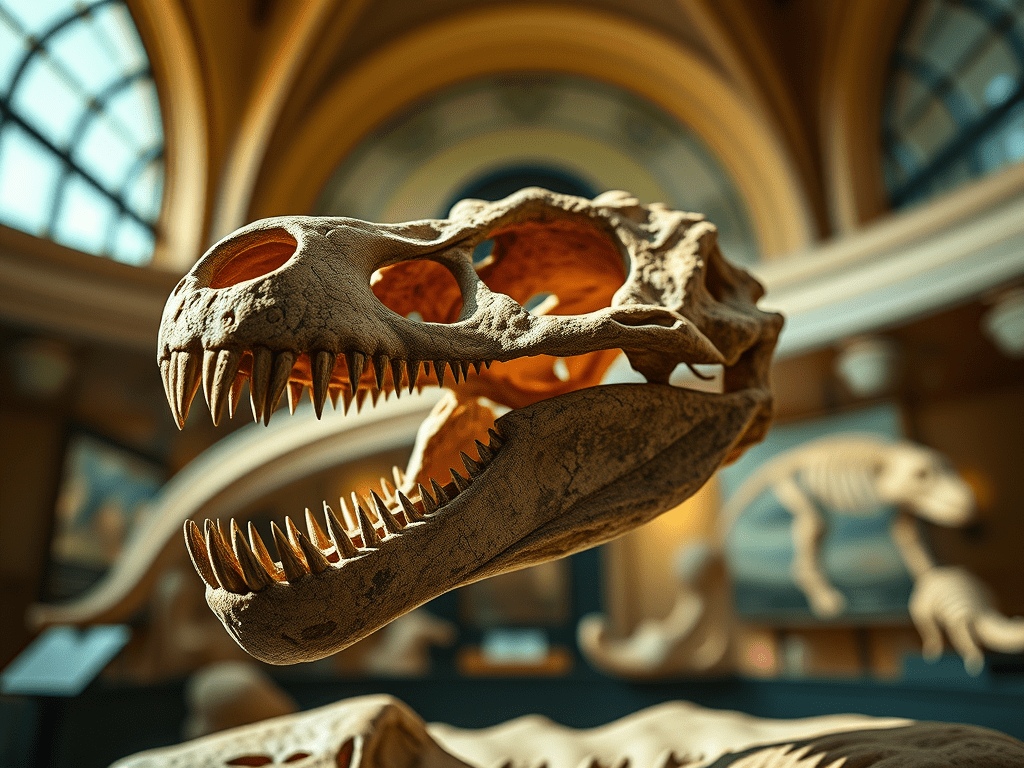
The mammalian ear is significantly more complex than our bird and lizard cousins in the vertebrate family. Rather than being attached to the jaw, mammal ears are separated while maintaining a key contact point and feature three inner ear bones instead of one. Scientists believe this evolutionary split began to occur around 260 million years with the emergence of the cynodonts, a precursor to modern mammals. Cynodonts, literally “dog teeth,” most likely continued to lay eggs, but their skeletal structure was more mammalian in comparison to the fauna in the Late Permian Era. The teeth were fully differentiated from each other rather than fused into a beak, there was a bulge in the brain cases, their jaw was more developed, they had a secondary palate, and were believed to have some primitive means to control their body temperature, such as fur. They also had an early separated ear bone, known as the stapes, a rectangular structure with a hole in the middle and columns on either side. This allowed for the direct transmission of sound waves through the inner ear, setting the stage for what would ultimately develop in modern animals. Evolution, however, is rarely so simply in inheritance and frequently quite surprising in action. A new study revealed that the path between cynodonts and modern mammals wasn’t nearly as direct as we’ve previously believed, suggesting that different ear structures evolved multiple times across multiple lineages, as though natural selection were conducting simultaneous experiments to determine which approach worked best, or rather which was fittest for reproduction, which to an extent it surely was. The latest research is based on an CT scan of two fossils belonging to mammal-precursor species, Brasilodon quadrangularis and Riograndia guaibensis. R. guaibensis is the earlier specimen and in the traditional view should have the more primitive structure, dating some 17 million years before the more modern form was said to emerge. Instead, it features the current mammalian-style contact between the jawbone and the skull. Brasilodon quadrangularis is the species believed to be closer to modern mammals, and yet it lacks this feature. Therefore, the feature must have emerged more than once, only to disappear and emerge again, perhaps multiple times. The lead researcher, James Rawson from Bristol’s School of Earth Sciences, put it this way, “The acquisition of the mammal jaw contact was a key moment in mammal evolution. What these new Brazilian fossils have shown is that different cynodont groups were experimenting with various jaw joint types, and that some features once considered uniquely mammalian evolved numerous times in other lineages as well.”
Another recent study provides evidence of the opposite kind, how evolution is equally adept at preserving structures that work and repurposing them for multiple needs. This study, co-authored by Catherine Carr, a Marine Biologist at the University of Maryland looked at an ancient part of the inner ear known as the saccule in modern geckos. Previously, the saccule was believed to be responsible for body positioning and maintaining balance, but the study found that it can also capture low-frequency vibrations, traveling through either the ground or water. They were able to determine this by observing the pathway itself on live geckos in a laboratory setting, where the specimens were exposed to different stimuli. According to their results, the saccule can detect frequencies between 50 and 200 Hertz, when hearing for most species is measured in thousands of Hertz. “The ear, as we know it, hears airborne sound. But this ancient inner pathway, which is typically linked to balance, helps geckos detect vibrations that travel through mediums like the ground or water,” explained Ms. Carr. Geckos were chosen both because of their mastery of balance, being able to cling to walls or another surface, and because they have what we consider normal hearing, that is the detection of vibrations in air molecules, unlike many other reptiles. The knowledge that they can also pick up lower level vibrations using the saccule, however, also implies that reptiles might hear much more than we think they do. “A lot of snakes and lizards were thought to be ‘mute’ or ‘deaf’ in the sense that they do not vocalize sounds or hear sounds well,” study co-author and former University of Maryland graduate student Dawei Han said in a statement. “But it turns out they could potentially be communicating via vibrational signals using this sensory pathway instead, which really changes the way scientists have thought about animal perception overall.” There are implications beyond reptiles as well. Humans also possess a saccule, meaning it is a structure preserved across most if not all of the animal kingdom, likely evolved for one purpose and now used for many. While we might not use it like a gecko as a sort of sixth sense, there’s no reason to believe it doesn’t pick up vibrations for us as well. “Think about when you’re at a live rock concert,” explained Ms. Carr. “It’s so loud that you can feel your whole head and body vibrate in the sound field. You can feel the music, rather than just hearing it. That feeling suggests that the human vestibular system may be stimulated during those loud concerts, meaning our sense of hearing and balance may also be linked closely.”
The combination of the two studies demonstrates the marvelous contradictions that underlie all life on Earth, conserving what works while continually innovating on a grand scale. A third study demonstrates how deep this conservation goes, however, far deeper than the human mind can imagine, and how to a frighteningly large extent from a our perspective, we share more in common with a lowly amoeba or even a bacteria than we’d like to admit, much, much more. This time a cross-disciplinary team of scientists from the Charles University and University of Chemistry and Technology in Prague, the University of Milano, and the Institute of Science Tokyo learned how ancient proteins, precursors to current ones uses in ribosomes, a modern structure that supports the construction of proteins in a cell, were originally used to support processes around a precursor to DNA itself, specifically serving to isolate it from the surrounding environment before there was even anything resembling a modern cell – or even modern life. In principle, evolution only requires a few key ingredients, namely a self replicating molecule with the ability for copies of itself to inherit variable traits, but this simplistic model doesn’t allow for complexity of any kind. To some extent, it is the enemy of complexity because simpler forms can reproduce faster, and either consume the resources of more complex forms or destroy them outright. For example, a simple protein molecule known as a prion, which we would not consider alive, produces copies of itself quite effectively and dangerously, performing replication by forcing other proteins to take its shape, one of which causes Mad Cow disease. Such a simple structure can, in principle, evolve, but in order for life to become complex, it needed a way to perform the replication process in relative peace and security in addition to a means to encode that complexity. In other words, it needed to defend itself from both the environment and potential competitors. DNA is the means to encode complexity in a modern cell. It’s protected in two key ways, separated in advanced eukaryotic cells from everything else by the nucleus, and the entire cell is protected by a membrane. DNA, as the brains of the cell, is copied in part into much smaller strands of RNA, essentially instructions for what the cell needs, which exit the nucleus, bond with the ribosomes, and then attract specific proteins using these peptides. Less complicated prokaryotic cells (primarily bacteria) follow a simplified version of this process, except without the nucleus. DNA, RNA, ribosomes, and peptides are therefore shared across all life on earth (excluding viruses, which are not technically alive by most definitions), and it has long been believed that they evolved only once, closely together in some fashion, likely as a result of some earlier, shared benefit that then branched out and became differentiated into the complexity we see today.
The new study suggests precisely that. A modern ribosome contains two structures, one small and one large. The larger structure is generally responsible for assembling proteins, but the smaller structure appears to be more ancient, predating the modern interplay between RNA and ribosomes. The small structure contains rPeptides, which had yet to be studied in any detail. According to the new research, these rPeptides form tiny water droplets, protecting the RNA molecule while it is exposed to the relative chaos of the cytoplasm, which would easily damage the delicate structure. As Phys.org described the findings, “The distinct properties of the two protoribosomal stages suggest that rPeptides initially provided compartmentalization and prevented RNA degradation, preceding the emergence of specific RNA-protein interactions crucial for the structural integrity of the contemporary ribosome.” Dr. Klára Hlouchová, an author of the study, explained the results, “Our findings imply that peptides play a vital role in driving condensation and stabilizing the protoribosome. This sheds light on how fundamental life processes may have been protected and compartmentalized in a prebiotic world.” “At the same time, the spontaneous formation of concentrated droplets depends in a subtle way on the RNA sequence and structure, implying that it is rather specific for the ribosomal particles,” added Professor Giuliano Zanchetta, a co-lead researcher of the study. Crucially, “These interactions among molecular precursors started to occur more than 4 billion years ago before the first life emerged,” Dr. Hlouchová emphasized, meaning that the cells in our body right now contain some of the very structures that were present before a cell or anything close to it existed in the first place. Four billion years ago, it seems likely, these rPeptides were forming water droplets to protect some early, self-replicating, rather simple RNA molecule (which was probably much closer to a peptide made of different amino acids than anything else given we can assume these simple molecules played multiple, unspecialized roles), and they are still doing it today. At the same time, consider everything that evolution has invented – and in most cases scrapped when the vast majority of species have gone extinct – during the four billion years in between. We, indeed all life on Earth, are the balance between the two, as ancient as we are new, as grandly complex as we are simple. Indeed, it is fair to say that complex life wouldn’t exist at all without this contradiction. If there weren’t reliable, proven, shall-we-say bullet proof forms and chemical pathways to build upon, there could be no complexity, and without complexity there could be no innovation.


