For whatever reason, there is something deep in the modern psyche that has been corrupted and cannot bring itself to accept the past as it was, that greatness has always been tinged with things we come to regret, that progress isn’t perfect, and that people never will be.
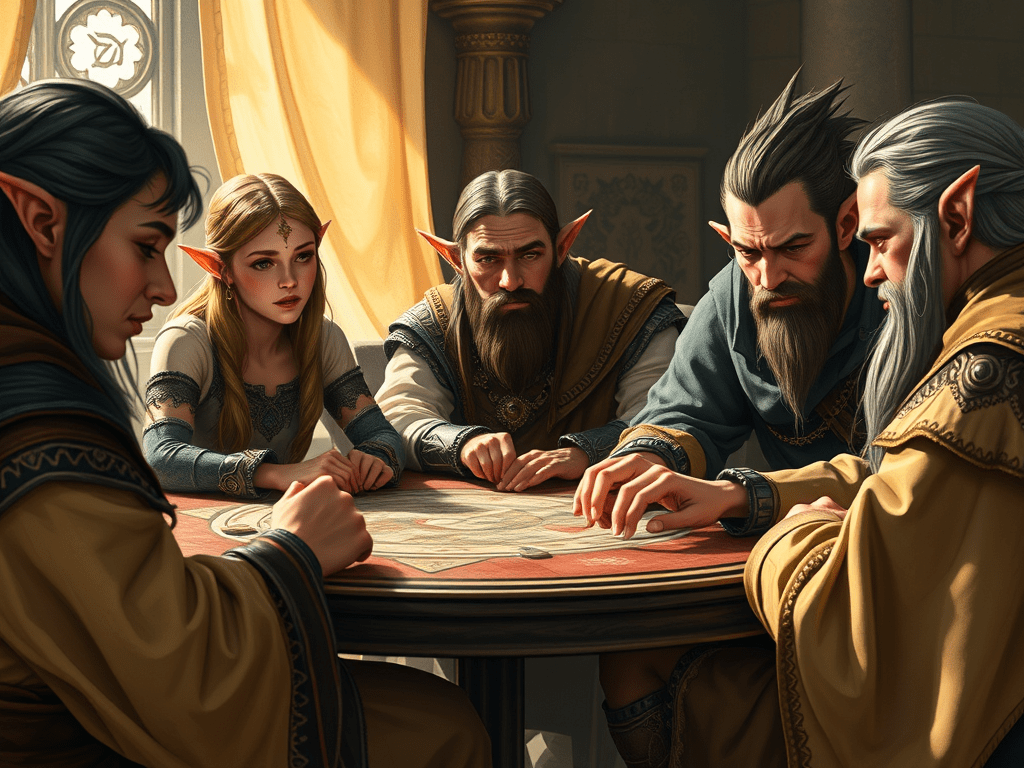
While much of corporate America was busy dismantling their Diversity, Equity, and Inclusion initiatives in the wake of Donald Trump’s electoral victory last November, at least one company decided it was an opportune time to effectively double down on woke, believing now is the time to commit to their progressive bonafides. Thus, Wizards of the Coast, owned by Hasbro and the publishers of the world’s most popular roleplaying game, Dungeons & Dragons ended the year with a series of changes to both the actual rules of the game, guidelines for how the game should be played in the modern era , and warnings about how it used to be played that seemed bizarrely anachronistic even at this point. First, they changed the longstanding term used to describe the variety of beings players can choose from, humans, elves, dwarves, and the like from “races” as they had been known for fifty years to “species.” While this change is technically more accurate given the original intention was never analogous to human races and ethnicities, it’s also insulting to the intelligence of their own customers, who the geniuses at Wizards of the Coast seem to believe are incapable of figuring this out, apparently playing the game for decades believing an elf was the same as a black person. Even worse, they took the unnecessary effort to differentiate different species, making it clear that they are completely separate lineages, only to simultaneously undermine the definition of species in the first place, treating them in fact as if they were races. According to the new rules, dwarves are no longer inherently brawny and durable, elves intelligent and dexterous, halflings small and quick. Instead, every one of the new species essentially starts as a human, that the character then customizes into a race or whatever. As The New York Times described it in the identity obsessed language we had hoped to be rid of, “Some character traits have been divorced from biological identity; a mountain dwarf is no longer inherently brawny and durable, a high elf no longer intelligent and dexterous by definition.” In other words, they’re species now, but not really, unless you believe a chimpanzee isn’t imbued with any fundamental differences than their closest cousins, humans. This is species as something entirely new that we can’t really explain, except to say it’s also entirely woke, something like race and species as a fictitious social construct. Wizards of the Coast, for its part, defended the change claiming that players wanted more leeway in creating their characters, but since they’ve always had leeway to tailor the game however they wanted, it’s hard to take them seriously at this point and needless to say, not everyone was pleased. “It’s an unnecessary thing,” explained Robert J. Kuntz, an award-winning game designer who frequently collaborated with Gary Gygax, a co-creator of Dungeons & Dragons, somewhat unnecessarily under the circumstances. “It attempts to play into something that I’m not sure is even worthy of addressing, as if the word ‘race’ is bad.”
Many would argue that the other changes are equally unnecessary and perhaps even more bizarre and insulting to players. Though Dungeons & Dragons is usually played among groups of friends, or at least acquaintances, who presumably know each other, have some level of shared interests, and some ability to interact socially without causing a scene, Wizards of the Cost apparently believes their customers are both really stupid and equally incapable of navigating a potentially uncomfortable situation without a pre-instituted trigger warning. “Since D&D is improvisational, the game can go in unexpected directions. It’s helpful to have an agreed-on signal that players can use to communicate that a limit has been violated, allowing you to adjust quickly,” the new Dungeon Master’s Guide suggests. “That signal might be a gesture (such as crossing the arms in an X or raising a palm in a ‘stop’ gesture), a code word or phrase, touching or lifting a designated object, or anything else your group agrees upon. Players should also feel safe to say ‘stop’ and pause the game until the issue is resolved.” Even better or worse depending on your perspective, “Players may also give a friend permission to use the signal on their behalf,” suggesting their customers are also too weak and pathetic to express themselves. Beyond wondering why anyone is playing the game with people who make them feel unsafe, “The person who invokes the signals can comment on what they want adjusted but doesn’t have to explain why the content is objectionable. The signal shouldn’t trigger a debate or a discussion: thank the player for being honest about their needs, set the scene right, and move on.” How a Dungeon Master is supposed to do that when the source of the discomfort or lack of safety remains unknown is unclear, but alternatively, “Make it clear to players that if a person isn’t comfortable using the signal, they can step away from the game or call for a break to talk to you quietly.” Perhaps equally needless to say, the need for a pre-emptive warning that treats players like infants incapable of speaking up for themselves, wasn’t well received either. “Wokeism personified,” claimed one player on social media. “The player signals what they ‘want adjusted’, but ‘doesn’t have to explain why the content is objectionable.’ All feelings of any kind must be validated at all times, without question or debate.” “Imagine needing a safe word in order to play a game with your ‘friends.’ The infantilization continues,” wrote another. Personally, I had to turn to my lovely wife after I learned this to ask if the people writing these rules have ever actually played the game. While I haven’t played much myself in recent years, those I played with in high school never had any issue sharing what they thought was objectionable, frequently and vociferously. If anything, the chief problem was the opposite. At least in my experience, there was a much greater threat of the entire campaign breaking up because of an objection, not because players were afraid to voice them. Obviously, a Gen-Xer playing in the late 1980s and early 1990s might as well be a dinosaur these days, but for us, the vicious cycle was always that we spent hours upon hours preparing for a game, only to have it blow completely up in less time because someone got pissed at someone over something, frequently with a lot of screaming, yelling, and cursing. No more, apparently. The kids today need agreed upon hand signs designed not to resolve disputes, but to ignore them.
Of course, the kids today also need to be protected from the past as much as the present. The final insult Wizards of the Coast delivered was a series of retroactive trigger warnings appended to earlier versions of Dungeons & Dragons that remain available in downloadable form online. Given that they do not believe their own customers are capable of expressing themselves without fear to their own friends, we should not be surprised that they feel they are equally incapable of reading anything produced prior to just about last week without being appropriately warned. To address that concern, they’ve added a lengthy preface, haranguing the language, the treatment of women, the inclusion of slavery, the rampant cultural appropriation, and of course, blaming white males. “Some language in the first iteration of D&D presents a moral quandary,” by that they must mean to the woke and the woke alone, “The documents reproduced in this book include many pages of charts and tables alongside lists of monsters, spells, and magic items. But that game content also includes a virtual catalog of insensitive and derogatory language, words that are casually hurtful to anyone with a physical or mental disability, or who happens to be old fat, non-conventionally attractive, indigenous, Black, or a woman.” This is obviously quite the list, who knew I was engaged in such atrocities as a teenager, but they weren’t quite finished, needing a reason for this litany of moral quandaries. “Some people have charitably,” meaning Wizards of the Coast has not, “ascribed this language to authors working from bad assumptions. In the 1970s, historical wargamers were predominantly white, middle-class men; it isn’t surprising that they would dub a class of soldiers the ‘fighting man.’ But when, in the pages of Greyhawk, the description of the Queen of Chaotic Dragons includes a dig at ‘Women’s Lib,’ the misogyny is revealed as a conscious choice,” because of course it is. Still, “It’s an unfortunate fact that women seldom appear in the original D&D, and when they do, they’re usually portrayed disrespectfully. Slavery appears in the original D&D not as a human tragedy that devastated generations over centuries, but as a simple commercial transaction. The cultural appropriation of original D&D ranges from the bewildering…to the staggering,” marking perhaps the first use of these terms regarding cultural appropriation in general. They are, however, generous – dare I say charitable? – enough to note the obvious, “Despite these shortcomings, D&D has always been a game about people choosing to be someone unlike themselves and collaborating with strangers to become friends. It has slowly become more inclusive, and as the player base has become more diverse, the pool of creators who make the game has expanded to include people with a broader range of identities and backgrounds.” Generally speaking, this should be a good thing, considering that the game was largely reserved to geeky fantasy nerds like myself when I started playing, but the fact that it comes at the expense of trashing the legendary creator, Mr. Gygax has caused many people to become angry for obvious reasons. Kyle Mann, the founder of The Babylon Bee, wrote on X, “Wokeism is a parasite. It can only infect and invade great things built by others. It cannot build on its own. This is why instead of making their own thing, wokies have invaded Dungeons and Dragons and begun denigrating its creator, Gary Gygax, the very man who essentially created the entire hobby. Imagine investing your life in founding an entire pastime, and now the vultures who own the rights to publish your works trash you in those works. If you enjoy any modern fantasy, RPGs, or any video game at all, you likely owe a debt to Mr. Gygax. His creativity was unparalleled. If you can find a copy of the early D&D books, do yourself a favor and pick them up. It’s an insanely inventive game system, and he’s actually a hilarious writer, making the huge tomes very readable.”
While I couldn’t have said it better myself, conservatives rightfully rejoicing that we have won an important victory over the woke, should not get overconfident. Elon Musk, who jokingly asked what it cost to buy Dungeons and Dragons in response to this nonsense, has described wokeness as a mind virus. If so, it’s closer to an antibiotic resistant strain of mutant bacteria that can never be fully cured, only suppressed and controlled. The same way political correctness was repackaged and expanded as wokeness a couple of decades later, any victory will be short lived before the war begins again. For whatever reason, there is something deep in the modern psyche that has been corrupted and cannot bring itself to accept the past as it was, that greatness has always been tinged with things we come to regret, that progress isn’t perfect, and that people never will be. Instead, they must lash out at everyone and everything, tearing it down while they insist they need safe spaces of their own. It’s sad, depressing, and absurd at times, but it’s not likely to end soon and in its own small way, Wizards of the Coast has made that all too clear, while effectively shitting on their own customers, which is actually quite the achievement in its own right.

 Confessions of a Conservative Atheist
Very good. You nailed it with this “For whatever reason, there is something deep in the modern psyche that has been corrupted and cannot bring itself to accept the past as it was, that greatness has always been tinged with things we come to regret, that progress isn’t perfect, and that people never will be.”
LikeLiked by 1 person
Thanks, I appreciate the comment and the kind words, though I wish it were different.
LikeLike