At the risk of sounding more than a little provincial, visiting a non-European country can always be a little daunting for a Westerner. As progressives put it, representation matters in some sense, but that’s where the opportunity for real magic happens when you travel.
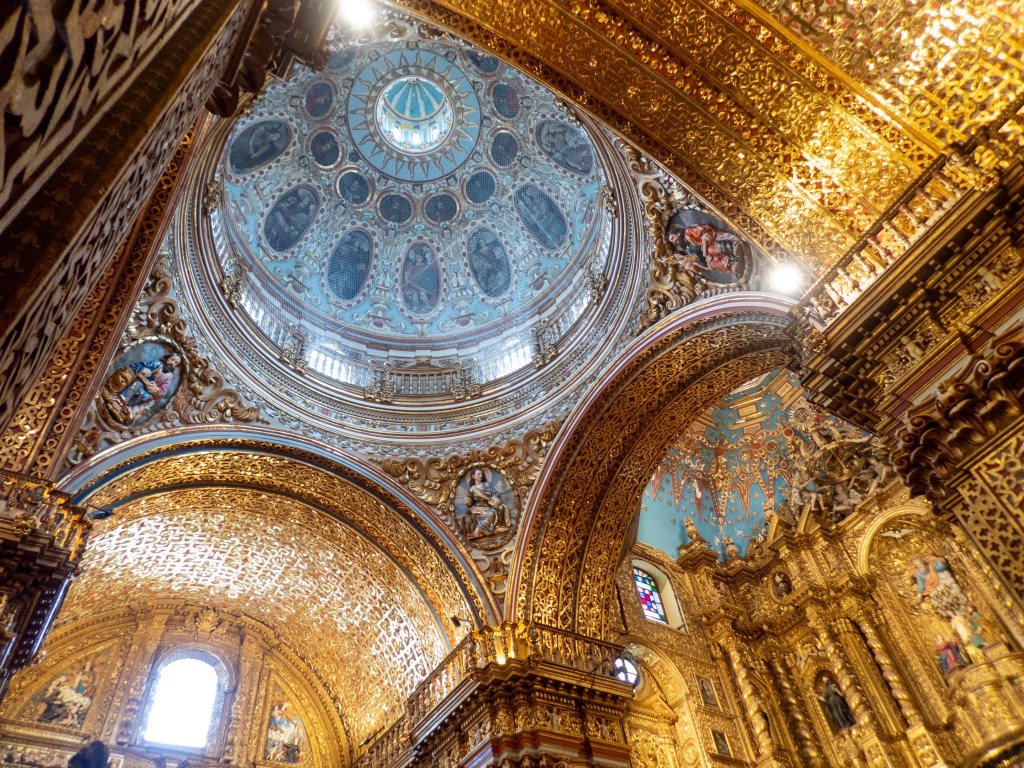
Quito, the capital of Ecuador, wasn’t a city I’d planned on visiting in my life. To the extent events in the South American country in general are covered in American media, the tone is decidedly negative, stories about a potential insurrection and most recently, a controversy over the Ecuadorian government raiding the Mexican embassy to recapture a convicted felon before he was swept beyond their borders. In that regard, Ecuador is uniquely situated south of Columbia and uses the United States dollar as their primary currency, making it an optimal location for both drug trafficking and money laundering. The insurrection and the embassy raid were in fact, primarily about the drug trade as recently elected President Daniel Noboa, only thirty three years old, has vowed to rid the country of drug-funded corruption – starting with the previous administration, who conspired publicly and privately with Mexican cartels. Fortunately, we saw precisely none of this when we were there, only learning about it later from a couple that lived in Ecuador on our expedition to the Galapagos. What we did see was an incredibly vibrant city, seamlessly blending the old and the new. Situated in a valley nestled in the majestic Andes mountains, the “old city” dates back to the original Spanish colonies in the 1500s. On August 15, 1534, the conquistador Diego de Almagro founded Santiago de Quito at a nearby location, which was renamed San Francisco de Quito in 1534. The city was refounded at its present site in December that same year, this time by 204 settlers led by Sebastián de Benalcázar, whose capture of Rumiñahui, ended all organized resistance. The Spanish promptly began building tremendous, spectacular churches to convert the indigenous population. Perhaps the most spectacular is the Church and Convent of San Ignacio de Loyola de la Compañía de Jesús de Quito, known in Ecuador simply as La Compañía, was built between 1597 and 1765. The interior of this church needs to be seen to be believed – intricate cedar carvings across the walls, columns, and ceilings are coated in 23-carat gold leaf. The upper portions feature spectacular stained glass, lining the tops of the walls and domes that shine down upon the pews. The combination borders on dizzying. In direct light, the gold shimmers and glows, creating an almost magical aura, but the complexity of the carvings, the sweeping lines of the columns and domes, and the vastness of the space transforms the solid gold color to near black, copper, and bronze depending on the angle. As you walk around, the colors seem to shift and change at each alcove lining the walls, but whenever you look up on a sunny day, it’s as if you were in the presence of a higher power.
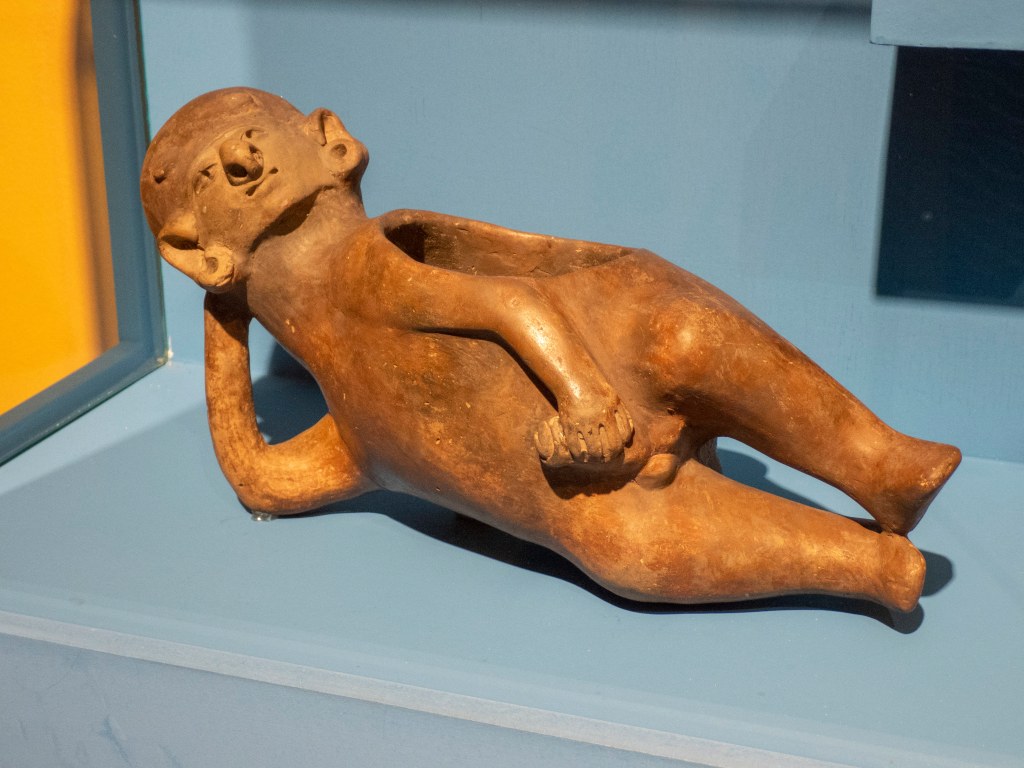
It’s no surprise that La Compañía has hosted even Catholic popes in recent memory. Pope John Paul II presided over a mass on January 30, 1985 and Pope Francis was there July 7, 2015 to pray before the image of Our Lady of Sorrows. One can only imagine what the native peoples must have thought entering the church for the first time hundreds of years ago. The Spanish might have been the first Westerners in Quito, but the indigenous populations go back much, much further to 8,000 BC. In 1956, American archaeologist Robert E. Bell excavated a site on the nearby slopes of the Lallo volcano, discovering obsidian and glass tools from a tribe of hunters and gatherers. By 1,500 BC, the native population had advanced enough to terraform the landscape of a small community, irrigating their fields with water from nearby streams. By 890 AD, the region was home to the Cara or Shyris empire, who swept in from the Western coast. To be sure, some historians dispute this and believe the area around Quito remained distinct from the Caran empire, referring to them as the Quitu. Whatever the case, either the Cara or the Quitu were ultimately taken over by the legendary Inca sometime in the 15th century, shortly before the arrival of the Spanish. Today, both aspects of Ecuador’s heritage are respected and celebrated. The National Museum of Ecuador, for example, is organized into three sections. Visitors begin by exploring pre-Colonial art, carvings and statues from a lost era that seem strange and other worldly to modern sensibilities. The proportions of the figures are distorted, with large heads and disgorged bodies, small hands and arms. Many are rather sexualized at least to my untrained eyes with prominent genitalia. The Colonial period is dominated by Catholic-inspired religious art before you enter the Republic era dating to the 1820s. Here, we see photos of presumably upper class men and women in old-fashioned suits, many taken at a prominent art school, and most of which would not seem out of place in the American Southwest during this same period.
Coincidently, we happened to be in Quito while they celebrated the Battle of Pichincha, which occurred on the slopes of a nearby mountain and marked the end of Spanish dominance in the region leading the way to the Republic. General Antonio Jose de Sucre organized an army backed by legendary revolutionary Simon Bolivar in the coastal province of Guayaquil, and began marching eastward toward Quito with around 1,700 men in January 1822, adding reinforcements as they went. A smaller, but better trained and equipped Spanish army retreated from the advance towards Quito proper. Sucre hoped to surprise them by mounting an attack from the slopes of Pichincha volcano, sending his men down into the city en masse. The combination of difficult conditions and rain made their progress slow, however, and they were stuck on the sides of the mountain when Spanish scouts spotted them, mounting an immediate assault from the city below. The battle itself took place at an altitude sickness-inducing 11,500 feet above sea level, on incredibly steep slopes covered in thick vegetation. The fighting was fierce for several hours, conducted under near impossible circumstances, but a combination of luck and good timing on the part of British allies forced the Spaniards to retreat back down the mountain. Sucre and his men surrounded Quito in the immediate aftermath, but didn’t actually invade, waiting on a treaty that would secure peace. As Sucre himself described it afterwards, “The events at Pichincha have brought about the occupation of this city [Quito] as well as its forts on the afternoon of the 25 [of May], the possession and peace of the entire Department, and the taking of 1,100 prisoners, 160 officers, 14 artillery pieces, 1,700 rifles…Four hundred enemy soldiers and two hundred of our own lie dead on the field of battle; we have also counted 190 Spanish wounded, and 140 of our own…[A]mong the latter are Captains Cabal, Castro, and Alzuro; Lieutenants Calderón and Ramírez, and Second Lieutenants Borrero and Arango…I make a special mention of Lieutenant Calderón’s conduct, who having suffered four wounds in succession, refused to leave the field. He will probably die, but I am sure the Government of the Republic will compensate his family for the services rendered by this heroic officer.” This battle was fought in the context of Bolivar’s plan to create a South American United States, but eight years later, Ecuador seceded from the country and officially became a Republic.
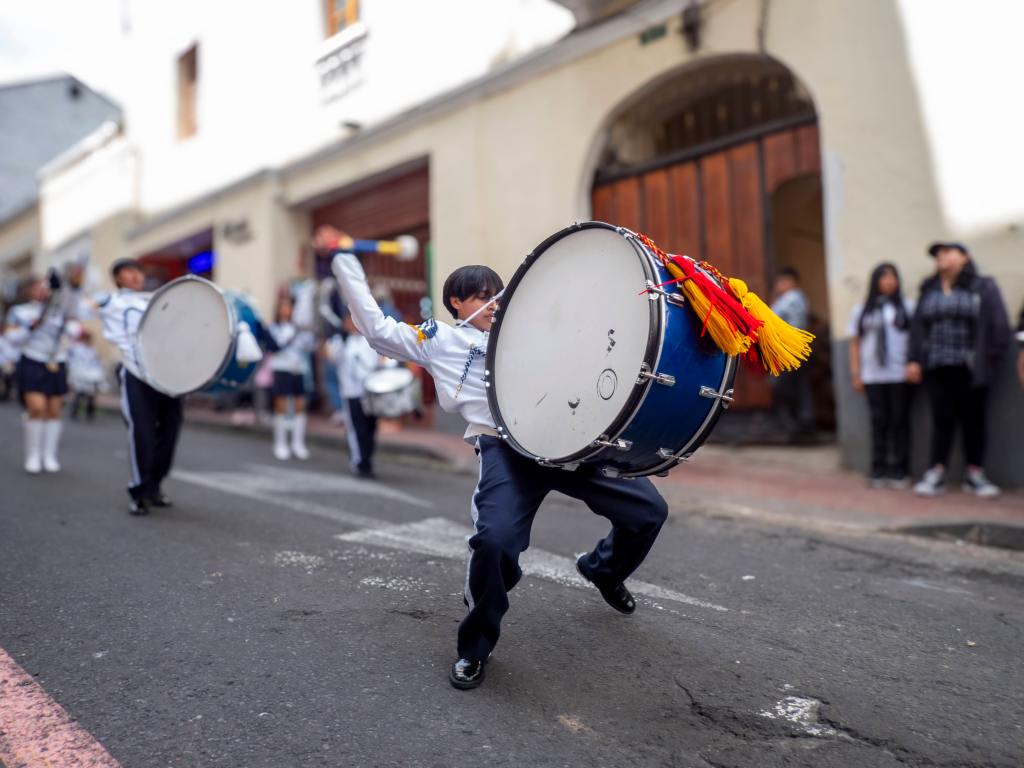
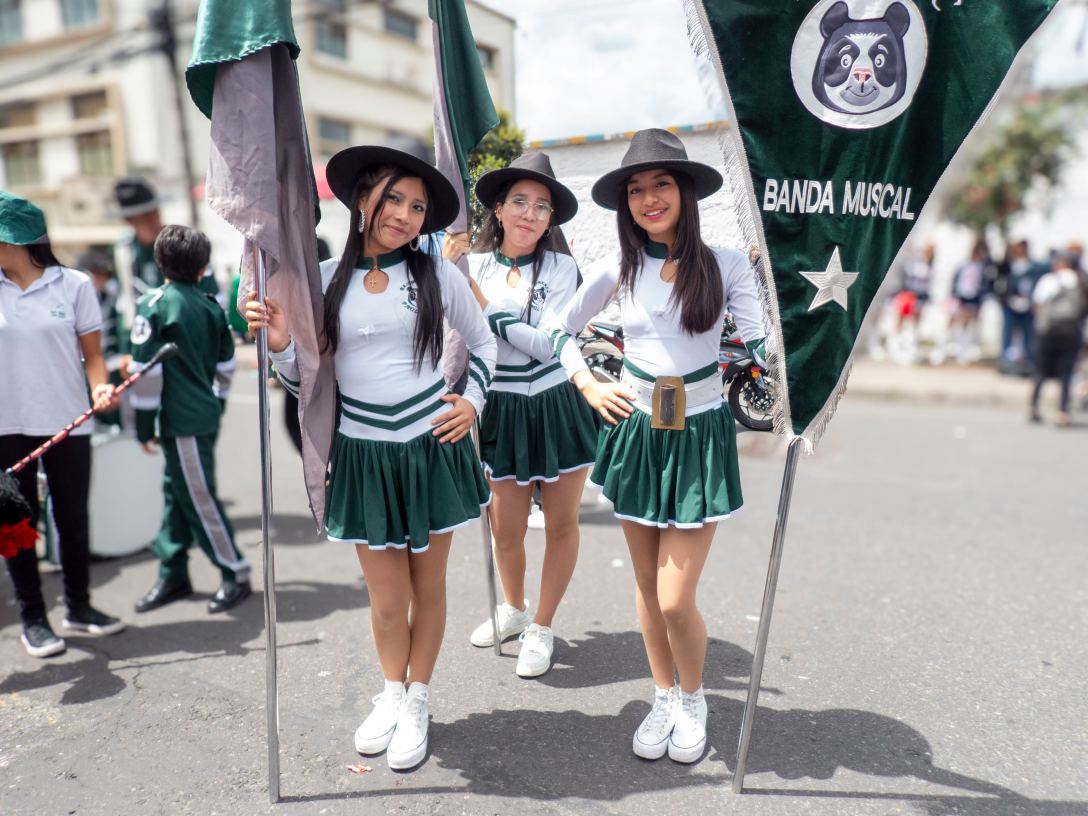
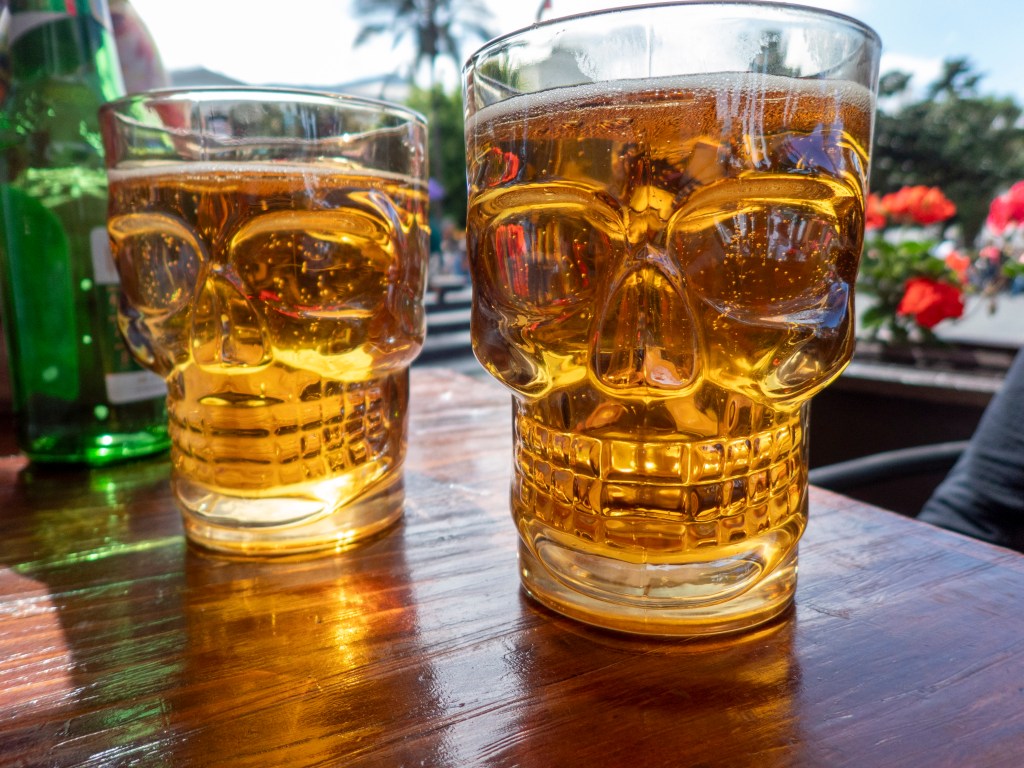
To this day, Ecuadorians celebrate the victory on May 24. It seems the entire city comes alive, mounting a parade of public school students, dressed in their finest uniforms, down Garcia Moreno, past the Church of La Compañía to the old town square. The number of students in the march easily numbered in the thousands as each school puts on its very best display. Some are part of a marching band, others closer to cheerleaders or girl scouts, along with representatives from military academies in a wide variety of matching uniforms. The roads are closed, traffic nearby is jammed for miles, onlookers and parents line the sidewalks the entire route (a significant number carrying life size cut outs of their new president), businesses close early, and the square itself is packed with other spectators. The event lasts well over five hours, organized into two sections. Of course, we knew none of this when we planned our day. Our goal was to visit the Church of La Compañía and check out some of the other sights in the old town, but our Uber driver couldn’t get us past the start of the parade route – near another spectacular church – and given our limited Spanish, we were unable to understand that he was trying to explain all the other streets between us and our destination would be closed. We hopped out of the car into a swelling crowd of students preparing for their march along with their proud parents and teachers, lined up hours before they would actually begin the procession. Little did we know, our plan for the day would see us following the parade route from its start, all the way to the town square. On the square itself, there are little bars and restaurants lining the edges with outdoor seating looking out into the open area. After a couple of hours of walking down the hilly streets and sightseeing, the idea of a beer gazing at the statue in the middle was quite welcome, and we were able to grab a comfortable seat – tucked below yet another church – and watch the end of the parade. Interestingly, beers were served in a mug shaped like a skull and my mom took a liking to the design. The server wouldn’t allow us to buy one of the mugs, but shortly after he appeared with a skull shaped perfume bottle as a little gift. The total price for five drinks? Less than $11. Yes, the magic of Quito extends to the use of the American dollar and pricing so low by United States standards, it might as well be free. Beers are rarely more than $2.50. An entire lunch can be had for under $5. Street food is available for $2. At a local restaurant earlier in the week, the total bill was $14.25 for lunch for four people. The most we spent at a gourmet restaurant was $140 including the tip, and that was for a local delicacy – roast guinea pig, known as coy. The whole pig is roasted for 14 hours at low heat, then flambeed to finish it off adding a crispness to the skin similar to cackling. Otherwise, steak is $5 per pound at the supermarket, tomahawks are barely $10, and all of the food – from a fine restaurant to a stand in the park – is excellent.
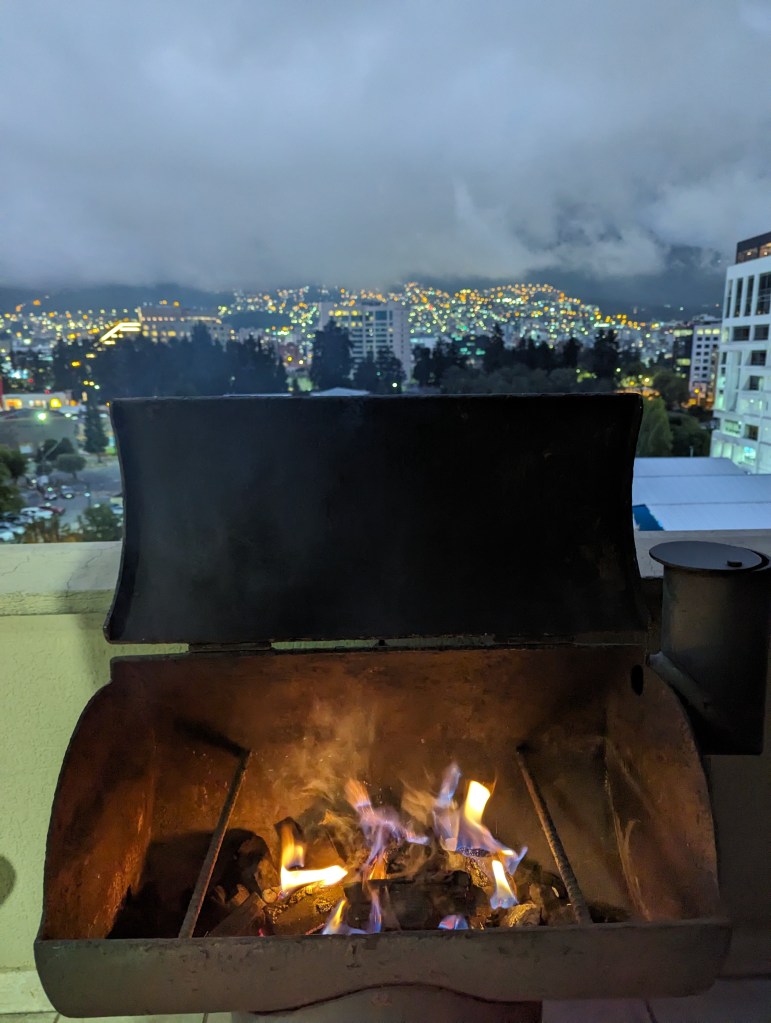
Perhaps the most interesting of our meals – and adventures – occurred high in the Andes. The mountains themselves beckon from the moment you arrive. From almost any vantage point in the city, you can see green slopes rising and rising to heights of almost 14,000 feet, looming in the near distance. Ecuador’s location on the equator renders them far different from the Rockies or other high peaks in the United States. There are no trees at the top, but the greenery goes all the way up rather than traditionally barren peaks. We were fortunate enough to have a Vrbo with a wrap-around deck on the ninth floor at the outskirts of the city, offering panoramic views all around and about the best place on the planet for a barbecue grill. There is a cable car, the TeleferiQo, that runs almost all the way up in barely 18 minutes, offering passengers comfortable gondolas and amazing views while they ascend. The area near the summit is known as the “Mirror of the Volcanos” for spectacular looks at the surrounding mountains, complete with a surprisingly modern gift shop and coffee bar, Ecuadorian coffee being among the best in the world. From there, visitors can follow trails higher up towards the peak, where a swing looks out over the edge of the world and a stable of horses awaits situated near an open air restaurant without running water – or at least we thought there were horses while the restaurant was a pleasant surprise. If I had one complaint about Quito, it was the relatively poor signage. I’d expected the signs to be in Spanish, easily translatable with Google’s visual technology, but the overall lack of clarity makes it difficult to know what you might get. Before we arrived, we had no idea there were horses at the top and once we saw the sign indicating that was the case, had no idea where or how far they were. The elevation alone is daunting as well. Previously, I’d skied in Colorado at close to 12,000 feet. Hiking at 2,000 more was a different sort of challenge, but between not knowing what was coming next and the generally breathless feeling, the sense of adventure was heightened as we set out on the trail we thought would lead to the swings, passed by a chapel swirling in mist, and discovered the horses nestled by the restaurant.
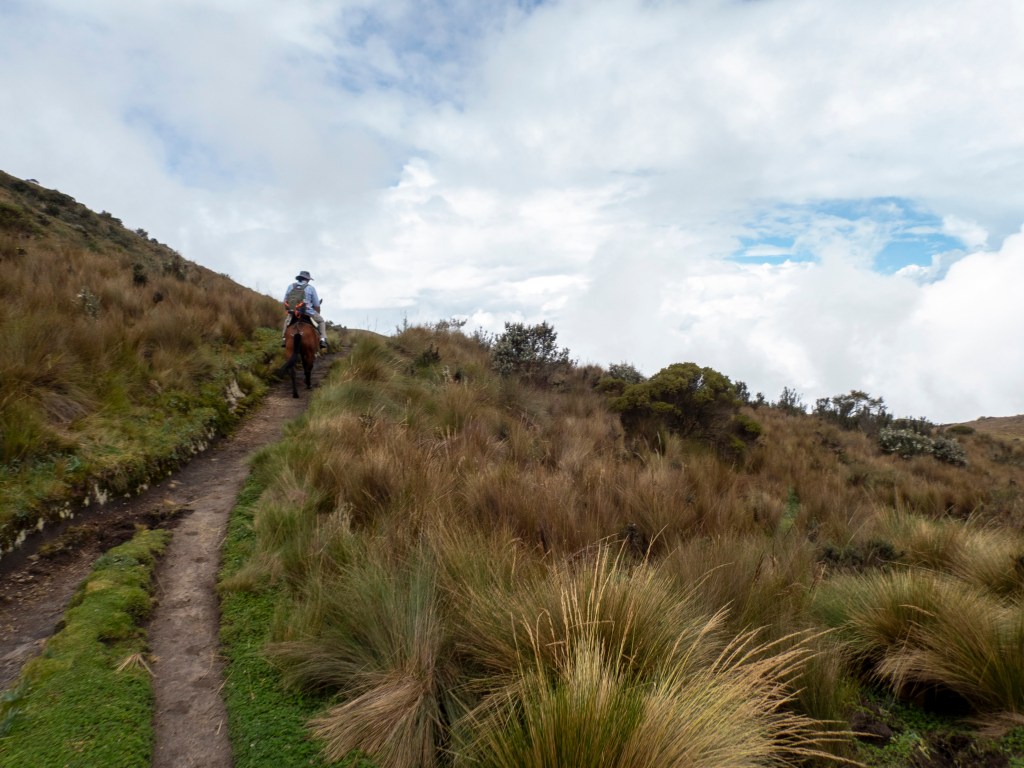
Given my mother recently celebrated her 80th birthday, my brother and I served as something of an advance scouting party making sure continuing to climb was worth it. I approached the stable – more of a hut with a pen to be sure – unsure if anyone was inside or you could actually ride the horses. After all, what are the odds they just let some gringo hop on at 14,000 feet? Typical of Quito, the man tending the stables spots me as an American immediately, says it’s $5 for a ride of about a half hour complete with the hand sign. I sign back that we need four horses. He nods, and we’re mounted up a few minutes later, snaking up a narrow, muddy, wet, and at points treacherous loop through the mountains. Unlike the United States, our guides are not mounted, and instead are walking along beside us. The horses clearly know where they are going, but the ride is bumpy, the footing unsure, and the odds of someone taking a tumble down a ravine are high enough that my wife claims she doesn’t like it and wants to get off – at first. Soon enough, however, we settled into the spirit of adventure for all of $20. In comparison, we were in Montana last year. The rides there start at $75 and run up to $150 or more. In Quito, we had spent less than that with lunch at the open air restaurant, serving fine food, big, big beers, and a local warm cocktail complete with moonshine.
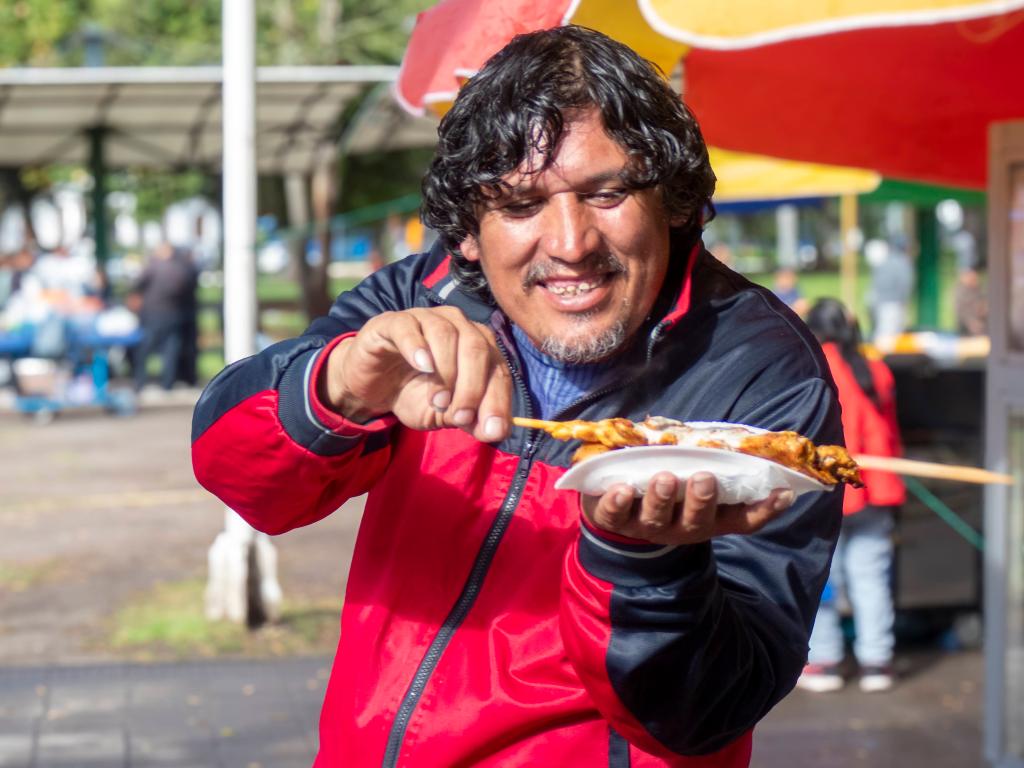
At the risk of sounding more than a little provincial, visiting a non-European country can always be a little daunting for a Westerner. As progressives put it, representation matters in some sense, and traveling in Germany, Austria, France, or Ireland, for example, is a somewhat different experience. You might not speak the language, but there is a shared culture and heritage that simply makes things easier in my opinion, if only for being less exotic and somewhat alien. I’m sure the French can pick out an American tourist from a hundred yards away, but it doesn’t feel that way walking the streets. In South America or Asia, however, you are the foreigner, the gringo, without a doubt. You look different. You act differently. You are different, but that’s where the opportunity for real magic happens when you travel. The discovery that, despite any apparent differences on the surface, you are the same. From our Vrbo, my wife and I walked to the local grocery store every morning as any local would, experiencing something of the day to day lives of the almost 2 million residents. We compared prices in Spanish, bought far more local beer than most, asked for help from customer service using Google Translate, and even were given the local discount card. From our apartment, we could see pickle ball courts, soccer fields, and volleyball at a complex below, watching the locals playing well into the evening. Across from the National Museum, there is a large park with stands of vendors, food carts, magnificent trees, sculptures, and more. Underneath an awning, people gather to play cards beside a volleyball court. School children sat with their parents. The smell of grilled chicken and beef filled the air. In many ways, the park was the same as you would find in New York or any other American city. People are doing the same things we do, living their lives, trying to find happiness, hoping for peace, only tinged with a more adventurous, exotic air with the mountains rising in the background, the decidedly obscure foliage including both palm-like trees and real monsters that you would find in a major forest, and a few stray dogs running around. Waiting a few minutes for our Uber – which in general tend to be much smaller than their American counterparts – I looked back out across the park, took in the mountains and the trees, glanced backward at the museum complex, and said to myself, this is why we travel. I might never make it back to Quito, but I am glad we went and should our paths ever cross again, another visit would be more than welcome.