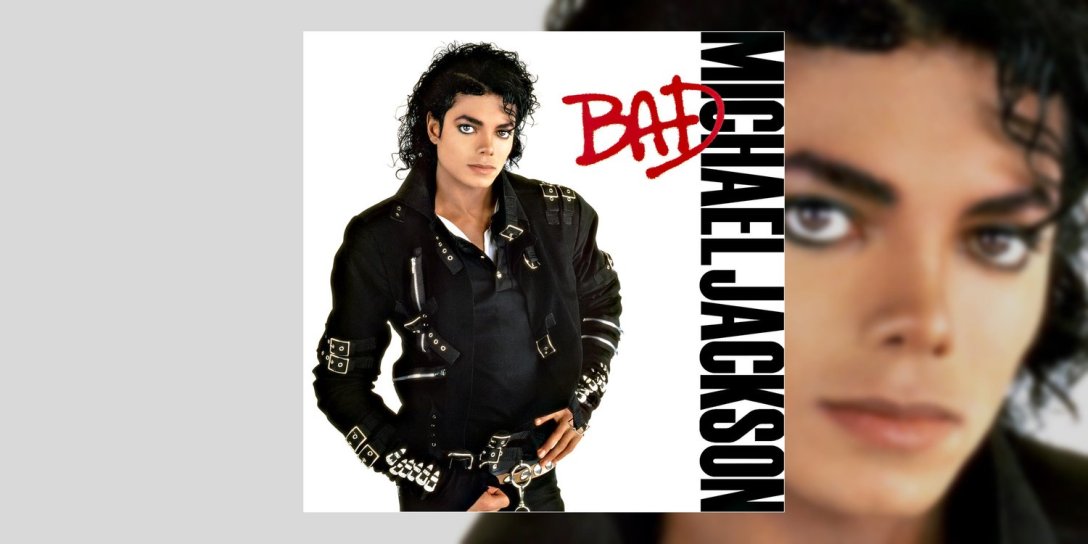
Even having lived through the cultural and musical phenomenon that was Jackson’s golden years, it is difficult to remember how truly unique and special he was, at least when the music isn’t playing. Then, it’s impossible to forget.
Michael Jackson is something of a tragic figure in the music and cultural worlds. The undisputed King of Pop achieved everything and anything a recording artist could hope for – more hits than most can count, millions up millions of album sales, and legions of adoring fans – and yet still he was consumed by such self-loathing, he underwent countless plastic surgeries to effectively replace his face. His success needs no introduction, having sold some 500 million albums worldwide over a four decade career that began as a child star in the Jackson 5. He had thirteen Billboard Hot 100 singles, the fourth most of all time. He won fifteen Grammys, six Brit Awards, and a Golden Globe. He holds 39 Guinness World Records, including being named “The Most Successful Entertainer of All Time.” Sadly, his bizarre physical transformation is also the stuff of legend, occurring over a decade or more from the mid-1980s to the late 1990s. It was considered increasingly strange even at the time, but in retrospect, a photo of Thriller-era Michael Jackson side-by-side with one taken ten years later seems absolutely shocking. His entire face was remade down to his skin color, making him borderline unrecognizable if not outright alien. Later in his career, Jackson was dogged by accusations of inappropriate relationships with children and outright pedophilia, adding to the controversy surrounding him. In August 1993, he was accused of sexual abuse by 13-year old Jordan Chandler and his father Evan, who claimed he had been kissed, groped, and forced to perform oral sex with the popstar at his Neverland Ranch in California. As a result, the police raided his home and found books with suggestive imagery of children, half clothed. The parties settled out of court a year later and Jackson was not officially charged at the time, but combined with a bizarre marriage to Lisa Marie Presley, his public image was irrevocably harmed. Ten years later, however, Santa Barbara authorities did officially charge him with seven counts of molestation and two with providing alcohol to minors. While he was ultimately acquitted after a lengthy trial and the FBI insisted they found no evidence supporting the claims, it took its toll on his health and his finances as well as his fame. Somewhere along the line, Jackson became addicted to pain killers and other pharmaceuticals, many of which were administered by his personal physician, Conrad Murray. He passed away on June 25, 2009 at not even fifty years old, suffering from cardiac arrest due to the ingestion of propofol and benzodiazepine, three weeks before the start of a sold out concert residency in London. A giant even in death, it’s estimated that 2.5 billion people watched his memorial service.
In April 1976, a young Bruce Springsteen, who had recently found fame with the success of his breakthrough album, Born to Run, decided it would be a good idea to break into Graceland and meet another king in the music industry, the King of Rock’n’roll, Elvis Presley himself. The makeshift plan began after a gig in Memphis, when Springsteen guitarist and close personal friend, Steve Van Zandt asked a taxi cab if there was a good diner in the area open at 3 AM. “The taxi cab [driver] says, ‘Yeah, there’s one right out by Elvis’s house,’” Springsteen recalled. “[I said,] ‘Elvis’s house?! You know where Elvis lives? Take us there, right now.’” He continued, “I saw there was some lights on in the house, ’cause you could see the house wasn’t far up the drive,” Springsteen remembered. “Gates were locked, [there was a] stone wall, and I looked at Steve, I said, ‘Steve, I’m going in.’” Though the cab driver warned him “they got big dogs over there,” the future legend would not be dismayed, “I said, ‘Well, when’s the opportunity gonna come again?’ I jumped over the wall, ran up the drive, got to the front door.” Before he was able to knock, however, a security guard emerged from the bushes, and asked, “Can I help you?” “Yes, is Elvis here?” Springsteen asked, only to be informed the King was in Vegas. “Okay, well, can you tell [Elvis] … that Bruce Springsteen was here,” the would-be Boss of Rock’n’Roll told the confused guard. “And he may not know who that is, but I was just on the cover of Time and Newsweek.” That was the closest Springsteen ever came to meeting his idol, but afterwards he noted it was probably better that the two never met. Idols are just that, idols. Something above and beyond a normal person, an ideal, an absolute, an abstraction. People, however gifted, talented, or influential they may be, are flesh and blood creatures, fallible, fragile, and flawed. Meeting your idol is likely to result in at least some level of disappointment when you realize they put their pants on the same way you do, and can even struggle with the occasional bowel movement. As a result, Springsteen has been fond of using the phrase “trust the art, not the artist,” meaning that the creation is the idealized object that exists on a higher plane regardless of how imperfect the creator themselves. The creation doesn’t change, dim, dull, or disappoint with the time. The creator grows old, possibly fat, weak, and ultimately dies. Sometimes, the creator can even be a criminal, guilty or at least credibly accused of despicable behavior. The creation, however, lives on.
Personally, I was born and bred on a steady musical diet of Rush, The Scorpions, and Ronnie James Dio. A little later, Queensryche arrived on the scene amid the hair metal craze and earned a special place in my heart until they softened up and grew generic. In college and afterwards, I turned to more traditional classic rock and began a lifetime hobby worshiping Bruce Springsteen while adoring Phish and Dave Mathews, and most recently Greta Van Fleet. Pop music has never really been my thing. It simply has to rock. The closest I come to pop music fandom is Duran Duran, but even then, check out the over two minute musical outro from their first album’s “Tel Aviv” and tell me if they can’t rock when it suited them. Michael Jackson, therefore, has never been my favorite, and yet there is little doubt he too could rock if and when he wanted. While the King of Pop is better known for dance-friendly tracks from “Thriller” to “Bad,” he had a unique ability to seamlessly blend and cross genres. He did everything including featuring guitar legend Eddie Van Halen on the solo for megahit “Beat It” to crafting a true burning, blasting rocker in “Dirty Diana.” “Dirty Diana,” the seventh track from 1987’s Bad and the fifth single from the album, reached number one on the Billboard Hot 100 charts, as did almost everything Jackson did during that period, despite somewhat mixed reviews. Stephen Thomas Erlewine said that “Dirty Diana” and “Man in the Mirror” “showcas[ed] Jackson at his worst.” Music critic Robert Christgau claimed it was “misogynistic as any piece of metal suck-my-cock.” Jon Pareles believed Jackson had reduced himself to a “terrified whimper.” John Tatlock of The Quietus considered it a “confused lumbering slog of a song,” believing “Jackson was never convincing in this kind of role, a boy-child trying to write a song about the kind of woman he never meets in the kind of places he’s certainly never been to.” Many felt Jackson was just copying himself on “Beat It,” released five years earlier. Mr. Tatlock, for example, insisted he was striving for “the pop-rock alchemy of ‘Beat It’.” Los Angeles Times’ Richard Cromelin said much the same, “‘Dirty Diana’ is trying to be this year’s ‘Beat It’ — a hard-rock song about a tenacious groupie that’s sent into orbit by a Steve Stevens guitar solo.” Jon Pareles of The New York Times, said it was a song about a “groupie who latches onto the narrator, mixes the sexual fears of ‘Billie Jean’ with the hard-rock lead guitar of ‘Beat It.’”
At least in my opinion, these critics have it backwards and are missing the point as they often do, unlike the public. “Beat It” is a pop song with a hard rock flair. “Dirty Diana” is a hard rock song with a pop flair. As a result, Jackson’s normally slick, upbeat vocals are replaced by more of an anguished growl. Following the pattern of a slow-burning power ballad, the verse is delivered in a whisper that seems about to explode, the beat slow and steady in the background as he describes a woman he can’t break free from. “You’ll never make me stay, So take your weight off of me, I know your every move, So won’t you just let me be, I’ve been here times before, But I was too blind to see That you seduce every man This time you won’t seduce me.” Typical of the genre, the woman herself is mysterious at this point while one gets the sense the speaker has clearly been seduced and is protesting too much, casting the the seductive woman as an addictive drug. This is made plain in the next verse, where Diana tells him, “That’s okay Hey, baby, do what you please I have the stuff that you want I am the thing that you need.” Needless to say, the speaker simply cannot resist, when she looks him “deep in the eyes.” “She touchin’ me so to start, She says there’s no turnin’ back, She trapped me in her heart.” The speaker, the instruments, and the entire song then explodes for the chorus, as all the jealousy and doubt bursts free and he labels her “Dirty Diana” for the first time, begging her to “Let me be.” In the second verse, we learn that the speaker is a singer and he’s not the only musician Diana is interested in. The vocals turn low again as he reveals, “She likes the boys in the bands, She knows when they come to town, Every musician’s fan, after the curtain comes down, She waits at backstage doors, for those who have prestige, Who promise fortune and fame, a life that’s so carefree.” In return for promising to be his “night lovin’ thing” and the “freak that he wants,” she won’t care “what you say” and will be his “everything” if you “make [her] a star.” After a repeat of the chorus, we learn a little more about what is troubling the speaker beyond the knowledge that Diana makes these same promises to others. She practically taunts him, asking “Why don’t you come home with me?” He responds, “My baby’s at home, She’s probably worried tonight, I didn’t call on the phone To say that I’m alright.” Ultimately, the speaker can only succumb to his temptation, as Diana hangs up the phone and tells his girlfriend, “He’s not coming back Because he’s sleeping with me.” The song ends with near-desperate howls of “Dirty Diana,” over and over again, suggesting both the thrill of the encounter and his own guilt at being unable to rise above physical pleasure bordering on addiction.
Almost forty years later, it remains a remarkable track, perhaps the closest Jackson came to a true hard rock song outside of “Smooth Criminal.” Both are also marked by their guilt and anguish, as if the King of Pop was revealing something deep down inside that would one day consume him. Based on subsequent events, it would not be much of a stretch to say that was the case for a man obviously haunted by demons that were hard to describe yet seemingly impossible to shake. Today, Jackson’s legacy is a complicated one. There is no doubt that he dominated the pop music industry in a way that is almost inconceivable in our fractured media era. Taylor Swift might be one of the most famous people in the world, but the world was much smaller then and Jackson defined a generation in more ways than music. Millions of people dressed like him, acted like him, sought to emulate him. As Rolling Stone’s J. Edward Keyes described his influence in music, “Trying to trace Michael Jackson’s influence on the pop stars that followed him is like trying to trace the influence of oxygen and gravity. So vast, far-reaching and was his impact—particularly in the wake of Thriller’s colossal and heretofore unmatched commercial success—that there weren’t a whole lot of artists who weren’t trying to mimic some of the Jackson formula.” Many have commented on his unique ability to break through the color barrier, a rare music icon adored by all races and ethnicities. Time Magazine’s Jay Cocks claimed he was the biggest black singer ever, a “star of records, radio, rock video. A one-man rescue team for the music business. A songwriter who sets the beat for a decade. A dancer with the fanciest feet on the street. A singer who cuts across all boundaries of taste and style, and color too.”
More darkly, Mr. Christgau wrote about this decline in the 1990s, claiming his “troubled life” resulted in “an arc not merely of promise fulfilled and outlived, but of something approaching tragedy: a phenomenally ebullient child star tops himself like none before, only to transmute audibly into a lost weirdo.” Later, he said “Jackson’s obsession with fame, his grotesque life magnified by his grotesque wealth, are such an offense to rock aesthetes that the fact that he’s a great musician is now often forgotten.” There is some truth to all of this. It is human nature to re-evaluate the past based on the present, to look back with either the proverbial rose colored glasses or a much darker lens. Even having lived through the cultural and musical phenomenon that was Jackson’s golden years, it is difficult to remember how truly unique and special it was, and hard to forget what came after. Still, when “Dirty Diana” came on last Friday night, none of the baggage prevented me from turning the music up loud enough to feel it in the floor and belt out the notes as best I could, which is to say not well at all, but it didn’t matter. The music can take you away anyhow, and make it easy to trust the art and not the artist – at least as long as the song plays.
DIRTY DIANA
Images may be subject to copyright.

 Confessions of a Conservative Atheist