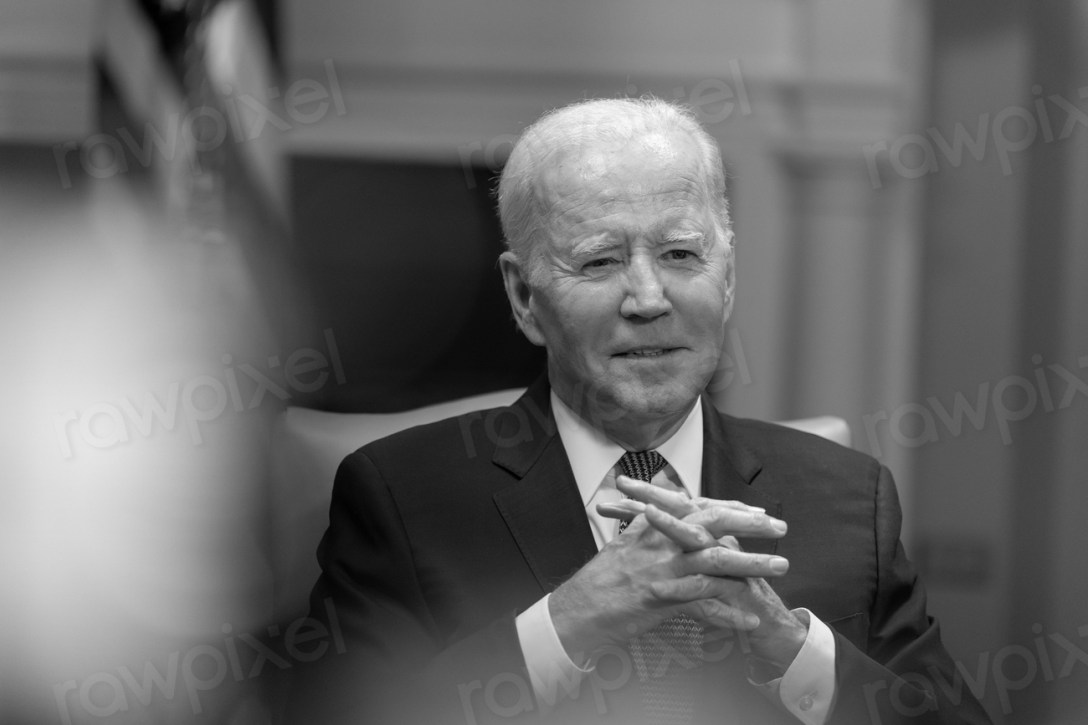
The real world of international relations is not a movie, but some key lessons and insights are the same. You can be at war without wanting to be at war and you cannot win a war without knowing who your true enemy is, forget telling them in advance what you will and will not do.
“Tattaglia’s a pimp. He never could’ve out-fought Santino. But I didn’t know until this day that it was Barzini all along.”
Vito Corleone
Joe Biden is no Marlon Brando. The Godfather might have come to the realization who was behind the attacks on his family late, but once the realization dawned on him after a meeting with the Five Families, he wisely recognized relations could never be the same and Barzini must be stopped, nor did he telegraph his response to the war in advance, leaving his enemies uncertain. The real world of international relations is not a movie, of course, but some key lessons and insights are the same, namely that you can be at war without wanting to be at war and you cannot win a war without knowing who your true enemy is, forget telling them in advance what you will and will not do. The tragic news that three servicemen were killed by a drone strike in Jordan this past weekend has been widely reported as some kind of turning point or escalation, as though the attack itself was a complete surprise that couldn’t have been predicted or prevented, or deaths in the region were not inevitable after months of violence. CNN, for example, described the “killing of three Americans at Tower 22 in Jordan near the border with Syria” as “a significant escalation of an already-precarious situation in the Middle East.” The New York Times put it this way, “This was the day that President Biden and his team had feared for more than three months, the day that relatively low-level attacks by Iranian proxy groups on American troops in the Middle East turned deadly and intensified the pressure on the president to respond in kind.” The US government itself has described their role prior to the deaths as primarily de-escalating the situation. Chairman of the Joint Chiefs of Staff General CQ Brown told ABC News a key goal is to “make sure as things have happened in the Middle East is not to have the conflict broaden.” “The goal is to deter them and we don’t want to go down a path of greater escalation that drives to a much broader conflict within the region,” he said. As late as last week, the government was downplaying the number of attacks on American forces, pretending that sustained attacks will not produce deaths at some point. Deputy Pentagon Press Secretary Sabrina Singh said, “Not necessarily, no,” when asked if the Pentagon believed violence was increasing. President Joe Biden himself has previously described his strategy for preventing a broader war with three simple words aimed at Iran, actually one word: Don’t, don’t, don’t, as in don’t do it. Last October, while in Tel Aviv, he put it this way, “And my message to any state or any other hostile actor thinking about attacking Israel remains the same as it was a week ago: Don’t. Don’t. Don’t.” Conservatives have pounced on these comments to describe the President’s policy as a failure, which is certainly correct, but still manages to miss the much broader context and the need for a strategy to address the real problem at hand. The lessons of Vito Corleone.
In reality, the United States has been at war with Iran since October 7, whether we have chosen to admit this reality or deny it, whether we believed it could be contained or otherwise, and whether we are willing to name who is behind it. If someone is repeatedly punching you in the face, you are in a fight, regardless of how you choose to defend yourself. If someone is telling someone else to punch you in the face, you are in a fight with both, whether or not you choose to acknowledge your main assailant or do anything about it. Unlike in The Godfather, the facts have been overwhelmingly clear: Immediately following Hamas’ horrific attack on Israel, US military installations in Iraq, Jordan, and other parts of the Middle East have been bombarded almost non-stop by drones and missiles, while shipping lanes in the Red Sea have also been under sustained assault. Prior to the deaths in Jordan, there have been over 160 attacks on US installations in less than four months, that is at least 10 attacks per week, every single week. From this perspective, the attack this weekend might’ve drawn blood for the first time, but only because our bases are heavily guarded with state of the art defense capabilities, not for lack of trying, as if Sonny survived the shooting at the toll booth and his father simply dismissed it as an accident. Even The New York Times noted that the President himself “essentially ignored the majority that were successfully intercepted or did little to no damage while authorizing limited U.S. strikes focused mainly on buildings, weapons and infrastructure after attacks that were more brazen, most notably against the Houthis in Yemen who have targeted shipping in the Red Sea.” Here, they reference the handful of US responses so far. On January 12, President Biden claimed he ordered joint strikes with the United Kingdom in Yemen “in direct response to unprecedented Houthi attacks against international maritime vessels in the Red Sea.” “Today, at my direction, U.S. military forces — together with the United Kingdom and with support from Australia, Bahrain, Canada, and the Netherlands—successfully conducted strikes against a number of targets in Yemen used by Houthi rebels to endanger freedom of navigation in one of the world’s most vital waterways,” he said in a statement, adding that he will “not hesitate to direct further measures to protect our people and the free flow of international commerce as necessary.” These strikes followed at least two other US military incursions into Iraq and Syria, all of which were carefully calibrated to “deescalate” the situation, as though any attack can be perceived as anything other than escalation if only in allowing the conflict to fester. Equally clear, is that Iran is the country ultimately responsible for all of these attacks and the attack on Israel itself that began this phase of the conflict. The terrorist groups actually firing the rockets or manning the drones are pimps in The Godfather’s phrasing, incapable of acting on their own and everyone including the President of the United States knows it. It is and always has been Iran who funds, directs, and coordinates the activities of their various proxies including Hamas, Hezbollah, the Houthis, and other radical groups. They are Iranian proxies, and none of this would be occurring without their consent.
The Administration continues to dance around this topic, as though Vito Corleone ignored the revelation about Barzini entirely, suggesting only that Iran provides some kind of limited support, but we know this isn’t true because they are now actively considering an attack inside Iran itself. “The first deaths of American troops under fire, however, will require a different level of response, American officials said,” the Times wrote following the tragic events over the weekend, “and the president’s advisers were in consensus about that as they consulted with him by secure videoconference on Sunday. What remained unclear was whether Mr. Biden would strike targets inside Iran itself, as his Republican critics urged him to do, saying he would be a ‘coward’ if he did not, as one put it.” “The question Biden faces is whether he just wants to react to events in the region or whether he wants to send a bigger message that attempts to restore a sense of deterrence that just hasn’t existed in the region for months now,” explained Brian Katulis, who held national security positions under President Bill Clinton. “I’m sure they’re looking for some kind of Goldilocks response here,” he added, which can be interpreted as “not too hard” that it provokes a full-fledged war, “not too soft” that it just prolongs the conflict “but something that seems just right.” We might call this war by the dating game, rather than The Godfather. Is it too soon to call her? Should I just send a private message? What can I do to make it seem I’m not overly interested but interested enough? Perhaps even worse, these deliberations have been accompanied by the continued insistence that we are not at war, suggesting that we will not do anything major, or anything that might provoke our enemies into further attacks, given them the strategic advantage in a way that the Godfather never would. “We are not interested in a broader conflict in the region, we’re not looking for another war, but we absolutely will do what we have to do to protect ourselves,” John Kirby, a spokesperson for the National Security Council at the White House, explained to CBS on Monday in an incoherent statement that couldn’t be further from the point. The problem is that we haven’t protected ourselves. It’s too late to do that; now, we need to end the aggression as the Godfather needed to end his mafia war. President Biden managed to do make matters even worse as I was writing this post. He announced in advance that he’d decided how to respond to Saturday’s attack like a boxer telegraphing their punch from the corner stool while insisting “I don’t think we need a wider war in the Middle East. That’s not what I’m looking for.” Even more incredibly, he continued to claim that we hold Iran responsible in only an indirect sense, “I do hold them responsible in the sense that they’re supplying the weapons to the people who did it,” and he wasn’t even clear on whether the response would deter future attacks, saying only “We’ll see,” as if he expects Iran to have an iron chin and just take the punch. The mainstream media, meanwhile, is happy to repeat these absurdities, focusing on how the poor President is being forced to walk a “tightrope” (Time Magazine) or do the “impossible” (CNN). As Stephen Collinson put it yesterday, “Biden has now arrived at the unenviable position that presidents often face when all potential options before them are bad” and the critical task now for President Joe Biden — as he mulls retaliation over the deaths of three Americans in an attack by suspected Iranian proxy forces in Jordan Sunday – is to prevent that region-wide war from tipping out of control.”
Two things are evident from the reactions of both the Administration and the mainstream media, both of which are completely wrong because they studiously avoid the underlying threat, framing matters of war and peace in terms of a tennis match or a baseball team in the middle of a losing streak, as if they have the right pieces in place, they just need to perform better rather than the existential battle war always is, where your enemies must ultimately be defeated or beaten into submission badly enough to desist. The first mistake is that the United States needs to “respond” and some specific response, whether you call it “Goldilocks” or something else, is “just right.” A response, however, is merely a tactic, an action taken as a result of the actions of another. It is not a strategy to contain or eliminate what is driving these actions in the first place. This doesn’t mean a response is not required or warranted under the circumstances, but we’ve already responded three times to no effect. Believing some other response will change the dynamic is short-sighted at best, potentially calamitous at worst given the escalations inherent in this kind of tit-for-tat, reaction-for-action conflict can frequently lead into the very kind of broader conflict everyone claims to be avoiding. The second, related, mistake is that the objective of our response should be to avoid a “broader conflict” or prevent the war “from tipping out of the control” rather than directly addressing the underlying threat. The combination of these two mistakes leads to two conclusions on the part of our enemies. First, there are some provocations – even outright attacks – we will not respond to, some level of harassment of our military including missile strikes beneath our notice; as if Corleone would accept his enemies robbing him, just not murdering his family. If these attacks are calibrated appropriately, however, they will be ignored and can continue. Second, there is a level of outright war – as in sustained military action over weeks, months, and years – that we would also find acceptable and once again, it’s merely a matter of calibrating this level to keep the conflict going indefinitely, achieving the enemy’s goals by a thousand cuts. Putting this another way, what else could Iran possibly think when the Administration responds to the death of three servicemen by claiming over and over again that we don’t want a war, we aren’t even sure if our response will actually deter them from anything, rather than promising to unleash hell upon them if they continue a war that is already in progress from their perspective?
To be clear, “unleash hell upon them” should not be interpreted as a call to invade Iran or even necessarily strike them directly. It is instead a call to both confront them as the cause of this conflict, so there can be no mistake about who will be held responsible, and clearly identify a red line which they cannot cross without serious consequences, once again so there can be no mistake about what will happen should Iran continue down this path. It is inconceivable that we will achieve a different outcome without these two items in place, any more than you can expect your teenager to come home on time without actually informing them of the curfew in advance, or that Michael Corleone would go on to win the mafia war without taking significant action. It is also a call to develop a longer term strategy that directly addresses the Iranian threat, not merely responds to it. Deterrence, for all the ways it has been used lately, is not a strategy, and nor is the “rapprochement” we’d previously sought under this Administration when they, unwisely in my opinion, attempted to revitalize the nuclear agreement, loosened sanctions, removed the Houthis from the terror watch list, and bartered with the Mullah’s for hostages. Both deterrence and rapprochement are the outcomes we seek from a strategy, the things we want Iran to do, not what we must do to make them happen, the same as Vito Corleone wanting the war to end instead of what ultimately had to be done to achieve that outcome. Rapprochement, at least in a rational world, should no longer be an option after October 7 anymore than it was once Michael went to war after his father died, leaving two possible goals for our policy moving forward, either ending the regime or containing the regime, neither of which the President has come close to endorsing in public or otherwise as far as we are aware. Rare, however, is any successful foreign policy with an unknown goal because neither your allies nor your adversaries know which action you want them to take. Contrary to the conventional wisdom, tactical uncertainty – as in leaving your adversaries guessing what you might do in response to a given development – is a desirable feature of foreign policy, but uncertainty in the outcome you will accept invites aggression while your adversaries attempt to figure that out.
President Biden appears to be prefers tactical certainty – announcing what he will do and will not do in advance and telegraphing his responses as we have seen here – with strategic uncertainty, which to my knowledge has never proved successful for obvious reasons. This has been true in the United States since John Quincy Adams crafted the Monroe Doctrine, declaring North and South American off limits to European powers, when James Monroe was President. It was true when Teddy Roosevelt spoke softly and carried a big stick, preventing a war with Germany over Brazil and negotiating peace between Russia and Japan. It remained true when Ronald Reagan declared the Soviet Union the “Evil Empire” and demanded the Berlin War be torn down. It is still true today whatever our chattering classes may claim, and we will not succeed in the region until a clear goal and actionable strategy, even one that is held closely by the Administration, is in place coupled with tactical uncertainty in how we might respond, leaving our adversaries off balance rather than being off balance ourselves. The sad reality is that neither October 7 nor everything that has come after it was inevitable. These are not things that just happened to put the President in a difficult or impossible position, as if they would have happened to any President or as if they happened in The Godfather when they were unaware what was driving the aggression. They are the unanticipated outcomes of the policies he has pursued, and in many cases his critics warned him that there would be undesirable outcomes before they materialized. In other words, Vito Corleone was correct: You need to know who your enemies are and what you want to achieve, or you will lose the war as we are right now.
Images may be subject to copyright.

 Confessions of a Conservative Atheist