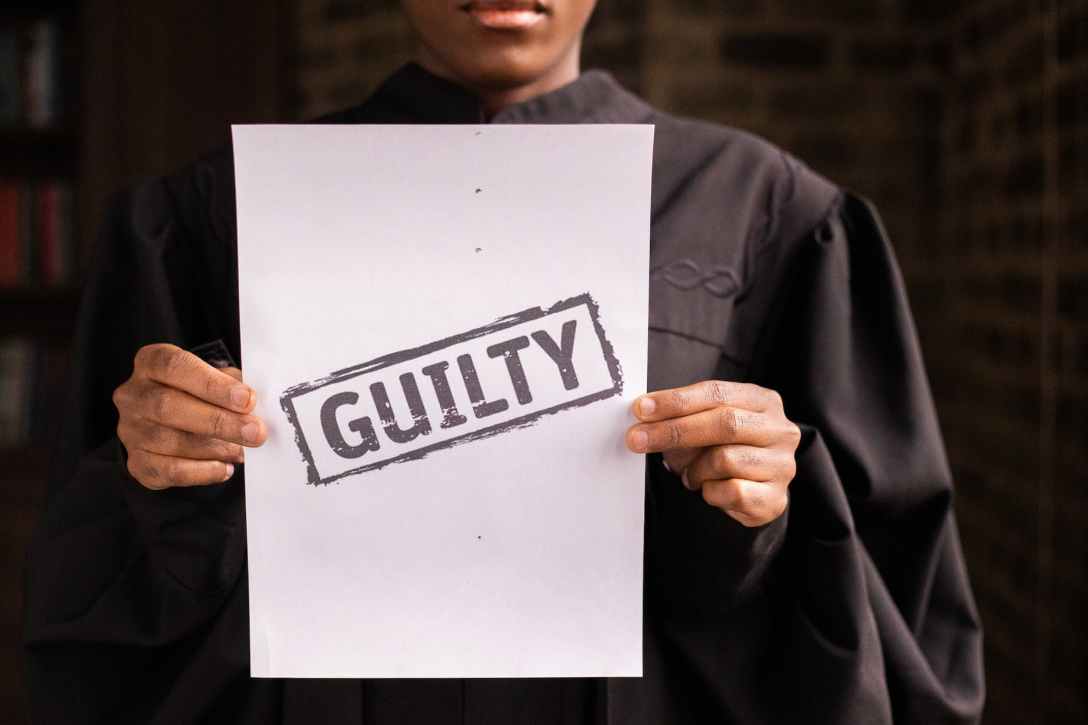
There is little more fundamental a right than the ability of voters to listen to completely unfettered Presidential candidates before making their own personal choice. In a sense, Judge Chutkan has abridged the rights of every American to decide – for themselves and in and of themselves – who to vote for and why.
“Mr. Trump may still vigorously seek public support as a presidential candidate, debate policies and people related to that candidacy, criticize the current administration and assert his belief that this prosecution is politically motivated, but those critical First Amendment freedoms do not allow him to launch a pre-trial smear campaign against participating government staff, their families and foreseeable witnesses,” U.S. District Court Judge Tanya Chutkan explained in what can only be described as the most heinous assault on Free Speech since the Supreme Court permitted the jailing of Communist dissidents during World War I. In her view, “First Amendment protections yield to the administration of justice and to the protection of witnesses,” a complete inverse of what the Constitution demands consider there’s a reason it’s the First Amendment and set above all others. Rather incredibly, Judge Chutkan failed to provide any details as to what these protections amount to, saying only that she would describe the “contours” of the decision before issuing a final ruling at some indefinite point in the future. “This is not about whether I like the language Mr. Trump uses,” she said although most clearly it is and just as clearly, she doesn’t like it. “This is about language that dangers the administration of justice,” she continued without identifying exactly which fundamental right that falls under. Perhaps even worse, she added that “Trump does not have the right to say and do exactly as he pleases,” apparently unaware at times that there is a First Amendment in the first place. Considering the Constitution guarantees free speech, protects the rights of the accused against unlawful search and seizure, guarantees due process, and the American justice system is based on presumed innocence, I at least have a hard time understanding how the “administration of justice,” as in the application of novel legal theories to Trump in particular, trumps, pardon the pun, the defendant’s rights in any way, shape, or form in a politically charged case. Even setting aside former President Trump’s rights, the federal judiciary is charged with protecting the rights of American citizens more broadly. There is little more fundamental a right than the ability of voters to listen to completely unfettered Presidential candidates before making their own personal choice. In a sense, Judge Chutkan has not only arbitrarily abridged the free speech rights of a Presidential candidate in the vaguest manner possible, but has also abridged the rights of every American to decide – for themselves and in and of themselves – who to vote for and why. Judge Chatkan is therefore both mistaken on the law – President Trump’s free speech rights entitle him to “smear” whoever he likes – and the very spirit of our democracy.
In other words, she believes she can substitute her own opinion for yours in a matter of tremendous importance to the country, and she does so with any sense of restraint, with close to outright glee at wielding this absurd power over all of us. There should be no misunderstanding here: She has taken aim at former President Donald Trump and you personally, and she likes it. Perhaps needless to say, the media in general liked it as well, claiming that an out of control judge deciding on their own what speech is acceptable during a Presidential campaign was a “narrow” ruling. The term “narrow” originated with Judge Chutkan herself, but was used by PBS, the Associated Press, Axios, The Hill, and others largely without any quotes or context, as though they had all agreed in advance with the Judge on how to position this stunning and disturbing development. How they would know a ruling which the Judge herself refused to describe in more than “contours” was actually narrow was left entirely unsaid. The usual panoply of legal experts asserted the “narrow” gag order was necessary because it would prevent the former President from intentionally intimidating witnesses, poisoning the jury pool, and other assorted horrors with little to no basis in reality. As many have noted, witness tampering and intimidation, should it occur, is already a crime and can be taken up separately. A gag order of this kind, in the middle of a Presidential campaign no less, need not be applied. The jury pool in DC already voted 95% against President Trump during his last campaign; the odds of him magically transforming a potential jury from Trump skeptic to a MAGA-hat wearing supporter are virtually non-existent. Regardless, Judge Chutkan declared that “I cannot imagine any other criminal case where a defendant is allowed to call a prosecutor deranged or a thug.” This is probably true, but misleading. Allowed has absolutely nothing to do with it. People, in this country, are allowed to say what they want, or at least they used to be. “I will not permit it here simply because the defendant is running a political campaign,” she added. There is, of course, a simple means to resolve this tension: Move the trial date until the day after the election. It’s not as if there is any reason a trial much of the public is highly skeptical of needs to proceed on an accelerated timeline. This would benefit voters and potentially the prosecution itself by limiting its impact on events. Judge Chutkan, however, appeared to have considered and rejected this simple fix. “This trial will not yield to the election cycle, and we’re not revisiting the trial date,” she said without mentioning that she set the start date for the day before Super Tuesday, purely by coincidence of course.
There were a few “dissenters” in the media over the ruling that help illustrate its absurdity. Yahoo News ran an article by the libertarian site, Reason.com, that claimed the order was “narrow” but still raises Constitutional “questions.” The Los Angeles Times noted the gag order “goes too far,” claiming that it may be “satisfying,” “but it isn’t Constitutional.” Erwin Chemerinksy begins by wishing “that Donald Trump would shut up” at times, but concludes that “basic 1st Amendment principles cast serious doubt on the judge’s order.” He recounts how the Supreme Court holds that limiting speech constitutes a “prior restraint” and is “allowed only in extraordinary and compelling circumstances. In New York Times Co. vs. United States (1971), for example, the justices held that the courts could not constitutionally enjoin newspapers from publishing the Pentagon Papers, a history of America’s involvement in the Vietnam War. The Supreme Court held that there is a strong presumption against orders preventing speech.” He cited the Court in another case, where the ruling noted a “profound national commitment to the principle that debate on public issues should be uninhibited, robust, and wide-open, and that it may well include vehement, caustic, and sometimes unpleasantly sharp attacks on government and public officials.” Ultimately, “What is particularly troubling about Chutkan’s order is that it seems primarily concerned with protecting prosecutors and court personnel from Trump’s vitriol. The law is clear that speech can’t be restricted to prevent government officials from being criticized or even vilified.” Meanwhile, The Wall Street Journal provides some context on prior rulings that might be relevant to this case and why most defendants choose – of their own volition – to remain silent about pending cases or to night fight potentially unconstitutional gag orders. “In advance of trials,” they noted, “most defendants are concerned about reducing their jail time or getting a good plea deal, so they don’t argue about the restrictions judges routinely place on their speech rights to protect witnesses, preserve an unbiased jury pool and assure a fair hearing of the case. Lawyers’ standard advice to clients is to keep quiet, avoid antagonizing the judge and let the legal team make all the public statements about the case.” President Trump, of course, is shall we say rather different in this regard. He “regularly flouts that advice and appears prepared to litigate to aggressively defend his right to keep doing so.” Regardless, “there are few clear precedents to guide judges on how to ensure a fair and orderly trial while protecting Trump’s free-speech rights as he seeks to reclaim his old office and defend his public reputation…The legality of pretrial restrictions and how they intersect with the First Amendment rights of defendants remains an underdeveloped area of the law because so few defendants have either the incentive or the financial resources to aggressively assert their free-speech rights while defending themselves against the underlying charges.”
These points and others are undoubtedly true, but they also manage to studiously avoid the larger context. The gag order serves one purpose and one purpose only, that is to limit the former President’s ability to speak on a topic of huge importance during what is expected to be a close election. As we have seen in the past, the position of activist judges and much of the mainstream media is that President Trump has no “unfettered” First Amendment rights. He can be attacked mercilessly by anyone and everyone, often with outright lies. The Department of Justice can leak whatever it wants, true or false, to manipulate the narrative against him with impunity. The media can run with whatever false story it wants, disregarding all journalistic processes and integrity. It is only President Trump himself who cannot – under any circumstances – be given the same latitude to respond. In fact, Judge Chutkan herself has failed to heed her own advice; by her logic, she should probably be the subject of her own gag order given she has no problem at all pontificating on anything and everything from the bench. Over the past couple of years, Judge Chutkan has developed a rather remarkable track record imposing hefty sentences on any and all January 6th defendants, making it clear that she firmly believes the unfortunate riots were a full blown insurrection. The Associated Press described it this way, “Other judges typically have handed down sentences that are more lenient than those requested by prosecutors. Chutkan, however, has matched or exceeded prosecutors’ recommendations in 19 of her 38 sentences. In four of those cases, prosecutors weren’t seeking any jail time at all.” These cases have included the Judge variously pontificating on the former President’s role in January 6th long before he was charged with any crime. In her view, the entire incident occurred because of “blind loyalty to one person who, by the way, remains free to this day.” She is also onboard with the notion that January 6th, an event which however despicable ultimately had only a three hour impact on delaying certification of the results, as a “threat to democracy.” Judge Chutkan further rejects any comparisons between the entire summer of riots that occurred in 2020 and January 6th, clearly declaring her own sympathy with “the actions of people protesting, mostly peacefully, for civil rights” and completely ignoring attacks on federal buildings, entire city blocks taken over by the mob, etc. Instead, she accused everyone else of ignoring a “very real danger that the Jan. 6 riot posed to the foundation of our democracy.” We know precisely where her sympathies lie, and they certainly aren’t with having a fair trial for a man she obviously loathes.
Oddly, after I started writing this post, Judge Chutkan herself paused the very gag order she said was so important, leaving it in place for less than a full week once President Trump filed an immediate appeal for its removal. She claimed this, to use Yahoo News’ phrasing, was to give “Trump’s lawyers time to prove why the former president’s comments should not be restricted as the case heads toward trial. U.S. District Judge Tanya Chutkan said the gag order would remain on hold — for now — while she considers Trump’s bid to speak freely about the case as he challenges the restrictions in higher courts.” The cynic in me, however, can’t help but not the performative nature of the entire process. On Monday, Judge Chutkan was pontificating about the glory of the “administration of justice” and the importance of muzzling one of the country’s most popular public figures, using words and phrases broadcast around the world by a compliant media. By Friday, the order is magically placed on hold and might be removed entirely with much less fanfare, and no pronouncements from on high from the Judge about the danger Trump poses by his very nature. Whatever the case, this is not the way any of this is supposed to work, especially in a situation so fraught and controversial.

 Confessions of a Conservative Atheist