
I am a stranger to humanity, but you live your lives upon my brothers, loving, hating, caring, killing, birthing, burying, and everything else you do only because we are solid enough to build upon and in many cases, build from. If we were like you, there would be no humanity in the first place.
I am a rock on the Galapagos Archipelago. As an inanimate object, not possessed of any nervous or other system that would allow me to interact or respond to the world around me in any way, shape, or form, you might think I have no story to tell, but you couldn’t be more wrong. Living things, even the Great Basin bristlecone pine named Methuselah found in the White Mountains of California, which is estimated to be over 4,800 years old, have only a short time on this Earth. My brothers and I, meanwhile, endure through the eons, witnessing more than anything except the stars themselves, if we could see in the first place, of course. The archipelago I call home is between 700,000 and 5 million years old, depending on the island in question. My particular island, Daphne Major, has been around for at least 1.8 million years, a span that dwarfs the entire existence of humanity. When I first formed from the cooled lava of a volcano deep beneath the Pacific Ocean off the coast of Ecuador, there was no language, art, poetry, or invention on the entire planet, nor would there be for hundreds of thousands of years, and I am relatively young for a rock, a mere baby compared to others around the world. In the fact, the oldest among us have been around since the Earth itself first cooled, hardening even as the solar system was still forming, rather than any mere volcano. For example, Acasta Gneiss, a body of rock in Canada’s Northwest Territories, some 190 miles north of Yellowknife, is estimated at slightly over four billion years old, predating such niceties as air to breathe and complex life of any kind. Given that I personally began my existence on the ocean floor, rising up as liquid magma from a crack in the Earth’s crust, you might wonder how I spend my days basking in the sun. This is because I stand on the shoulders of my brothers, thousands upon thousands of us birthed by the dormant volcano, reaching through the cold water for hundreds of meters until we break the surface. While this might seem incredible, a pile of rock that touches the lowest points on the planet, the Galapagos aren’t alone. There are dozens if not hundreds of volcanic islands like me, rising up all over the world, some of which are legendary like my own home. Hawaii and Tahiti, Bora Bora and Iwo Jima, St. Helena, where Napoleon spent his final days, and Milos off the coast of Greece. We are everywhere, and we are still emerging even if we move too slowly for humans to see with their own eyes, constantly forming along the fault lines of the ocean floor, slowly, slowly, slowly poking our way to the surface.

While might be everywhere and some of you maybe standing or sitting on my brothers at this moment, we are not the same, varying in color, age, consistency, and how the elements have shaped us after we have formed. The Galapagos Archipelago is legendary in evolution and biology at least partly because, as a group of islands, we are relatively young, newborn in the grand scheme of things compared to Hawaii and Tahiti. The oldest portions of Hawaii, for example, date back 80 million years, offering far more opportunity for life to take hold after the rocks break the water, exposed to the elements above the surface for the first time. While the Galapagos is known for being brown and scrubby, or dark and scrubby for some of my brothers are charcoal grey, where water is precious, plants struggle to survive, and there are only a handful of native animal species, Hawaii is green and tropical, offering a refuge to a far larger number of forms of both plant and animal, making it a more desirable vacation destination at least for some. Tahiti tells a similar story. The longer my kind are exposed to the atmosphere, the more likely it is that plants and animals will make their home. Seeds drift on the wind, or in the ocean itself. Birds, of course, can fly, some of them extremely long distances, but others arrive as well. Insects, lizards, and small mammals drifting in on logs, for example, or in many cases since humans became a world traveling race, brought on boats in the equivalent of an invasion. Everything that survives, lives, breeds, and makes its mark upon me over time, but ironically, it is precisely because of my relatively young age and the mere handful of newly arrived species that call me home that I am so interesting in the first place, a destination famous for scientists since the inventor of evolution himself, Charles Darwin, tread upon my shores in the 1830s. While the concept of natural selection would take another thirty years for him to fully conceive, he must’ve felt something pulling at him at the time. Somehow, merely standing in the Galapagos and gazing upon my rough, almost alien grandeur made him feel tantalizingly close to solving the “mystery of mysteries,” that is how one species turns into another. He might not have understood the implications as he was cataloging the creatures that call the archipelago home, birds, tortoises, lizards, and more, but he’d discovered something truly remarkable: Animals that must be descended from the same ancestor, had adapted differently to the unique conditions of each island, altering themselves to survive and prosper, growing more divergent from each other though they were descended from the same line.
Thus, the famous finches, that even laymen not interested in these matters have probably heard about. Whatever the case, a handful arrived at some lost point in the past, birthing some seventeen unique species over time. Today, there are three sizes of ground finch, three of tree finch, finches with different beaks, cactus finches, warbler finches and more, all of which are unique to the Galapagos, native nowhere else. The connections between these, namely the differences in the beaks, was a critical piece of inspiration for a revolution in human thought, one of the greatest ideas ever conceived, even though Darwin himself never set foot on Daphne Major and indeed few humans have ever come here. Nestled north of Santa Cruz Island and west of the airport on Baltra, visitors might see me while flying in and after they land, recognizing my distinct, almost circular shape, like a conical hat with the top cut off, but I am not a welcoming place by any means. There are no beaches or docks for a boat, not even a raft. The softer volcanic rock around the edges of the roughly circular island have been eaten away by the ocean, resulting in a wall around the entire perimeter that actually leans back out over the water like a challenging rock face at some climbing competition. To set foot on the island proper, one needs to approach in a small boat, line yourself up against one of the shorter ledges, then jump onto an outcropping of unforgiving rock. Even should you be intrepid enough to do so, life is not easy here, as though something deep within me was trying to bar humans and most other animals from gaining any kind of foothold at all. There are no trees. There is no real soil. There is almost no water. My sides are so steep that during the rainy season, everything washes back into the ocean, and during a drought almost everything dies, but this doesn’t make me any less important to the study of life itself. In fact, I might well be one of the most important sites in the entire world for unraveling the mysteries of evolution. There are things that have been witness on my back that have never been seen anywhere else.
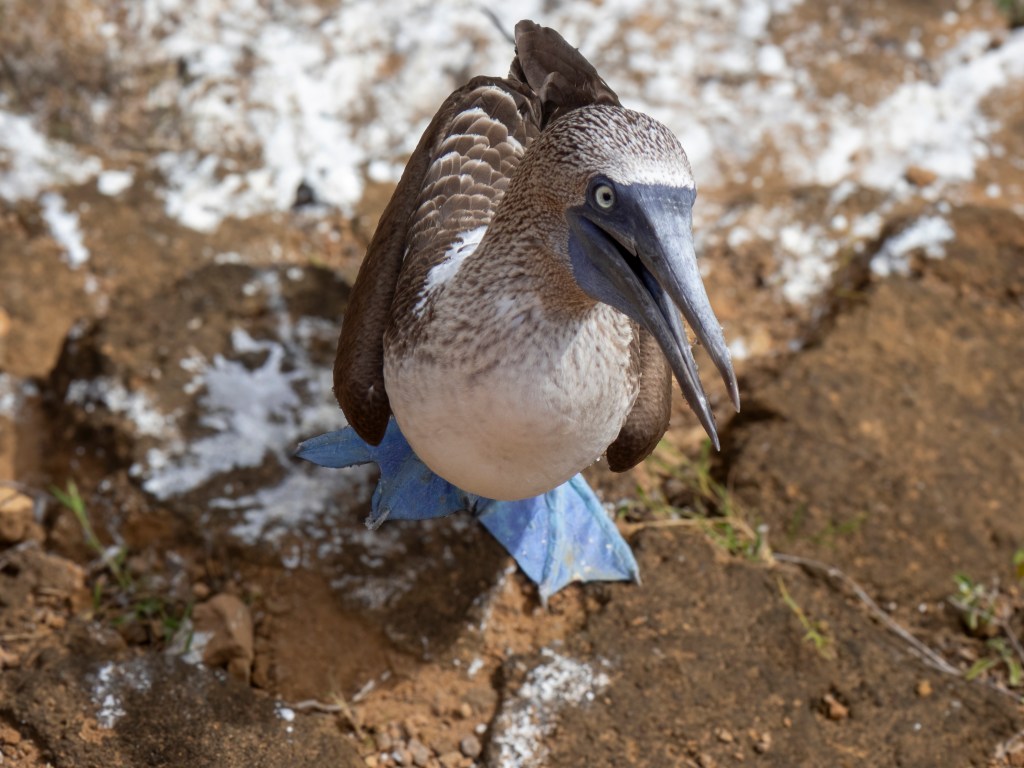
Peter and Rosemary Grant, two world-renowned evolutionary biologists, originally from England then America via Princeton University, have spent decades studying changes in Daphne Major’s finch population. Beginning in 1973, they measured, cataloged, and classified every finch on the entire island across thirteen different species, then did the same for their offspring. Not surprisingly, each species had unique adaptations based on its diet and the relative populations of each species changed over time in response to what food was available. When there was enough water to be found, finches with smaller, weaker beaks were able to survive on smaller, softer seeds, but in 1977, there was less than an inch of rain the entire year, drying everything out, leaving behind only large, hard, difficult to eat seeds. The smaller finches were decimated, but those with larger beaks prospered. Within two years, the entire finch population had grown, gaining mass in response to the changing food source. A few years later, however, the situation reversed, and torrential for eight months favored smaller birds. During these tough times, the birds of different species interbred, venturing outside the normal comfort zone to survive, creating hybrids that further mixed up the gene pool, further suggesting how life responds to different pressures in the drive to reproduce, but this was just the beginning of the Grant’s remarkable discoveries. In 1981, a finch arrived from another island, one that was significantly heavier than most ground finches, and able to eat both types of seeds, as well as exploit other food sources like nectar and pollen, and one which ultimately changed the make up of the entire island. Upon its arrival, they aptly named the new comer Big Bird, believing it had immigrated from Santa Cruz a short distance away, though in 2015 they learned its origins were on Espanola, almost 60 miles removed. Whether Big Bird had gotten lost and couldn’t find his way home, no one could say, but once on the island, he lived for thirteen years and began mating with the species already present. While this was rare, it was known to happen occasionally, especially when environmental conditions changed rapidly. After Big Bird mated with the native population, however, something even more amazing happened: His offspring were hybrids with an existing species, but unlike Big Bird himself, they didn’t mate with any old finch. Instead, they only mated with each other and over the course of a mere handful of generations, created an entirely new species, the first species whose birth had ever actually been recorded in real time in the field, the only known instance of humanity ever witnessing that “mystery of mysteries.” According to their scientific names, Geospiza conirostris, the Espanola Cactus finch and Geospiza fortis, the local ground finch, produced a new species with measurable differences in the genes for beak shape, beak size, and their mating songs.
If I had eyes or sensory organs, I could’ve seen all of this happen, witnessing evolution in such a short period along with Peter and Rosemary and the broader history humans as it transpired over durations inconceivable to mortals. You might not phrase it this way, but new species are born right upon my back and around the world, on the backs of the other rocks and stones you take almost entirely for granted. You live your lives upon us, loving, hating, caring, killing, birthing, burying, and everything else you do only because we are solid enough to build upon and in many cases, build from. If we were like you, gone in the relative blink of an eye, as though the entire universe was made of water or sand, there would be no humanity in the first place. You need us not to change, or more accurately, to change so slowly you can’t see it with your short lifespans, stepping over us as if we didn’t even exist though we come in an astounding, almost bewildering variety, based on both how we are formed and how we age. I am placed in such a way that I overlook the ocean, facing south towards Santa Cruz, and the combination of the wind and the waves has kept me free from any growth upon my exterior or covering of any kind. Though volcanic rocks are frequently jagged when they first emerge, as if we were frozen in a moment of boiling torment, my rougher edges have been smoothed away over the eons, leaving a dull brownish surface, perhaps tinged with a little red and orange. As you ascend Daphne Major, however, to its maximum height of almost 400 feet, the ocean has less of an impact and other elements including the local wildlife can fundamentally alter our appearance, changing us from our native hues. Some of my fellows have been penetrated by cactus and other scrub, a thin layer of sentiment being all these enterprising plants need to cling to to survive, producing the seeds that ultimately feed the finches and the few other inhabitants. Perhaps more ignominiously, some of my kind spend a short eternity covered entirely in finch guano; the native brown completely concealed by a thick, slippery white coating that develops after generations upon generations of birds that have literally shat on my family’s face. On other islands, this phenomena is far more dramatic, if anything. Daphne Major is home to less than 2,000 finches at the most. Isla Genovesa, however, located several hundred miles north is home to tens of thousands, including much larger and more raucous birds. In addition to finches, there are Nazca and Red-footed Boobies, Swallow-tailed Gulls, storm petrels, Red-billed Tropicbirds, mockingbirds, and frigates sometimes nesting a dozen to a single tree, making the foliage itself seem alive and covering the ground with something close to a thick coat of paint. On some of the other islands, sea lions get in on the act as well. In addition to their feces, their larger mass smooths off the rough edges of the surface, resulting in volcanic rock either brown, red, or even black that seems like it was polished for a purpose.

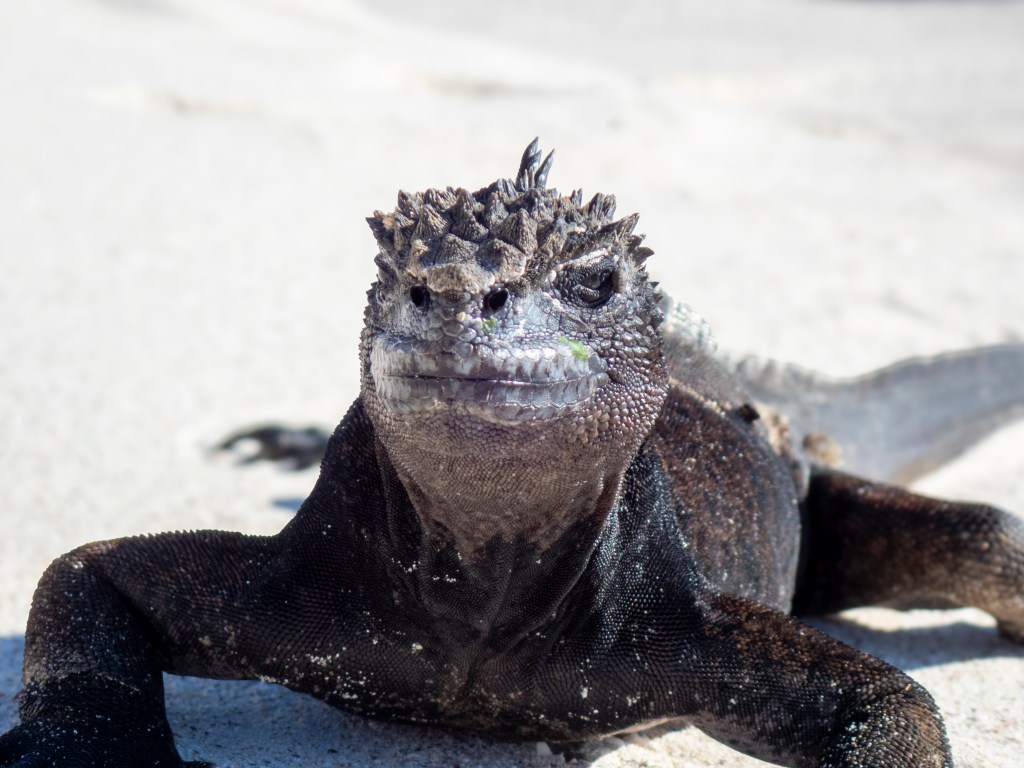
I will never know sea lions, tortoises, or the native species of iguana. They aren’t native to my island, and I find the entire idea of being covered in feces somewhat distasteful, even for a rock, but the coating does have the benefit of preserving the stone longer. My being is exposed to the wind and sea, waging a daily war against the elements that even something which persists for millions upon millions of years will ultimately lose, ground away to dust. Theirs is protected in an inversion of the usual arrangement, where stone protects life, here the droppings of life protect stone. Still, mine is the braver course, facing oblivion the entire time. It is also the more inspiring course, because while Darwin and other scientists have become legendary for solving that “mystery of mysteries,” exposed rock like me can rightfully be said to have started the entire intellectual revolution in the first place. Before scientists were ready to consider how and why animals might change, they needed to accept that the entire Earth changed first. When Darwin departed on the Beagle in 1831, he was gifted a copy of the first volume of Charles Lyell’s groundbreaking Principles of Geology, which introduced the idea that Earth’s surface was changing over time in response to forces happening above and below. Previously, people had believed that the surface only changed in reaction to truly catastrophic events, such as a biblical flood, but by analyzing the stratum of Mount Etna in Sicily, Lyell determined that the planet was both much older and subject to continuous change. As a result, Darwin was as obsessed with rocks like me as much as animals and everything else. Indeed, a large portion of his journal, subsequently published as The Voyage of the Beagle, was devoted to theorizing about how the various landscapes he encountered came to be. In South America, in the town of St. Fe Bajada, “I was delayed here five days, and employed myself in examining the geology of the surrounding country, which was very interesting. We here see at the bottom of the cliffs, beds containing sharks’ teeth and sea-shells of extinct species, passing above into an indurated marl, and from that into the red clayey earth of the Pampas, with its calcareous concretions and the bones of terrestrial quadrupeds. This vertical section clearly tells us of a large bay of pure salt-water, gradually encroached on, and at last converted into the bed of a muddy estuary, into which floating carcasses were swept.” Further south, while crossing the Straits of Magellan, he considered the impact and extent of glaciers on the rocky landscape, “The descent of glaciers to the sea must, I conceive, mainly depend on the lowness of the line of perpetual snow on steep mountains near the coast. As the snow-line is so low in Tierra del Fuego, we might have expected that many of the glaciers would have reached the sea. Nevertheless, I was astonished when I first saw a range, only from 3,000 to 4,000 feet in height, in the latitude of Cumberland, with every valley filled with streams of ice descending to the sea-coast. Almost every arm of the sea, which penetrates to the interior higher chain, not only in Tierra del Fuego, but on the coast for 650 miles northwards, is terminated by ‘tremendous and astonishing glaciers,’ as described by one of the officers on the survey. Great masses of ice frequently fall from these icy cliffs, and the crash reverberates like the broadside of a man-of-war through the lonely channels. These falls, as noticed in the last chapter, produce great waves which break on the adjoining coasts. It is known that earthquakes frequently cause masses of earth to fall from sea-cliffs: how terrific, then, would be the effect of a severe shock on a body like a glacier, already in motion, and traversed by fissures!”
While no one can say for sure, certainly not a humble, non-sentient rock like myself, it seems reasonable to believe that Darwin’s interest in the changing landscape led directly to his interest in the changing animals crawling, walking, running, and flying across it. In other words, life happens because it can stride across me and build upon me, but on an even deeper level, the mystery of mysteries finally began to be unraveled only after humanity started wondering how I came to be in the first place. This, I would once again humbly suggested, is not a bad track record for an inanimate object.

 Confessions of a Conservative Atheist