We should condemn those who would make sport of anyone’s suffering for any reason, but in a world where everything is political, there is nothing wrong with stating your opinion on what led to the destruction and what could have done better once it was unleashed.
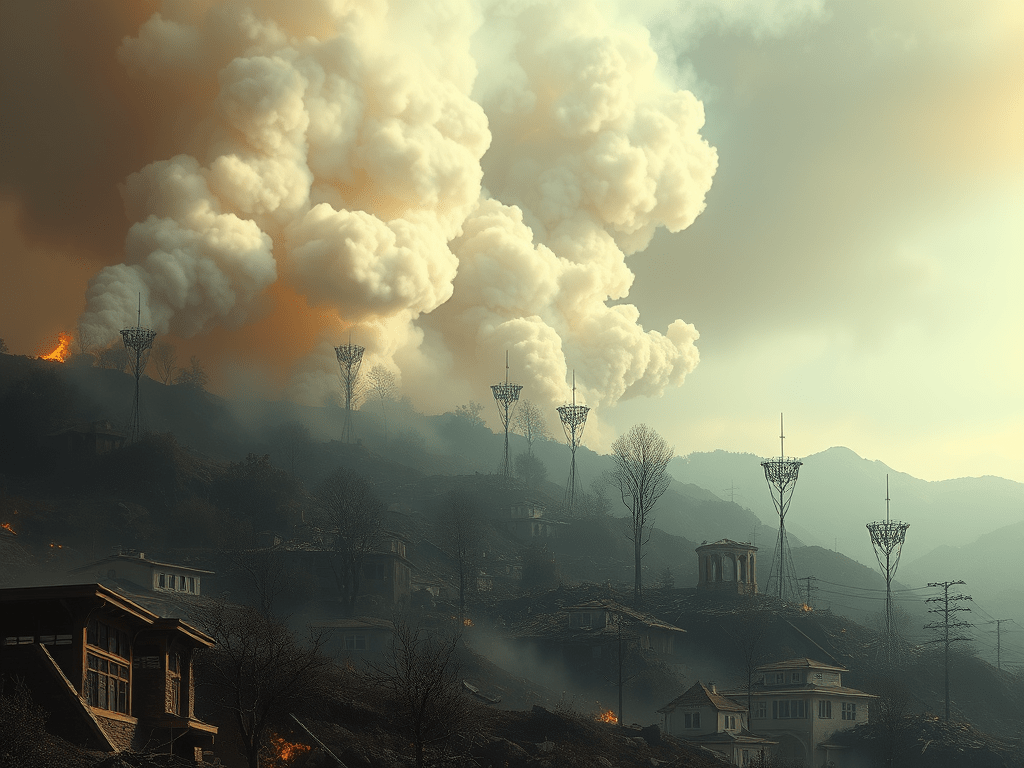
The fires in Los Angeles have prompted a range of responses, from the heartfelt to the horrible with the political in between. While most fair-minded Americans have expressed shock and horror at the scope of the devastation across both the community and the individual members of that community, some, of course, have chosen to ridicule those who are suffering, either for political (for example, it is only karma that veteran actor James Woods lost his home because he’s a Republican) or economic reasons (for example, the average price of a home is $3.4 million in the Pacific Palisades, why should we care what happens to a bunch of rich people?). This is unfortunate, but also an unfortunate part of human nature that simply can’t be avoided. There will always be those who find joy in another’s suffering, as the Germans had it long ago. The average person, however, understands that a home is more than the value of the property, the building, and the stuff in it. Whether rich or poor, there are few things in life you can lose other than a loved one as devastating as your home. The Los Angeles Times described the carnage, claiming the area had “never seen this level of destruction.” “The unprecedented scale of the destruction in Pacific Palisades came into horrifying focus Thursday from a fire that flattened a large swath of the community, rendering it unrecognizable. As the smoke began to clear after two days of intense fire, Pacific Palisades appeared more like a moonscape of destruction than an upscale neighborhood known for its ocean views, beautiful vistas and celebrity denizens. Entire swaths of the residential district, from its quaint village to the shores of the Pacific Ocean, were completely gone, the architectural whimsy and lush landscaping reduced to burned-out ruins with white smoke still billowing from the wreckage. It is a level of loss a Los Angeles community has not endured in recent memory — if ever — despite earthquakes, fires, floods and civil unrest. The devastation extended for miles. Some of the structures that survived — shopping centers, office buildings, a church, a school building, apartments, an occasional house — rose out of an otherwise featureless, battered and gray landscape. The scene was equally grim on Pacific Coast Highway, where row after row of prized homes backing up onto the sand were incinerated and exposing direct views of the ocean to the road.” In total, it’s estimated that some 10,000 buildings have burned to the ground including homes, businesses, and other structures. Can you imagine fleeing as the fire bears down, pressed onward by gale force winds, knowing you are likely never to return and some of the things you consider priceless in life will be lost to you forever? I can’t, nor do I think most people can. The rich, of course, will have an easier time temporarily relocating and rebuilding while the poor will be in much, much worse shape without the necessary resources to house and support themselves during this catastrophic period. Without our support, even the middle class might not recover, and support them, we should while condemning those who would make sport of anyone’s suffering for any reason.
At the same time, this doesn’t mean the catastrophe is above and beyond politics somehow. In a world where everything is political, there is nothing wrong with stating your opinion on what led to the destruction and what could have done better once it was unleashed. In that regard, leading Democrats and their enablers in the mainstream media are pointing to climate change, as though mother nature herself were punishing the West Coast. Democratic Socialist Senator Bernie Sanders, for example, has taken repeatedly to X to claim humanity’s impact on the weather was responsible. “80,000 people told to evacuate. Blazes 0% contained. Eight months since the area has seen rain. The scale of damage and loss is unimaginable. Climate change is real, not ‘a hoax,’” he proclaimed on January 8. Two days later, he reiterated the same claim, ridiculed those who disagree, and bizarrely attacked those who he believed were politicizing the issue while he himself was politicizing it. “Politicizing this issue is extraordinarily irresponsible. To think that climate change is a ‘hoax’ is insane. Let’s be clear — Trump is in opposition to 97% of the scientific community who agree that climate change is real and that it is caused by human activity.” Later that same day, he warned and practically threatened us all, “The debate is long over. Climate change is real. And it’s here. If we do not get our act together, what we are seeing now will only get worse.” Others have made similar claims, but what evidence of any kind do they have climate change is responsible when we have no idea how the fire began and the Santa Ana winds that whipped it into an uncontrollable frenzy have been a recurring phenomenon, long before industrialization? Indeed, whenever it is convenient for them, Senator Sanders and the army of real card-carrying experts he cited are fond of insisting that weather – much less a fire – is not the climate. As the National Ocean Service, part of the National Oceanic and Atmospheric Administration, helpfully explains, “We hear about weather and climate all of the time. Most of us check the local weather forecast to plan our days. And climate change is certainly a ‘hot’ topic in the news. There is, however, still a lot of confusion over the difference between the two. Think about it this way: Climate is what you expect, weather is what you get. Climate is the average of that weather. For example, you can expect snow in the Northeast in January or for it to be hot and humid in the Southeast in July. This is climate. The climate record also includes extreme values such as record high temperatures or record amounts of rainfall. If you’ve ever heard your local weather person say ‘today we hit a record high for this day,’ she is talking about climate records. So when we are talking about climate change, we are talking about changes in long-term averages of daily weather. In most places, weather can change from minute-to-minute, hour-to-hour, day-to-day, and season-to-season. Climate, however, is the average of weather over time and space.”
To be sure, there are experts who insist, sometimes falsely as in the case of hurricanes, that climate change is making severe weather both more frequent and more intense. The same National Oceanic and Atmospheric Administration addresses wildfires in particular, “Climate change, including increased heat, extended drought, and a thirsty atmosphere, has been a key driver in increasing the risk and extent of wildfires in the western United States during the last two decades. Wildfires require the alignment of a number of factors, including temperature, humidity, and the lack of moisture in fuels, such as trees, shrubs, grasses, and forest debris. All these factors have strong direct or indirect ties to climate variability and climate change. A 2016 study found climate change enhanced the drying of organic matter and doubled the number of large fires between 1984 and 2015 in the western United States. A 2021 study supported by NOAA concluded that climate change has been the main driver of the increase in fire weather in the western United States…For much of the U.S. West, projections show that an average annual 1 degree C temperature increase would increase the median burned area per year by as much as 600% in some types of forests.” Of course, there are many who dispute these claims, but even if you accept them at face value, the government estimates the total temperature increase between 2016, the end of the study cited above and today, was .15 degrees Celsius. The years in between were equally hot, and yet the Pacific Palisades was still standing. Likewise, there were terrible fires long before 1980. Prior to 1850, it is estimated that about 4.5 million acres burned annually, with fires lasting for months, and overall activity peaking approximately every three decades, when up to 11.8 million acres were burned. In 2022, however, approximately 7.5 million acres burned across the entire United States, making it either the 11th most or the 12th least of the past 23 years, with 66,255 fires, either the 12th most or 13th least. This is because, contrary to the direct claims of Senator Sanders and others, any impact of climate on weather or wildfires is on the overall average. Fires are said to become more likely and burn longer because of the drier, hotter conditions, but the impact on an individual fire, from how it starts to how is spreads, is near impossible to say, especially if it turns out this one began because of human activity. In other words, even if climate change has increased the number and extent of fires, blaming it directly, as a proximate cause as Senator Sanders and others are doing is both nakedly political and patently false. If we had adopted every strategy they suggested, including the complete Green New Deal, there is no reason to believe this particular fire would’ve been prevented or reduced in any way, nor does a focus on climate change somehow absolve state and local officials from their responsibility to manage and respond to catastrophic fires.
For their part, Republicans, including President-elect Donald Trump have focused their political criticisms on what they perceive as these failures of both the state and local governments, believing the preparation to deal with fires in general, this fire in particular, and the overall response have made matters much worse than they could have been, arguing that politicians in California have been far more interested in going woke than protecting the populace. In their view, any response to a massive fire that begins with a water shortage on oceanfront property, where limitless gallons are literally a few yards away isn’t acceptable. President Donald Trump claimed on Truth Social, “The fires are still raging in LA. The incompetent pols have no idea how to put them out. Thousands of magnificent houses are gone, and many more will soon be lost.” “They just can’t put out the fires,” he added. “What’s wrong with them?” At the state level, it’s no secret that the water supply has been poorly managed to the point where it was the fodder for Jack Nicholson’s fictitious private investigator, Jake Gittes in the 1974 classic Chinatown. In 2014, California issued a $7.5 billion bond to build new dams and other vital facilities, but as late as 2023 no major projects had been completed. “It’s slow going — a lot of permitting,” explained Lisa Lien-Mager, spokesperson for the state Natural Resources Agency. “It’s not like the state just writes a check.” The Los Angeles Times summarized the situation this way, “Of the total bond money, $6.4 billion has been committed to projects and more than $2 billion has been spent, says Nancy Vogel, the Natural Resources Agency’s deputy secretary for water. In all, 1,838 projects have been funded and 760 are completed. So, it’s false that zilch has been built. But it’s true that many projects are progressing too slowly, even by government standards.” Simultaneously, California Governor Gavin Newsom has stopped efforts to provide more water to the Los Angeles region. As President Trump was ending his first term, he issued a memorandum recommending the state divert more water from the north to the south. “President Trump gave the Department of the Interior and the Department of Commerce clear direction to move forward and provide water to California’s communities and farms,” explained U.S. Secretary of the Interior David Bernhardt at the time. “Today’s action furthers President Trump’s commitment to America’s hardworking farmers who need water to feed our nation.” “President Trump told us to make water in the west more reliable, and the Bureau of Reclamation is doing just that,” added Brenda Burman, Commissioner of the U.S. Bureau of Reclamation. “Working with partners in California, and using the best available science, we will implement new biological opinions to modernize Central Valley Project operations. We’ve worked hard with our partners to get here, but President Trump has called on us today to do more, so we’ll be out there every day with our partners working to make sure farms, families, communities and fish and wildlife have the water they need to thrive.” Governor Newsom resisted this effort, however, claiming he wanted to protect “highly imperilled fish species close to extinction.” In addition, it appears that, rather incredibly, a local reservoir that could’ve provided a much needed back up supply was left completely empty, having never been filled after a series of repairs last year.
Others, including Los Angeles’ own Fire Department Chief have criticized California’s fire prevention strategies. Last month, Fire Chief Kristin Crowley wrote to the Board of Fire Commissioners that recent budget cuts totaling over $17 million, “have adversely affected the Department’s ability to maintain core operations,” “severely limit[ing] the Department’s capacity to prepare for, train for, and respond to large-scale emergencies,” affecting their capacity for both brush clearance and residential inspections, and reducing the effectiveness of “Specialized programs and resources, such as Air Operations, Tactical EMS Units, Disaster Response, and Community Emergency Response Teams (CERT), which rely heavily on v-hours.” Last week, she reiterated these concerns to CNN’s Jake Tapper. “We can no longer sustain where we are. We do not have enough firefighters.” A lack of equipment is also a concern, with 100 fire apparatus currently out of service and no mechanics to service them. “Yes, I think the fire department is overwhelmed with what has happened,” explained Fire Commission President Genethia Hudley-Hayes. “The cuts have to be taken into consideration in terms of their ability to respond to something like this.” At the same time, the department itself has found the resources and manpower to focus on Diversity, Equity, and Inclusion initiatives. Indeed, Chief Crowley’s own online bio, who is a proud lesbian herself, stated her priorities before the fire this way, “creating, supporting, and promoting a culture that values diversity, inclusion, and equity while striving to meet and exceed the expectations of the communities.” To that end, she spent last year establishing the department’s Office of Equity and Human Resources, and there are now more black, Latino, Asian, and female firefighters in each recruitment class, but as CNN’s Scott Jennings put it, “We have DEI, we have budget cuts and yet I’m wondering now, if your house was burning down, how much do you care what color the firefighters are?” Beyond the budget, there are also concerns about the effectiveness of the leadership and organization. LA Mayor Karen Bass was on a junket to Ghana when the fire struck, and her chief lieutenant, Deputy Mayor of Public Safety Brian Williams, was on leave after being investigated by the FBI for placing a bomb threat. “She knew that we had a major wind event coming up that had the potential for a wildfire,” explained Tom Doran, after fleeing the Palisades Fire that destroyed his home early Wednesday morning. “She’s off in another country, and at the taxpayer’s expense, when she should’ve been here … She is the chief executive of Los Angeles. Yes, she delegates but if you delegate you’re the one in charge.” At least at this point, it doesn’t appear that senior city leadership were in place in the crucial early period when the fires were first spreading to provide effective command and control. The confusion persisted throughout the week, when it was reported first that Chief Crowley was fired, then that she wasn’t.
Whatever the case, the results aren’t encouraging, and politicking has nothing to do with it, save that one should wonder why Democrats believe controlling the weather rather than their own governments is the better strategy.

 Confessions of a Conservative Atheist