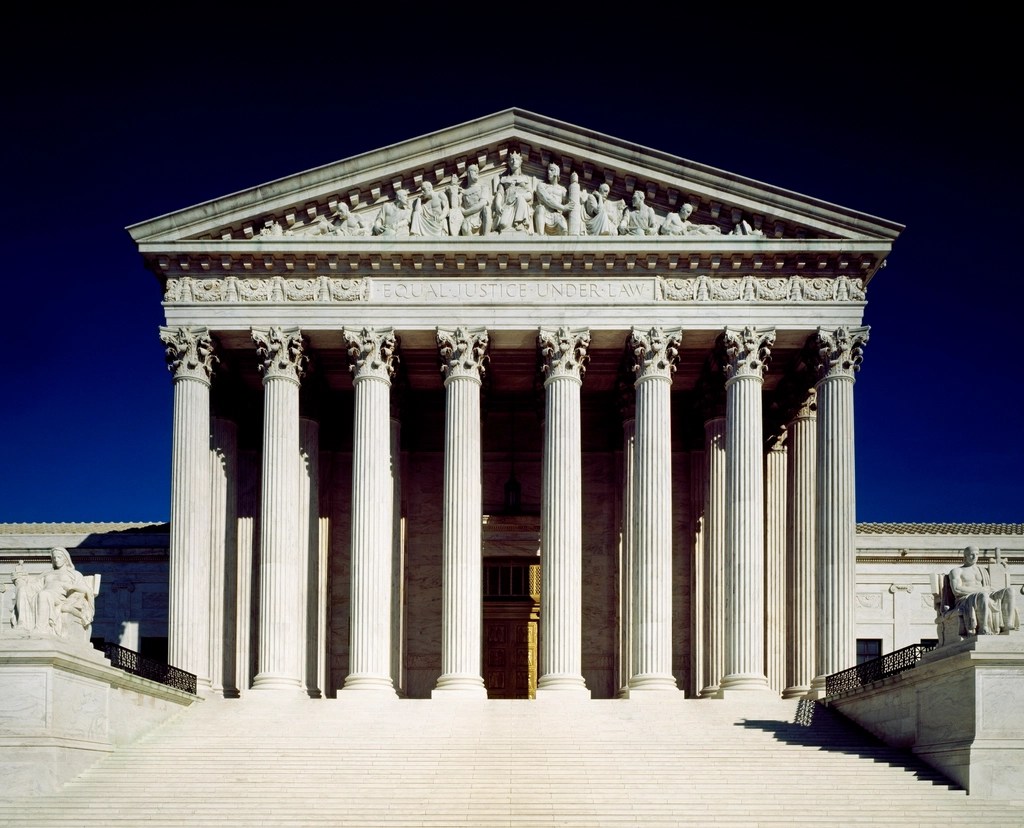
Last week, the reasonable outcome was for the Supreme Court to reject the case entirely. This week it’s to reject even the narrow question the Court proposed ignoring the obvious importance to the future of the country. Is it any wonder few pay any attention to the experts any longer?
Last Thursday, the Supreme Court agreed to hear President Trump’s immunity claim after two weeks of speculation they would refuse to do so. For example, on Saturday, February 24, CNN claimed, “Some experts believe that the longer the high court takes, the more likely it is to reject Trump’s request to block the DC Circuit ruling. That theory rests on the idea that a conservative justice might be writing a lengthy dissent from the decision – and that can take some time.” One of these so-called experts was Randall Eliason, a former federal prosecutor and law professor at George Washington University who predicted a mere two weeks to decide a matter of grave importance was “probably a bad sign for the former president.” “I think that’s the most likely reason,” Mr. Eliason said. “Someone is writing a dissent.” After the Supreme Court announced they would hear the case contrary to what passed for conventional wisdom, the media immediately switched gears to suggest something nefarious was afoot. CNN proclaimed, “Trump uses the slow legal system to his advantage. The Supreme Court is helping,” implicitly suggesting that things should never be to the Bad Orange Man’s advantage and any attempt to fairly hear or evaluate the various rights he should enjoy as President is wrong by definition. As Joan Biskupic saw it, “Wednesday’s action by the high court, made up of six conservatives and three liberals, plainly gives Trump a new measure of success and buys him more time before possible trial on election subversion in Washington, DC. The former president’s strategy of trying to delay the four criminal trials against him is well-documented. And in fighting special counsel Jack Smith’s case, the Supreme Court has become an ally of sorts, despite the expedited schedule.” To hear her tell it, the Supreme Court should refuse to do its own job, and instead simply step aside to allow the Special Counsel to rush the trial forward on his own politically motivated schedule. In contrast, daring to review a critical decision that will impact the entire future of the presidency in America is becoming an “ally of sorts.” The New York Times saw things in a similar manner, even using the same “as sorts” qualifier, claiming that “His strategy of seeking delays is paying off. The Supreme Court gave him a victory of sorts yesterday by deciding to take up his long-shot argument: that he is all but immune from prosecution for any actions taken while in office. The practical effect was to push back, by several months at least, the start of his federal trial on charges of plotting to overturn the 2020 election. Whether the trial can get underway before Election Day remains uncertain.”
Needless, no attempt to actually evaluate the claim was made, and any and all decisions were seen entirely through the prism of Donald Trump, but if the mainstream media and the experts were capable of seeing past the dreaded boogeyman of American politics, they would easily recognize two things. First, President Trump’s lawyers are obviously asking for more than they will receive as anyone would in any back and forth process. It should not take a legal expert to understand that a lawyer argues for the best possible scenario for their client. In this case, they have put forward a claim that the President is immune to prosecution from just about anything, but that’s not what they need to have the charges dismissed, nor does anyone who is not one of Trump’s lawyers believe the Court is likely to endorse anything so broad. The Court is, however, likely to consider various scenarios where immunity is necessary and where it isn’t. Putting this another way, nobody believes the President can sneak out of the White House, set himself up as a sniper on the Washington Mall, and go on a killing spree, deal drugs, or participate in gang rapes. At the same time, there are self-evidently presidential duties, prerogatives, and powers that require immunity from prosecution for the smooth operation of government. A president cannot function if they are under the constant threat of prosecution from their political adversaries and contrary to conventional wisdom, every president makes decisions that run afoul of the law. President Biden, for example, has had his Executive Orders overturned on student debt relief, a moratorium on evictions, and the vaccine mandate, plus provisions in the coronavirus relief package that provided aid based on racial and ethnic criteria. There are multiple public statements on at least some of these matters where it appears the President was aware the orders were not within the existing legal framework and would ultimately be overturned. On the eviction moratorium in particular, the Biden Administration announced in advance that they did not have the authority immediately before they magically found it. “To date, the CDC director and her team have been unable to find legal authority, even for a more targeted eviction moratorium that would focus just on counties with higher rates of COVID spread,” explained Gene Sperling, the economic recovery czar in August 2021. President Biden himself acknowledged this as well by saying, “Whether that option will pass constitutional measure with this administration, I can’t tell you. I don’t know. There are a few scholars who say it will, and others who say it’s not likely to. But, at a minimum, by the time it gets litigated it will probably give some additional time while we’re getting that $45 billion out to people who are in fact behind in the rent and don’t have the money.” In other words, President Biden broke the law when he issued the order and he knowingly did so against the advice of his own legal advisers. Landlords, who were forced to continue to allow tenants that had not paid their rent in years, were obviously harmed by this decision. It was a similar story on the vaccine mandate, when the Biden Administration insisted for an extended period it was not the federal government’s role to mandate vaccines nationwide but ultimately moved ahead anyway, causing thousands of people to lose their jobs with no recourse or recompense.
Of course, President Trump’s situation, both with January 6th and the classified documents, is not the same. He is not being accused of issuing illegal Executive Orders, but of personally running afoul of various laws. This difference is surprisingly relevant and irrelevant at the same time. Relevant for obvious reasons, but irrelevant because the crimes Trump is charged with are primarily driven either by the notion that he obstructed a process (in the case of January 6) or violated a law regarding classified documents. An illegal Executive Order necessarily obstructs a an existing law, by either blocking it or extending it unlawfully, and laws regarding classified documents necessarily touch upon the authority of the Executive. In the documents case, the alleged illegality occurred after he was out of office, though the documents in question were removed while he was in office and would enjoy either privilege or immunity. Likewise, there are important questions surrounding the nature of presidential records, the authority to decide what constitutes an official record versus a personal one, and how the process to decide between the two should unfold. Namely, it is inconceivable – to me, at least – that a bureaucrat in the National Archives is given complete control of these records, up to and including coordinating with White House lawyers to bring in the Federal Bureau of Investigation. There is also the potential for a selective prosecution, especially in light of President Biden’s own mishandling of records, including sharing them with an author who subsequently deleted a transcript of the conversation, all of which occurred without charges because Biden was too much of a confused old man for a jury to find guilty. In the case of January 6, the role a President plays in ensuring a fair election and what prerogatives he or she has to both speak their mind on the matter and apply pressure to investigations remains admittedly unclear. What is clear, however, is that the conduct of presidential elections is directly prescribed in the Constitution and the president is the chief executive, responsible for enforcing both the laws and the Constitution. To suggest there is no role for a Chief Executive who believes an election has been conducted unfairly, especially when that election was conducted in a way that no other election has ever been conducted in the history of the country, resulting in the greatest change to the election since women had the right to vote, is absurd on its face. This doesn’t mean that the Supreme Court will ultimately rule that the President enjoys immunity in these matters, merely that it is a valid question, especially given that this is the first time in US history that a former president has been charged with a crime of any kind. To suggest that the Supreme Court would not weigh in, is perhaps even more absurd than suggesting the President has no role to play in the conduct of an election in the first place.
Unlike the pundits and prognosticators, the Supreme Court has a duty to consider the implications beyond Donald Trump, asking themselves what a presidency without immunity means long term, as any ruling will establish a precedent for how future occupants of the Oval Office are treated under the law. The former President Trump himself put the stakes in stark terms after the announcement. In his view, “a President will not be able to properly function, or make decisions, in the best interest of the United States of America. Presidents will always be concerned, and even paralyzed, by the prospect of wrongful prosecution and retaliation after they leave office.” What does American democracy look like if every Executive Order or statement, or lack of Executive Order or statement is met with threats of criminal action, if not actual prosecutions? Consider the situation with the border in Texas. President Biden, immediately upon taking office, rolled back key policies put in place by the Trump Administration, and then spent more than two years insisting the border was closed while record numbers of illegal immigrants streamed in on a daily basis. If a President does not enjoy immunity when making these decisions, what is to prevent a creative prosecutor in Texas from charging him with dereliction of duty, obstruction of justice, or some other set of crimes, even accusing them of conspiracy to commit murder if an illegal alien that would not have been in the country commits a homicide? Even if the charges themselves are not likely to stick, the threat alone – coupled with the power of a prosecutor to subpoena records, call witnesses before a grand jury, etc. – could be enough to exert undue influence. If the media had any interest beyond Donald Trump, these are the sort of questions they would be asking, especially when they don’t even need to come with any queries on their own. The Supreme Court, in fact, already did that for them when they decided to hear the case. The question, in their view, is “Whether and if so to what extent does a former president enjoy presidential immunity from criminal prosecution for conduct alleged to involve official acts during his tenure in office.” All the media need to is fairly cover that question, but instead they almost entirely ignore it, focusing exclusively on Trump and the surrounding politics, accusing the Court of nefarious activity simply for doing their job. As J. Michael Luttig, a conservative jurist and former U.S. circuit judge turned Trump hater put it, “This is a momentous decision just to hear this case. There was no reason in this world for the Supreme Court to take this case,” except for the obvious fact that the question they presented has never been answered and now needs to be. “It’s slow-walking. There’s very few other ways, in my view, to interpret it,” Michael Waldman, president of New York University’s Brennan Center for Justice told The Washington Post last week while ironically showing very little interest in justice. “This appears to be the approach that helps Trump the most while appearing not to,” he suggested, tipping his hand that his only goal is to see Trump prosecuted before the election. Others, such as former Republican Congresswoman Liz Cheney were open about the need to rush the trial under any and all circumstances, “Delaying the January 6 trial suppresses critical evidence that Americans deserve to hear,” she wrote in a social media post, which was quickly endorsed by fellow former GOP colleague Adam Kinzinger. “Donald Trump attempted to overturn an election and seize power. Our justice system must be able to bring him to trial before the next election. SCOTUS should decide this case promptly.”
Neither President Trump’s due process rights, nor the future of the office itself begin to enter their concerns. So much so that it took a full five days for the media to even address the question from the Supreme Court. On Sunday, CNN finally decided to report how they framed the issue, noting “How the Supreme Court’s decision on Trump’s immunity could turn on a single question.” “The Supreme Court will likely produce thousands of words when it decides this year whether former President Donald Trump may claim immunity from special counsel Jack Smith’s election subversion charges. But for now, court watchers are stuck parsing the first 29. That’s how many words the court used to lay out the ‘question presented’ in Trump’s immunity appeal – the question that the nine justices will focus on when they meet in April to hear arguments and then sit down to craft an opinion that will either greenlight Smith’s prosecution of the former president or shut it down.” Needless to say, “some experts saw worrying signs for Trump…The framing of the case was ‘extremely carefully crafted,’ said Norm Eisen, who served as White House ethics czar during the Obama administration and is a CNN legal analyst. And, he said, it ‘signals the only reasonable outcome here, which is to reject presidential immunity.’” Last week, the reasonable outcome was to reject the case entirely. This week it’s to reject even the narrow question the Court proposed. Is it any wonder few pay any attention to the experts any longer?

 Confessions of a Conservative Atheist