
A negotiation over the price of sea shells reveals that value is in the eye of the beholder and as a colleague brilliantly put it when comparing the US to India in general: It doesn’t convert and we can be both different and the same.
“Be honest. How bad does it smell there?” The question might have been phrased a little crudely, but a friend of mine asked me exactly that while I was traveling to India last week. I only say a “little crudely” because the famous Indian-Canadian comedian, Russell Peters, once said exactly that in one of his more memorable skits while riffing on the differences between race and culture. Mr. Peters was Indian by race, but Canadian by culture, having grown up entirely in North America. He didn’t realize the difference, however, until he went to India for the first time as an adult. On the plane to India, he described himself as the most Indian man ever, until it landed, the door opened, and the smell hit him. Then, he realized that he was far, far more of Canadian than Indian. My own answer to the question was a little more nuanced, “It varies by the meter. Seriously, there is some truly five star shit that would be world class anywhere, as nice as anything you’ve ever seen, but chances are it’s right next to a heap of shit, a half dead cow, and some dude laying in the street. The place is so jumbled up it makes no sense. In the resort area, there are rows of true mansions right next to shacks.” A colleague who I’d bonded with on my last trip to India and who I’ve hosted in New Jersey, had asked me a similar question a few days earlier, “What do I really think about India?” My answer was much the same: Even setting aside the amazing hospitality, fantastic food, and unique experiences, there is a certain controlled chaos to it, an energy, an excitement, a sense of opportunity I find both fascinating and charming, even addictive at times if you can past the barely controlled chaos. The morning after my arrival I set out on the streets of downtown Chennai, emerging from a boutique hotel, complete with a pool, a spa, three restaurants, and other amenities that would be considered mid to high end in New York City or any other urban area in the United States onto a sidewalk that seemed to have been the victim of a recent bombing campaign, more cracks and holes than cement. Across the street, a ramshackle assembly of small shops, some reasonably well maintained, a couple quite nice, and others looking like they survived the same war as the sidewalk was yet another reminder I was no longer in America. The building to the right of the hotel while facing the street barely deserved the name, but I’d already seen it from the hotel window and wasn’t surprised. Fronting the street itself was a Hard Rock Cafe of all things, which from what I can tell was an extremely popular night spot for locals and travelers despite that it sucks even in the US. To the right, a series of respectable buildings continued to the end of the block, and yet one couldn’t miss the occasional pile of garbage on the sidewalk as I meandered my way down.

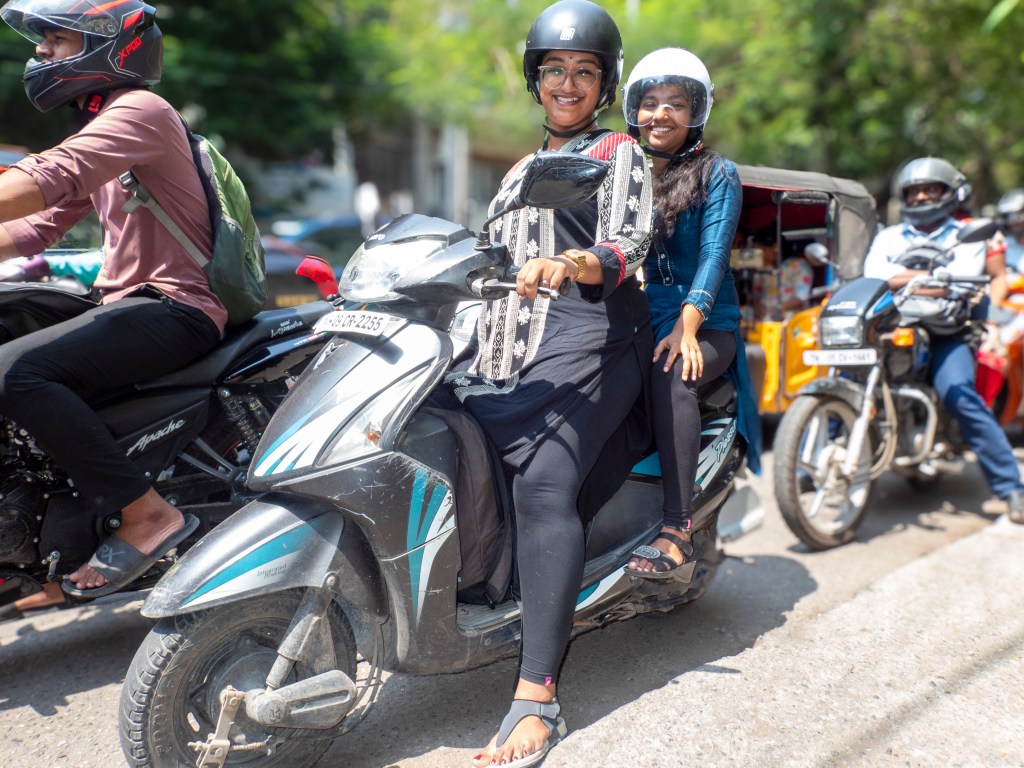
I wasn’t sight seeing that morning, however. I was on something of a mission, though I wasn’t certain how to accomplish it. Indian airport security is rather more severe than the United States if you can believe that. Switching planes in New Delhi, they’d taken my lighter, my small scissors, my cigar cutter, and as a result of being on planes for almost 20 hours with barely any sleep, I’d lost my baseball cap. I had a few hours before a car would take us to a resort about an hour south where we would host our strategy meetings for three days, and this was my window to resupply. Indian stores, however, aren’t quite like their American counterparts. For example, I figured a pharmacy would almost certainly have small scissors, but no such luck. They only sell actual drugs and most of them aren’t really stores at all, just counters on the street with a small room in the back. Baseball caps aren’t quite as popular in India either, but thanks to Google Maps, I was able to find the equivalent of a department store about ten minutes away, and so I set off in that direction on foot. Ten minutes down Indian streets, however, is far from the equivalent of walking from Madison Square Garden to Time Square. There are an equivalent number of people out and about, but as a colleague said later in the week, Indian sidewalks aren’t made for walking. When they aren’t cratered, they’re narrow or non-existent, and you’re just as likely to meet another pedestrian as you are a motorcycle or a scooter. The street beside what passes for a sidewalk is also a far crazier affair than anything in the United States. For one, lanes and traffic laws in general rarely apply because there are next to no traffic police for enforcement. Instead, a wide variety of vehicles, cars, small trucks, motorcycles with one, two, three, even four riders, sometimes infants on the gas tank, and motorized rickshaws, all traveling in lanes reversed from what Americans are used to thanks to their use of the British right hand drive. Outside the city proper, there are also likely to be cows to contend with. Regardless, when you are forced to step into the street, as you will be given the narrow sidewalks, occasional piles of refuse, and random people strewn there, it feels like you might be side swiped by a vehicle of some sort at any moment, forcing even the most hardened New Yorker to step rather gingerly to say the least.
Though this was my third trip to Chennai, the city is so large and sprawling I was in a different area, and didn’t realize there was a river of sorts running through it. Crossing the 100 foot or so wide body of water, I was uncomfortably reminded how different India can be from the United States or Europe. The water itself stank, cloudy and fetid, garbage was piled up on both sides, drifting down the surface. I imagined it as something like a river in the late 19th century, long before environmental protection laws cleaned up the refuse and transformed waterfront property into desirable real estate. There were no piers sticking out into the water, no sitting areas where residents could watch the current roll by, no one brave enough to get even close, as though it were an open sewer or a flesh-eating blob. Later in the week, I asked my colleagues about the garbage in general. The overall feeling was one of unacceptable shame, though the younger people were confident laws were changing and the future would be cleaner than the past. We can hope.
In the meantime, Chennai is hot. Heat doesn’t normally bother me, but around 95 degrees and humid was enough to soak my shirt and shorts even in sandals. After a couple of blocks en route to the department store, I was certainly feeling it, practically falling through the glass doors in search of air conditioning, pleased to discover that the store itself was modern, clean, and relatively high end. At the same time, communicating with the locals isn’t always easy. The team members I work with are all in the highly educated class and generally speak excellent English, sometimes better than people in the US. The people that work in retail, restaurants, and other shops, however, are another matter. I asked if they had a baseball cap, and the first person had no idea what I was talking about, but realizing I was a man, he said maybe upstairs with the rest of the menswear. Fortunately, the person upstairs understood what I was looking for and pointed me to a small collection of US Polo Association, finely made in India, cloth hats for less than $10. Success, complete the mental note that almost everything sold in India, from electronics to orange juice, is made in India because of high tariffs. Up next, I attempted to find out whether they had small scissors. Unfortunately, this required finding a picture on Google and showing it to several people. Though the store carried cosmetics and jewelry, they didn’t stock anything like scissors, nor could anyone tell me where to go that wasn’t miles away. Showing them a picture of a cigar cutter was even more confusing. Cigars aren’t popular in India in general, and a shrug of the shoulders was the best I could get. Being the sort of adventurous sort, I plugged “tobacco shop near me” into Google Maps and set off, fortunately in the same direction as my hotel only on the opposite side. While Maps works in India the same as it does here, Indian shops are so crowded onto the street fronts that it’s difficult to say where one ends and one begins, much less find an actual address, turning the software that gets us precisely from A to B in the United States into more of a general guide for the uninitiated. As a result, I ended up incorrectly crossing an intersection, attempted to walk through a construction zone, and dodged more vehicles than I can reasonably count. If my wife saw me, she would have her heart in her throat. If you saw me from above, it was like the old Frogger video game. I did locate an ATM on the way, and stumbled upon a store, which was more of a walk-in cubby, not bigger than ten feet by ten feet, that had small scissors, another small success. The supposed tobacco shop was more elusive, however and after an exhaustive search up, down, and across several blocks, with my increasingly melting, I discovered it had no frontage to the street, only a door, and it was boarded up. I resigned myself to go back to the hotel, this portion of the quest unfinished. I did ask the front desk where I might find one, only be told it was a solid half hour ride away. At a loss, I wrote the colleague I have grown close with, who somehow found a store and delivered it to the resort where our meetings would be held – along with some much needed beer – later that same day. As I said, the hospitality in India is amazing. He has an expression that a guest is like a god.
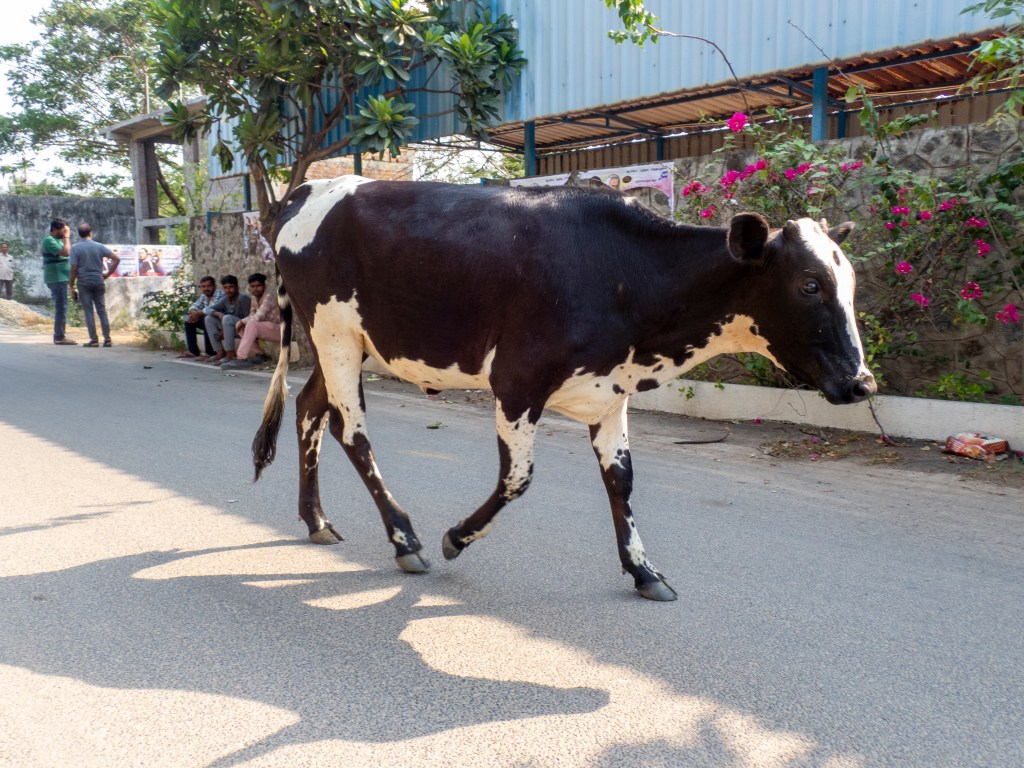
A few hours later, I was on my way to the resort myself. Chennai itself sits right on the beach, but it’s not the sort of beach most Americans would visit. One side of the street is essentially rows upon rows of concrete apartments, three to four stories high, that would never under any circumstances be considered beachfront property in the United States. They might not even pass as dilapidated military barracks from World War II. The people there, largely fishermen, are visibly poor beyond almost anything I’ve experienced outside an Indian reservation in Montana. There was garbage almost everywhere, crowding right up onto the street itself. The people looked simply destitute, many wearing tattered, mismatched clothing without shoes. Incredibly, another colleague in the car informed me that this was an improvement. Before the buildings, they lived in actual huts. Now, the huts are on the beach itself, where you can barely see the water through the cloth roofed, tent-like structures lining almost every inch. I couldn’t tell if people actually lived in them, or they were used for shelter from the heat while people were working, and I’m not sure I wanted to know either way. South of Chennai, however, the beach on the Bay of Bengal becomes world class. Many think of India as a poor country, and there’s certainly no shortage of poverty, but as in any American resort area, fine hotels, mansions, and other attractions occupy the space between the road and the beach. Mercedes and BMWs become more common sights, and considering they cost about double what they do in the US thanks to the tariff, the money is evident. The money, however, is always contrasted by the lack of it. As you move south, many of the storefronts get more and more dilapidated. In some cases, they aren’t stores at all, just little stands. Animals, stray dogs, and cows start to appear. The gates of the mansions themselves can be littered with garbage and people sleeping on the sidewalk.
The ride itself takes about an hour from downtown Chennai, giving me an opportunity to ask a few questions. First up was what the hell was going on in Pakistan. This was Saturday, and India hadn’t yet launched airstrikes, but my flight down was already diverted around Pakistani airspace. I told my colleague that we get some headlines in the US, but not the details and was shocked to learn that a couple of weeks earlier terrorist had killed 26 men in cold blood in Kashmir right in front of their wives and children, even demanding they to pull their pants down to prove they were Muslim to avoid that fate. President Donald Trump was up next, but like in the United States itself the topic can only come up at an oblique angle. One dances around it to make sure an explosion of Trump-derangement isn’t imminent, before actually asking the question, what do you think of the President? When I told this colleague I was a supporter, he noted President Trump has all the right policies, but he goes about them in the wrong manner, not being enthused about his bombastic, off the cuff style, which is certainly fair enough even if I think that is the only style that will work in his day and age. Others, however, were far more vocal in their support and admiration. In fact, I received more than one high five when my Indian colleagues learned I was a fan. I don’t want to generalize based on a small sample size, but from what I can tell, President Trump was much, much better liked than President Biden and there is the sense that the relationship with India will be strengthened as a result. They are necessarily proud that Usha Vance is of Indian descent, and were excited about the Vice President’s recent visit and meeting with their Prime Minister. A few criticisms aside, I didn’t speak to anyone who has anything resembling some of the hatred we see in America. While some were concerned about tariffs and trade wars, there was also the belief that India would be among the key countries to benefit, including Vietnam and Korea. To those in the professional class, India is ripe with opportunity and everyone seemed eager to seize new manufacturing jobs, even if they came at the expense of China, perhaps because they came at the expense of China.

The resort itself, Taj Fisherman’s Cove, was said to be one of the nicest properties in south east India, if not all of India, and it certainly lived up to the description based on the oceanfront view from my room alone. The property, situated right on the beach, of course, was large, but not overwhelming. Two main hotel buildings, a gorgeous central pool with a swim up bar, and stand alone cabins lined a wide, pristine beach. While I was arriving at the hotel, my ever-worrying mother posted on Facebook, reminding me to be safe, to which I replied don’t worry, it’s not like I race cars or chase bears, but with a few hours to kill before dinner, I immediately decided to avail myself of the bar, the beach, and the pool. If you haven’t seen it, the Bay of Bengal can be rough, and I wasn’t surprised to find the red flag indicating swimming wasn’t allowed, nor do I think anyone who knew me was surprised when I marched right out into the water with a beer. The hotel staff, however, was quite surprised, but in India everything is negotiable. He asked me to leave the beer the next time I went for a swim, then wondering what the hell I was doing when I ran off down the beach to play with a dog in the water, who was having a grand old time in the surf with his family (there are also a lot of stray dogs in India). Fortunately or unfortunately, the various vendors that line the beach can spot an American a mile away and not long after I arrived, someone selling carved shells and conches approached me. These are the sort of items that would cost hundreds of dollars in the states; he started at $250 for two. I got him down to a hundred, but I didn’t have all the cash on me, so I gave him $65 with an IOU. The next day, after learning there was no ATM at the hotel, I asked a colleague if they could loan me $35. He laughed and said that was too much for shells. I said it was two, one was carved, and the cost was $100 for both. He laughed again and said Americans don’t know how to negotiate. This led to two conclusions beyond that fact that I was dramatically increasing the market price for shells. First, value is in the eye of the beholder. In my mind, I figured I probably could’ve paid a few bucks less, but I was getting a deal either way and making a local happy. Second, as another colleague so brilliantly put it when comparing the US to India: It doesn’t convert. Dinner when I arrived was less than $40 for two people including drinks. Dinner the night before I left was less than $100 for six people based on the currency conversion alone, but that conversion isn’t as meaningful as it sounds, like trying to compare what a dollar bought in John D. Rockefeller’s day to today. There is no direct translation, but can’t we say that about the entire country?

Stay tuned for part two next week…

 Confessions of a Conservative Atheist