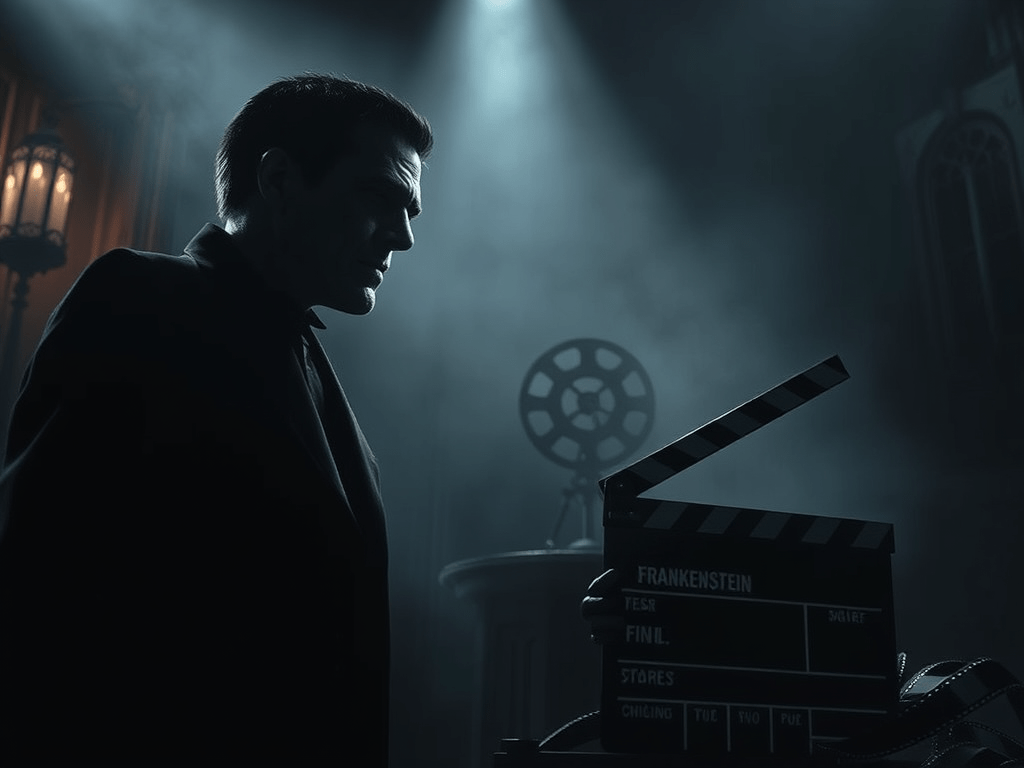
Frankenstein and a tale of two Hollywoods

In 1994, Mary Shelley’s Frankenstein almost ruined Kenneth Branagh’s career while this year’s equivalent of a remake from Guillermo Del Toro received almost universal praise despite making almost the same movie substantially worse. In 1994, Mary Shelley’s Frankenstein almost ruined Kenneth Branagh’s career.  Though opinions of the film have generally improved in the more than… Continue reading Frankenstein and a tale of two Hollywoods

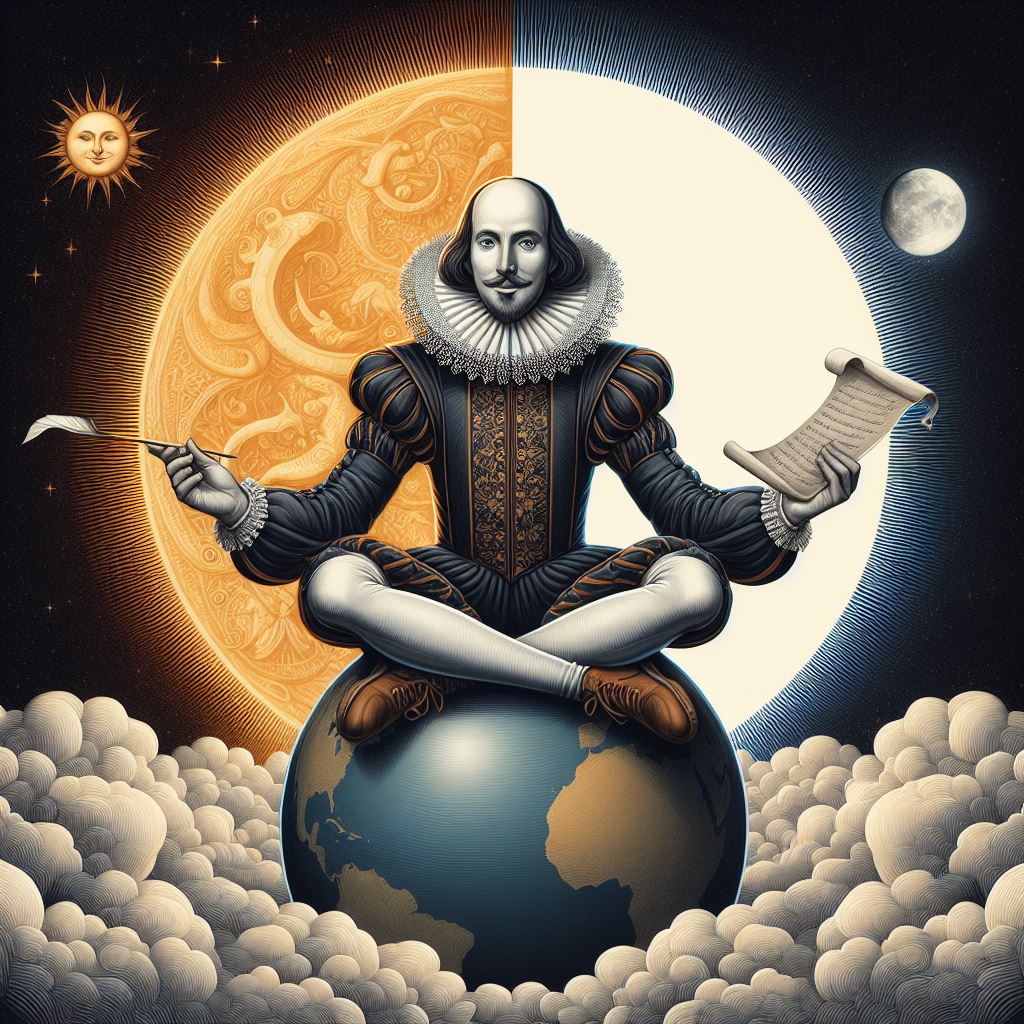
I am William Shakespeare about to write Hamlet

It’s the year 1600 and I am already an accomplished playwright, having written plays and created characters like Romeo and Juliet that would be revered for centuries. This might have been enough for any other artist, but I am not any artist by any means. I am William Shakespeare about to write Hamlet.  It’s the… Continue reading I am William Shakespeare about to write Hamlet

King Lear and the primal genius of Kenneth Branagh

It’s a credit to Shakespeare’s genius that he was able to craft one of the greatest plays ever written from such an unbelievable beginning, but it’s also his genius that the opening is the very heart of it all. Despite his protestations, Lear has broken one of the bonds that protects civilization from the lawlessness… Continue reading King Lear and the primal genius of Kenneth Branagh

Shakespeare’s Julius Caesar and the nature of power in the hands of the people

It is a tragedy not of a single individual or even the entire Roman Republic, but one of power, who has it, who wants it, how they get it, and how it ebbs and flows at the whims of the crowd, exercising their free and fickle will to support who they choose at any given… Continue reading Shakespeare’s Julius Caesar and the nature of power in the hands of the people

Shakespeare’s most underrated character and speech, perhaps

Jaques, As You Like It’s “melancholy fellow,” is not likely to appear on any list of Shakespeare’s greatest characters, nor is his speech on the nature of his melancholy, but we see in him a sort of proto-Hamlet without the need to wound, opinion unrestrained, as he fancies himself said, claims it is better to… Continue reading Shakespeare’s most underrated character and speech, perhaps

Shakespeare’s Macbeth, As You Like It, and all the world’s a stage

If brevity is the soul of wit, Macbeth’s might be the superior statement of the futility of our existence, an entire philosophy contained in a few simple lines, but the overall meaning couldn’t be more different.  It’s as if each speech is itself a prism, and the meaning reflected is based on the direction of… Continue reading Shakespeare’s Macbeth, As You Like It, and all the world’s a stage

Romeo and Juliet and the true nature of tragedy and comedy

Few, if any endings are more tragic, but therein lies Shakespeare’s clever trick.  To produce such an effect, he hid a tragedy in what is truly a comedy, the comedy of life itself.  Everyone knows Shakespeare’s Romeo and Juliet is a tragedy because any play that ends with two young lovers, the main characters of… Continue reading Romeo and Juliet and the true nature of tragedy and comedy

Barbie and the intellectual bankruptcy of the establishment

It’s sad, but not altogether surprising that tired cliches and worn tropes, which make even less sense wrapped around a beautiful female lead and a buff male costar, can so thoroughly impress people whose primary job function is to be critical. Last year, Barbie premiered to record box office returns and significant critical acclaim.  Reviewers… Continue reading Barbie and the intellectual bankruptcy of the establishment

Shakespeare friends and foes, Falstaff, and the idea of art as a mirror to the soul

Shakespeare isn’t a puzzle box to be unlocked or a cipher to be decrypted.  He is instead a universe to be explored and in that regard, no one in history has even come close.  Ultimately, your opinion is likely based on your opinion on the purpose of art itself.  The 400th anniversary of the publication… Continue reading Shakespeare friends and foes, Falstaff, and the idea of art as a mirror to the soul

I could be bounded in a nutshell, Shakespeare’s genius in three cryptic phrases

In one sense, Hamlet spins out the statement in a play of words, not intended to have any logical meaning, but to confuse his audience, hiding his real thoughts beneath the mask of insanity.  In another, it contains the meaning of the entire play and Macbeth besides. O God, I could be bounded in a… Continue reading I could be bounded in a nutshell, Shakespeare’s genius in three cryptic phrases